1903
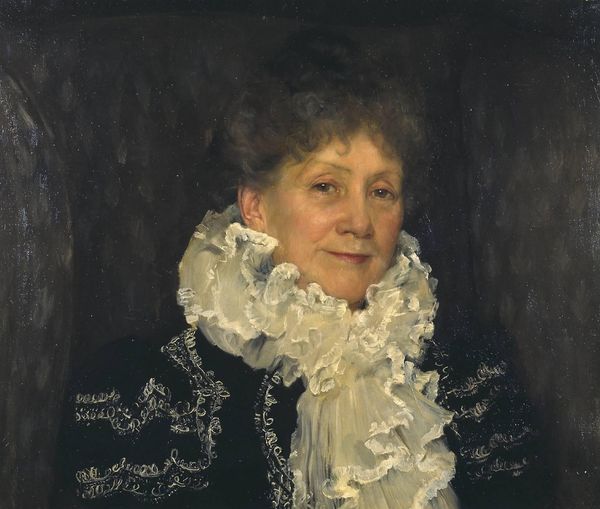
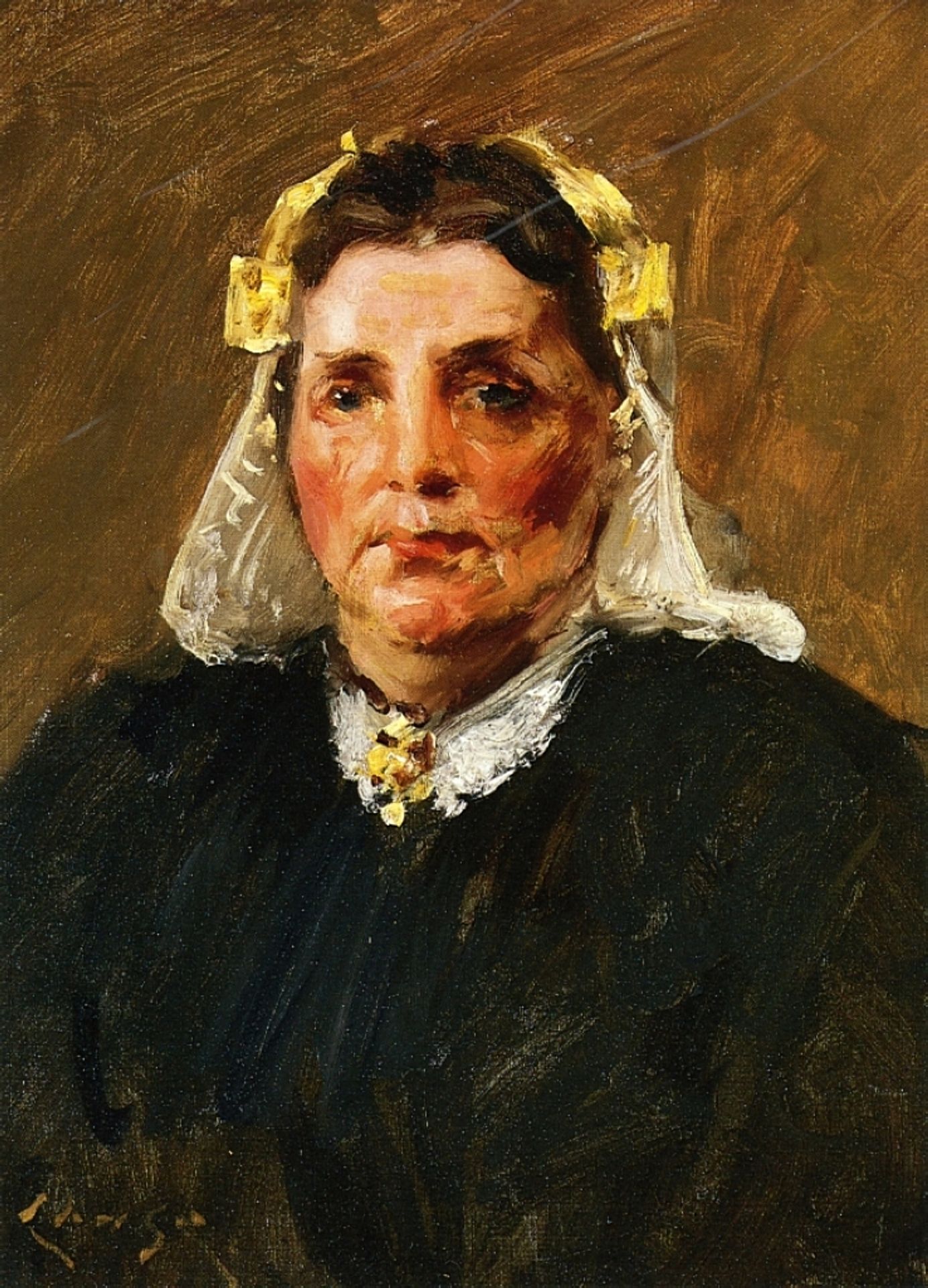
Woman of Holland

William Merritt Chase
1849 - 1916Location
Private CollectionListen to curator's interpretation
Curatorial notes
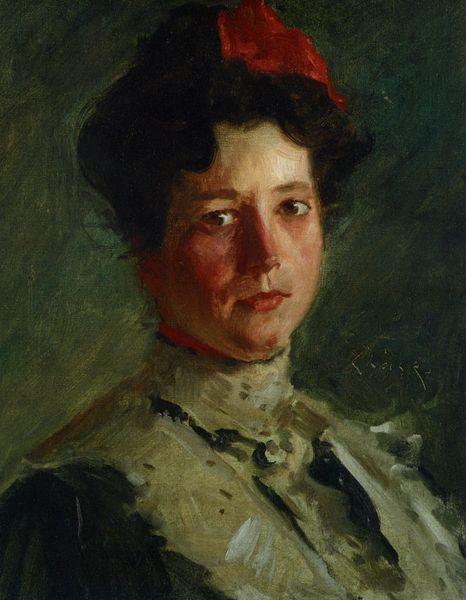
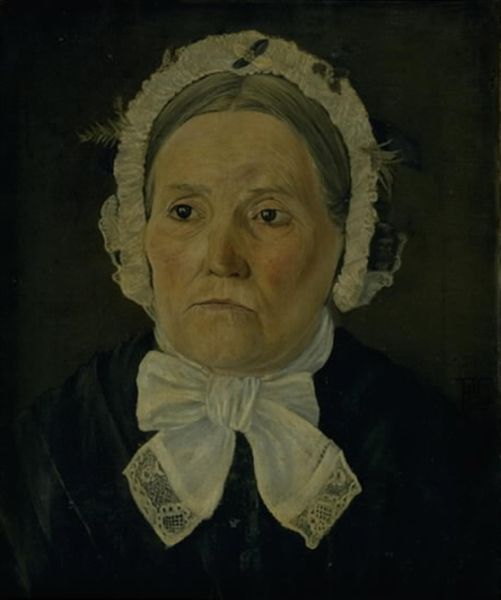
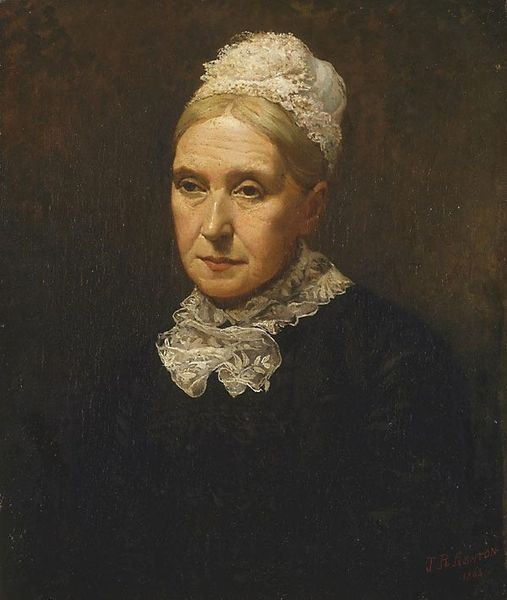
Curator: Immediately striking is the stark realism imbued with almost melancholic air. What’s your read? Editor: This painting, entitled "Woman of Holland", was created in 1903 by William Merritt Chase. Chase, an American Impressionist, captures a fascinating moment here. Curator: Indeed. And the construction—the careful balance of light and shadow across the woman's face—emphasizes the texture of the skin. Semiotically, this is loaded: wrinkles denote life, experience… mortality, even. Editor: Considering Chase's American Impressionist lens, this artwork offers a unique perspective on European life, specifically Holland. This portrait likely represents Chase’s ongoing fascination with portraying various cultural identities during his travels. It almost serves as a document of cultural exchange and representation, doesn't it? Curator: I concur. However, observe the compositional devices closely: The impasto technique provides an exquisite three-dimensionality that defies mere “representation.” Look at how the brushstrokes coalesce to evoke—rather than duplicate—form. The white lace juxtaposed with dark garment adds a graphic element, underscoring Chase’s sophisticated play with visual weight. Editor: Interesting point. Also, look at her garment and how it's simply depicted as being ‘dark’. I see it as reflecting broader artistic trends of that era, shifting from idealized to capturing everyday reality. Perhaps there is a statement being made about societal roles of woman here? Curator: Intriguing hypothesis! To close then: beyond being a snapshot of its historical context, Chase’s handling of materiality speaks for itself. Editor: True. I think this artwork reminds me how historical paintings allow conversations about past realities, challenging and reaffirming our views.