About this artwork
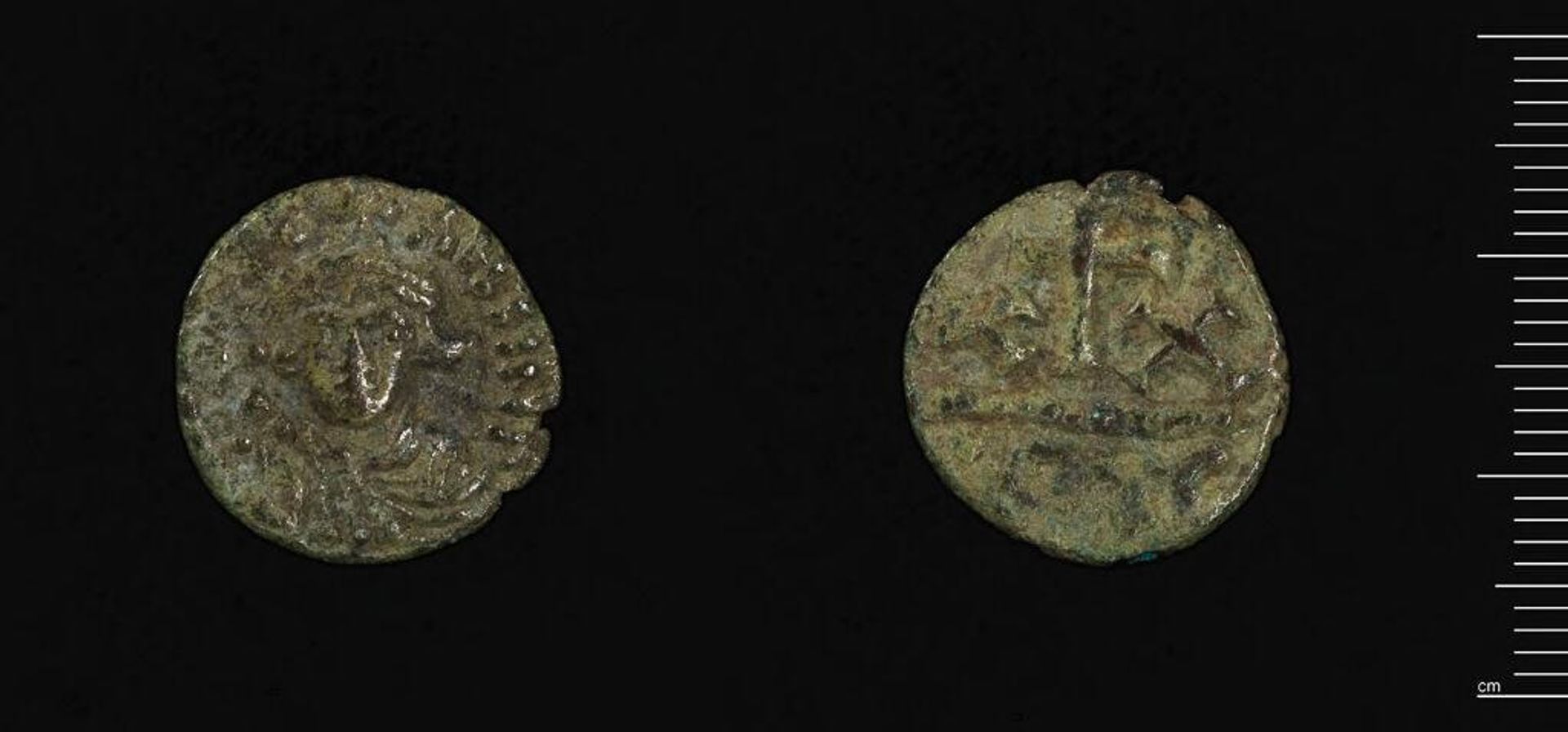
Editor: So, this is a "Half Follis of Constans II, Carthage." It looks like a very worn coin. How do we understand an object like this, beyond its monetary value? Curator: We must understand it as a piece of political messaging, circulated widely. Coins were tools of power, projecting the emperor's image and authority throughout the realm. Editor: So, every time someone used this coin, they were reminded of Constans II? Curator: Precisely. Consider where it was minted, Carthage. This signifies imperial control over North Africa, reinforcing political and economic ties. The wear and tear also tells a story of circulation, of lives touched by this image of power. Editor: That’s fascinating. It's like a tiny, portable billboard! I'll never look at old coins the same way again.
Half Follis of Constans II, Carthage
643 - 647

Artwork details
- Dimensions
- 3.46 g
- Location
- Harvard Art Museums
- Copyright
- CC0 1.0
Comments
Share your thoughts
About this artwork
Editor: So, this is a "Half Follis of Constans II, Carthage." It looks like a very worn coin. How do we understand an object like this, beyond its monetary value? Curator: We must understand it as a piece of political messaging, circulated widely. Coins were tools of power, projecting the emperor's image and authority throughout the realm. Editor: So, every time someone used this coin, they were reminded of Constans II? Curator: Precisely. Consider where it was minted, Carthage. This signifies imperial control over North Africa, reinforcing political and economic ties. The wear and tear also tells a story of circulation, of lives touched by this image of power. Editor: That’s fascinating. It's like a tiny, portable billboard! I'll never look at old coins the same way again.
Comments
Share your thoughts