About this artwork
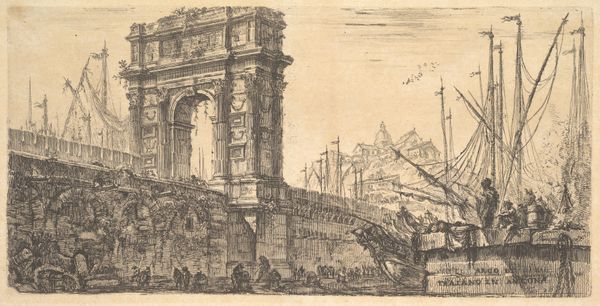
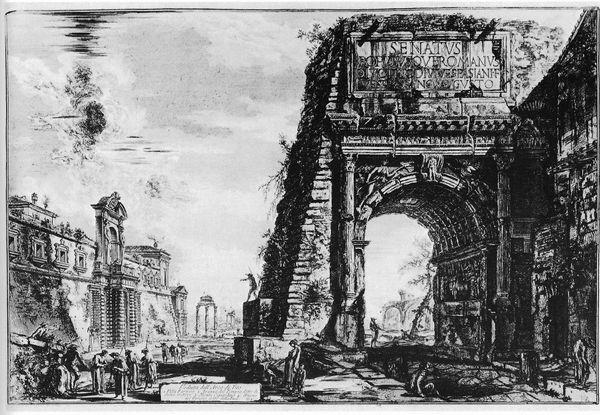
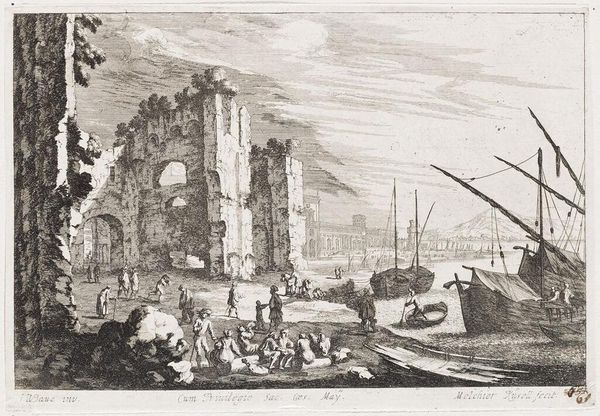
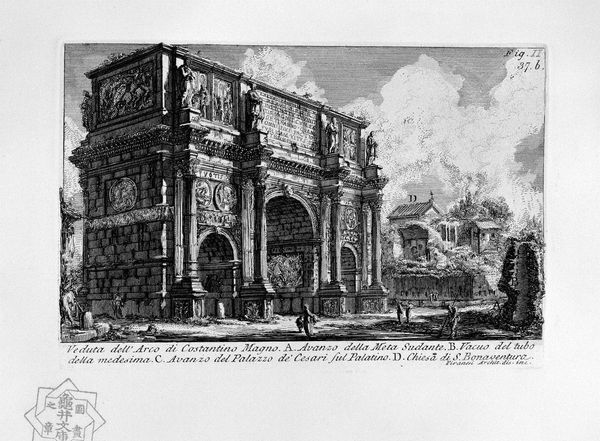
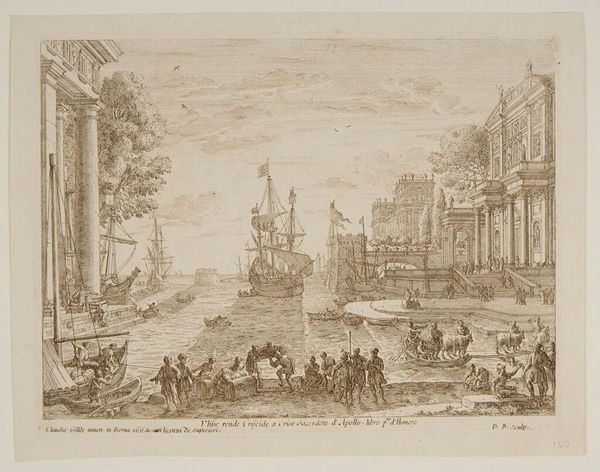
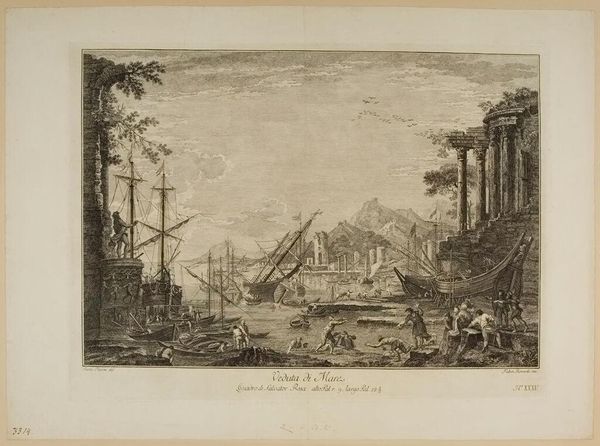
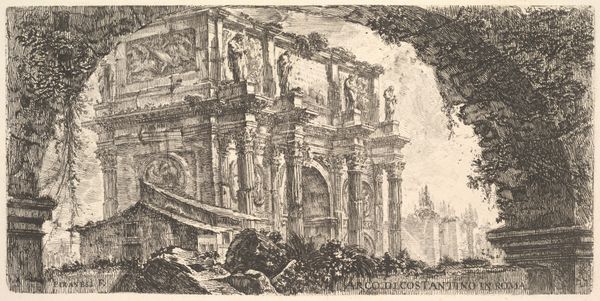
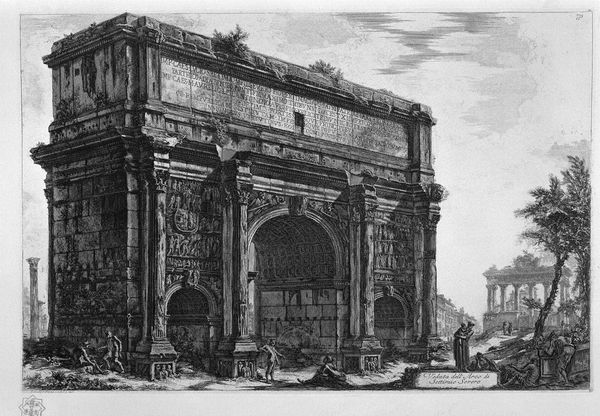
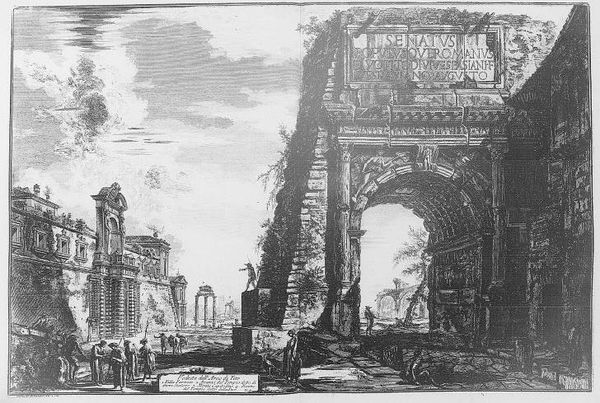
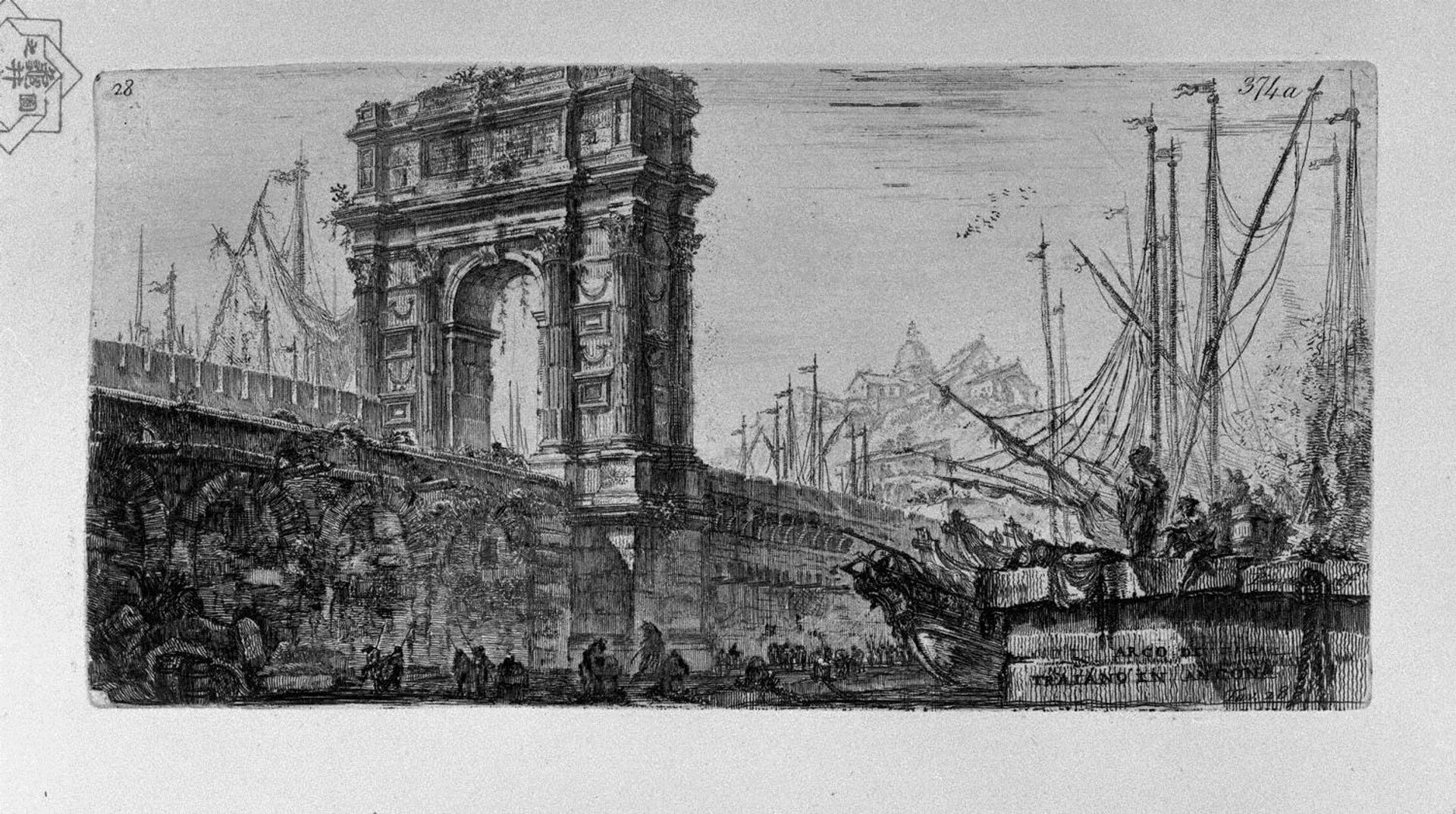
Giovanni Battista Piranesi, who was born in 1720, made this print. He lived during a time when Europe was fascinated by classical antiquity, yet also beginning to question the legacies of empire. In this print, Piranesi depicts the Temple of Pola in Istria, now part of Croatia, alongside other Roman ruins, creating a scene that romanticizes the past while also acknowledging its decay. We see figures of different classes populating the scene – their presence in a way highlights the contemporary world’s relationship to this architectural history. Piranesi was known for his dramatic and theatrical compositions. The contrast between light and shadow, typical of the etching technique, evokes a sense of grandeur and melancholy, reflecting the artist’s own complex feelings about the past. Piranesi used his etchings to celebrate Roman achievement, but also to criticize contemporary society's failure to live up to it. These romanticized, and at times exaggerated, depictions of Roman architecture influenced the Neoclassical movement. They also prompt us to reflect on how we construct and interact with history, and how our perceptions of the past shape our present identities.
Reversal of the Temple of Pola in Istria, and other Temple

Artwork details
- Medium
- print, etching, architecture
- Copyright
- Public domain
Tags
Comments
Share your thoughts
About this artwork
Giovanni Battista Piranesi, who was born in 1720, made this print. He lived during a time when Europe was fascinated by classical antiquity, yet also beginning to question the legacies of empire. In this print, Piranesi depicts the Temple of Pola in Istria, now part of Croatia, alongside other Roman ruins, creating a scene that romanticizes the past while also acknowledging its decay. We see figures of different classes populating the scene – their presence in a way highlights the contemporary world’s relationship to this architectural history. Piranesi was known for his dramatic and theatrical compositions. The contrast between light and shadow, typical of the etching technique, evokes a sense of grandeur and melancholy, reflecting the artist’s own complex feelings about the past. Piranesi used his etchings to celebrate Roman achievement, but also to criticize contemporary society's failure to live up to it. These romanticized, and at times exaggerated, depictions of Roman architecture influenced the Neoclassical movement. They also prompt us to reflect on how we construct and interact with history, and how our perceptions of the past shape our present identities.
Comments
Share your thoughts