drawing, paper, pencil, graphite
drawing
amateur sketch
aged paper
light pencil work
homemade paper
non-objective-art
pencil sketch
sketch book
hand drawn type
paper
personal sketchbook
geometric
sketch
pencil
geometric-abstraction
abstraction
line
graphite
sketchbook drawing
sketchbook art
Copyright: Rijks Museum: Open Domain
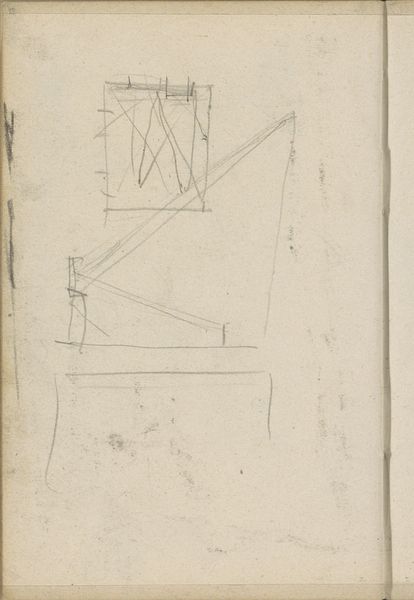
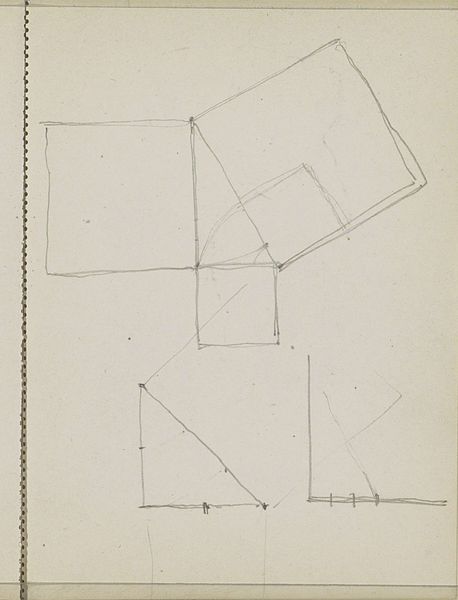
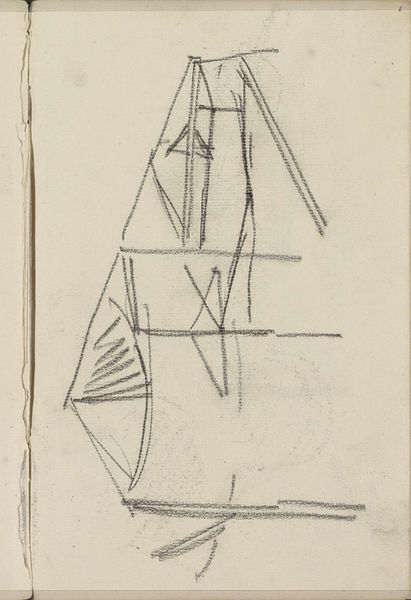
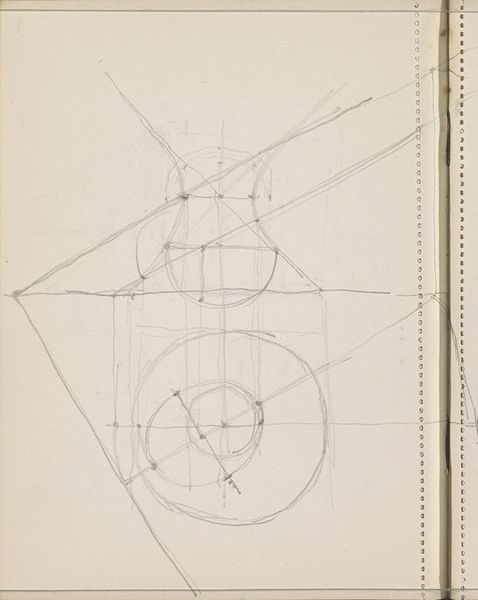
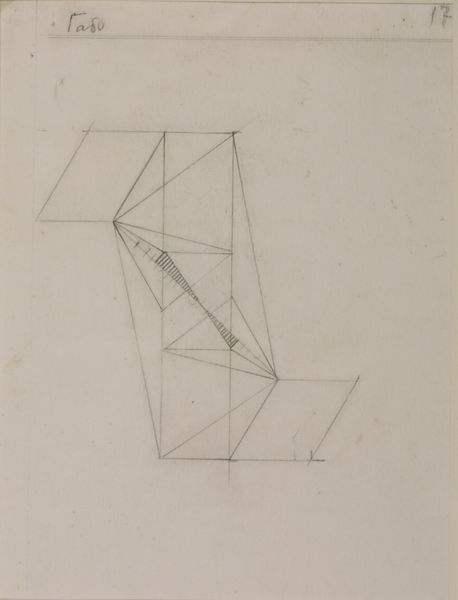
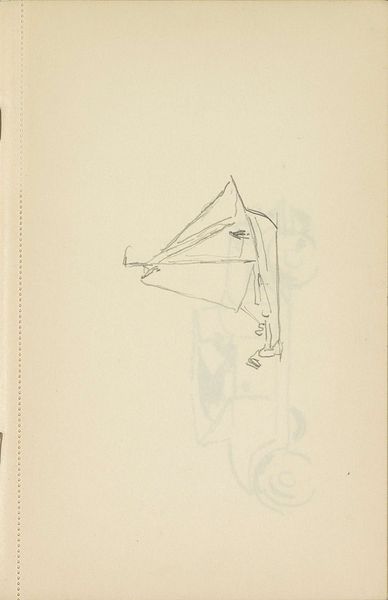
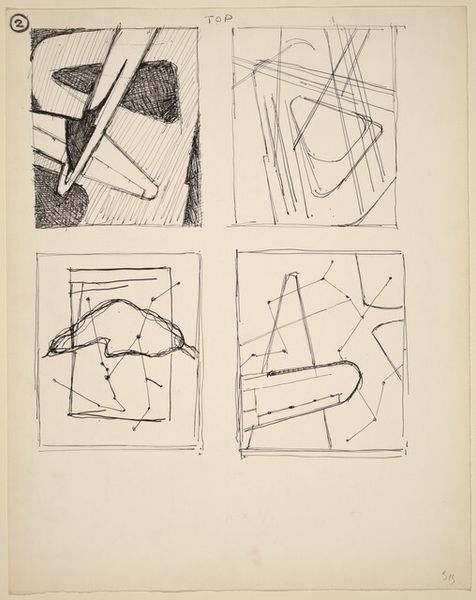
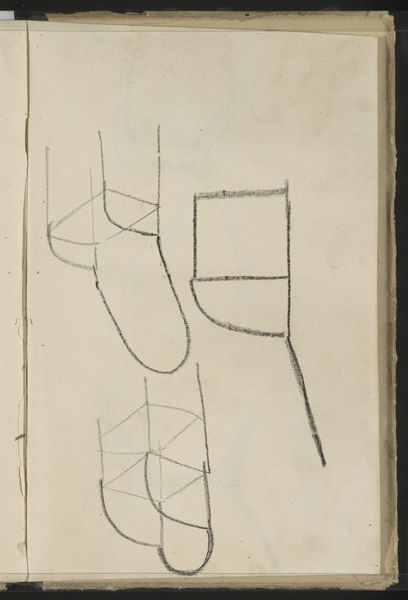
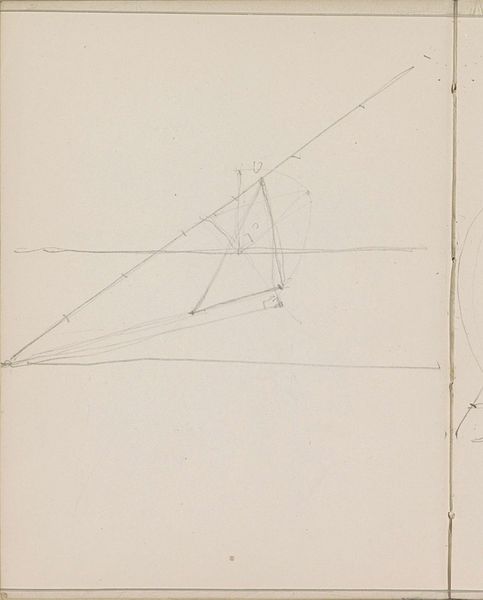
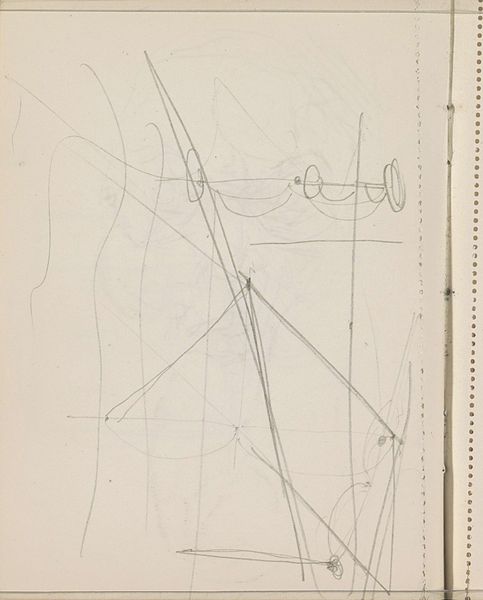
Reijer Stolk made this drawing called Wiskundige driehoeken, or Mathematical Triangles, sometime between 1896 and 1945, with a pencil on paper. I love the quality of the line; it feels exploratory and provisional, like thinking aloud, and it reminds me of the kinds of diagrams I draw when I'm trying to figure something out. See how some of the lines are darker and more defined than others? That kind of variation tells me that Stolk was working through his ideas as he drew. The texture of the paper is smooth, which allows the pencil lines to glide effortlessly across the surface, creating a sense of lightness and transparency. And that little triangle towards the bottom? It's like a concentrated dose of geometry, a tiny symbol of the vast mathematical universe Stolk was exploring. In a way, this drawing reminds me of the work of Sol LeWitt, another artist who used simple geometric forms to create complex and conceptually rich artworks. But where LeWitt's work is precise and calculated, Stolk's has a more organic, intuitive feel. Ultimately, this drawing is a reminder that art and math aren't so different after all. Both are ways of making sense of the world, of finding patterns and connections in the chaos.
Comments
No comments
Be the first to comment and join the conversation on the ultimate creative platform.
 React
React Comment