1720 - 1808
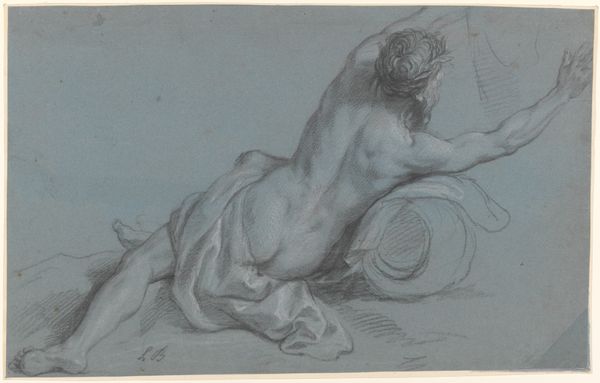
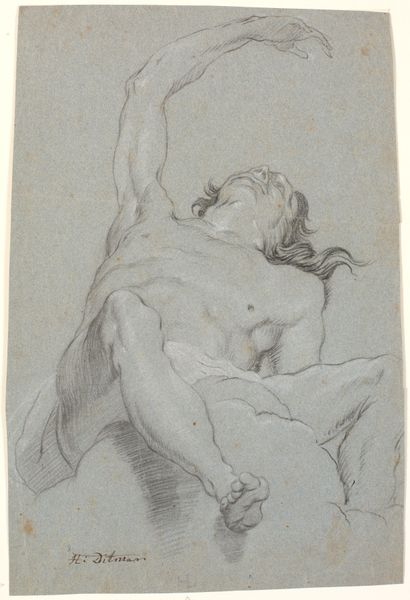
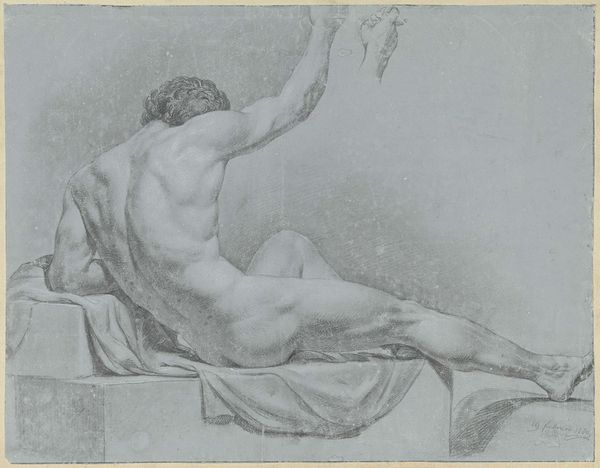
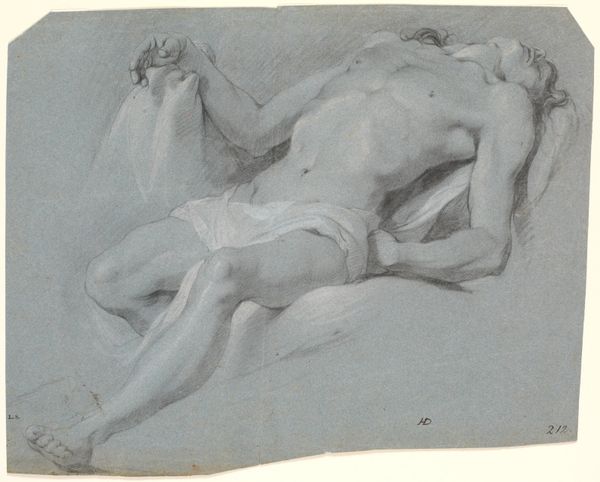
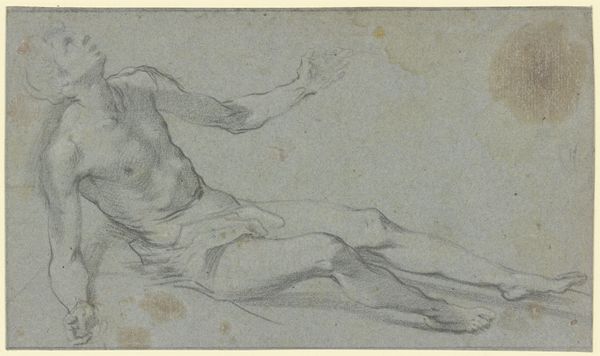
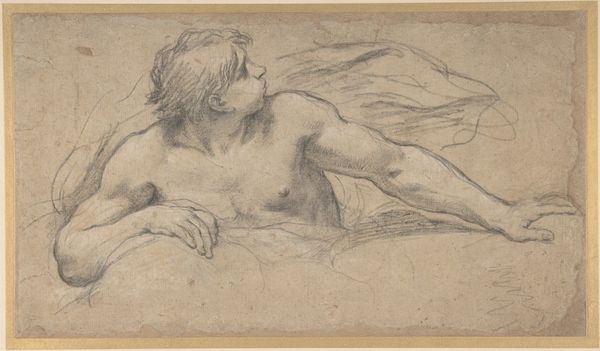
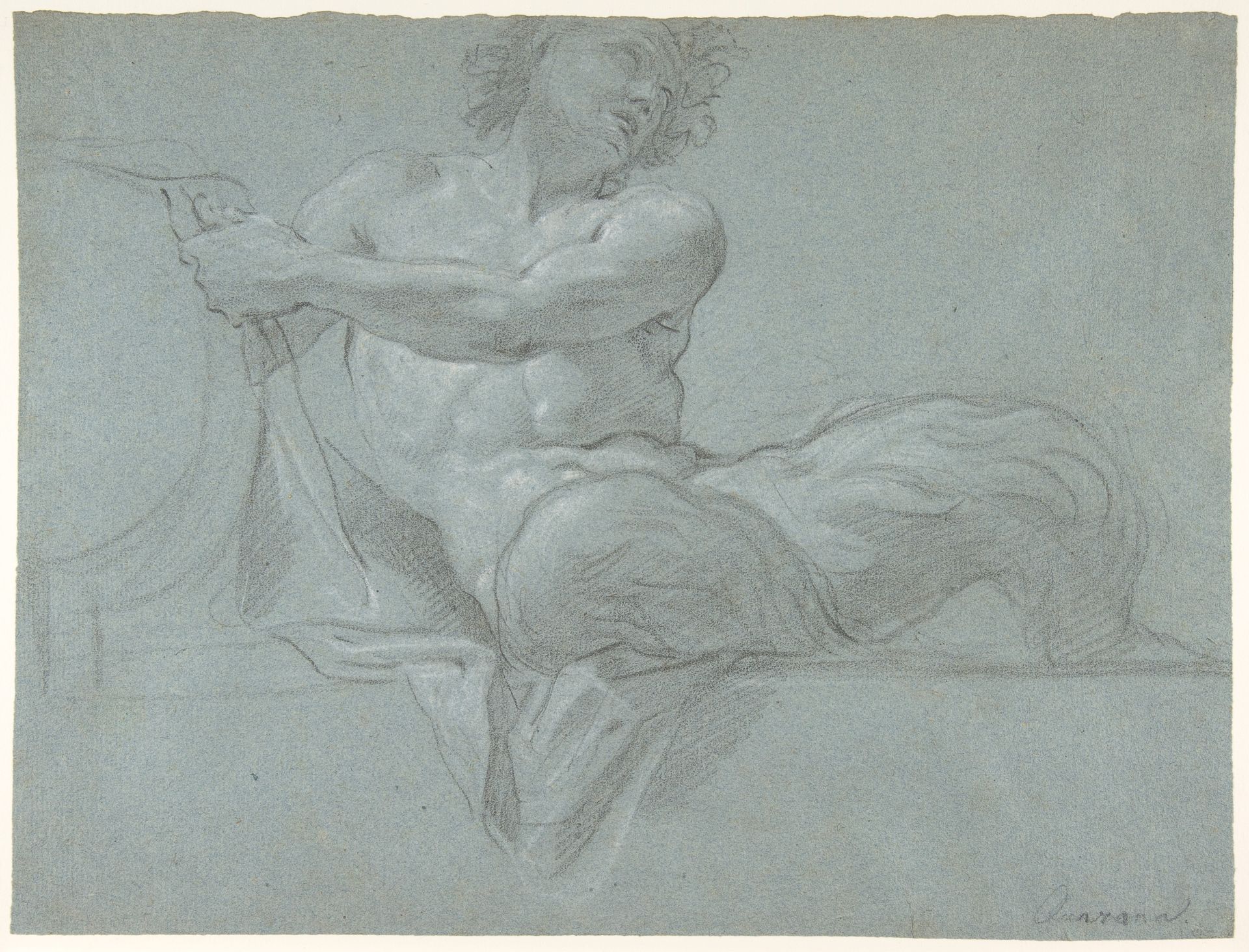
Satyr Reclining on a Ledge, Facing Right (recto); Satyr Reclining on a Ledge, Facing Left (verso)


Listen to curator's interpretation
Curatorial notes
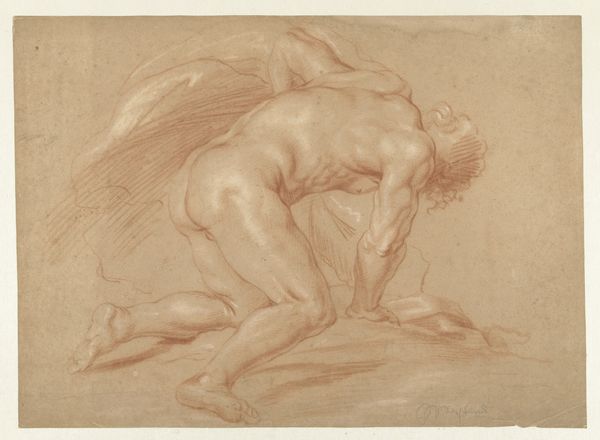
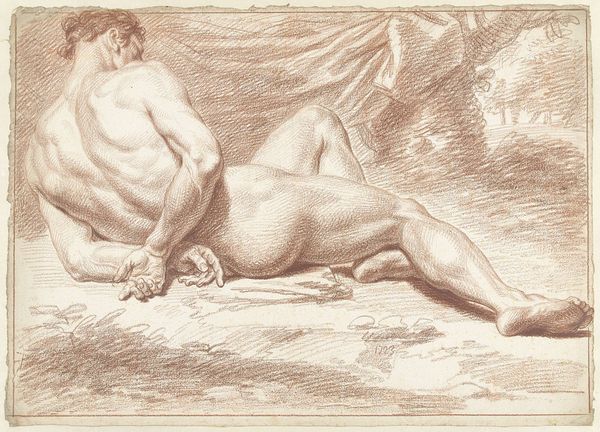
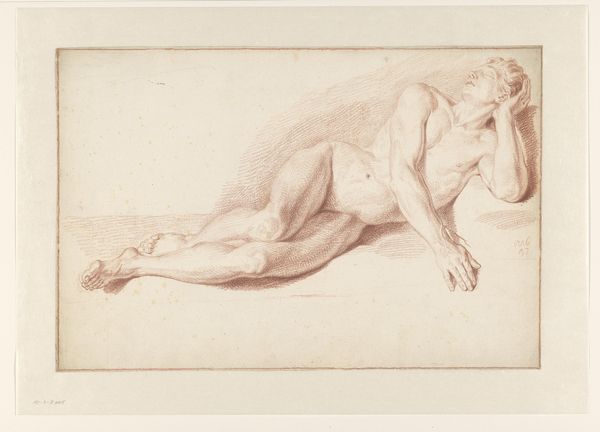
Curator: So, we have before us "Satyr Reclining on a Ledge" by Jacopo Guarana. Editor: Yes! Guarana made it sometime between 1720 and 1808 and employed humble materials - a pencil and some drawing paper. The figure seems relaxed, even languid. What do you see when you look at this piece? Curator: The immediacy of the pencil marks strikes me first. Pencil wasn't always viewed as a medium for "high art," was it? Its connection to preparatory sketches, to drafts, often relegated it to the realm of the "un-artistic." Guarana elevating this material points to shifting ideas around artistic labor, doesn’t it? The mass availability of pencils allowed for more widespread participation in drawing, influencing production and reception. Editor: I see. It makes you wonder who this was created *for,* doesn’t it? A patron, maybe? Was it meant to be seen as the final product, or simply a sketch? Curator: Exactly! Consider the academic setting in which Guarana likely trained. Figure drawing was a core exercise, but to what end? Was this drawing a demonstration of skill, meant to secure future commissions? We can also question the "originality" myth of art making. What source material was used to draw the original? Editor: You’re suggesting that this seemingly simple sketch is embedded in a much wider network of production, labor, and social standing. It's a reminder that art isn’t created in a vacuum. I had never considered the pencil itself as a significant element! Curator: Precisely. By examining the materiality and production of even a "simple" drawing, we unveil complex relationships of power, skill, and value that permeated 18th century art world, don't we? Editor: This has completely changed how I look at drawings! Thanks! Curator: Indeed, it invites us to consider what materials, processes, and choices the artist made during production and their cultural context.