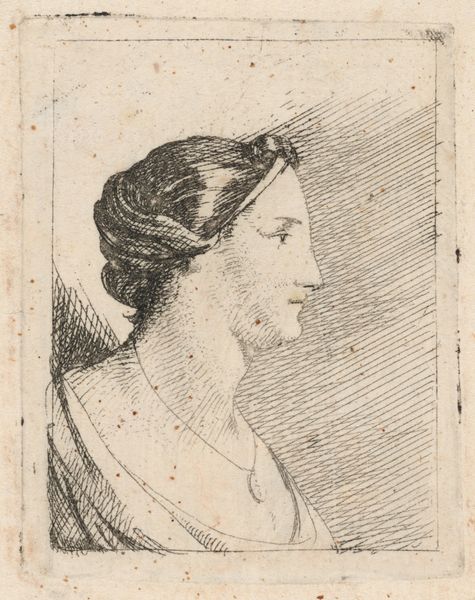
drawing, ink, pen
#
portrait
#
drawing
#
pencil sketch
#
figuration
#
ink
#
pen-ink sketch
#
line
#
pen
Dimensions: height 47 mm, width 50 mm
Copyright: Rijks Museum: Open Domain
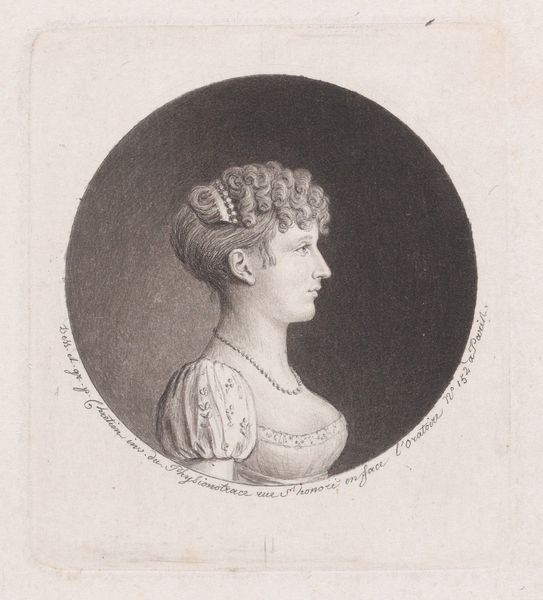
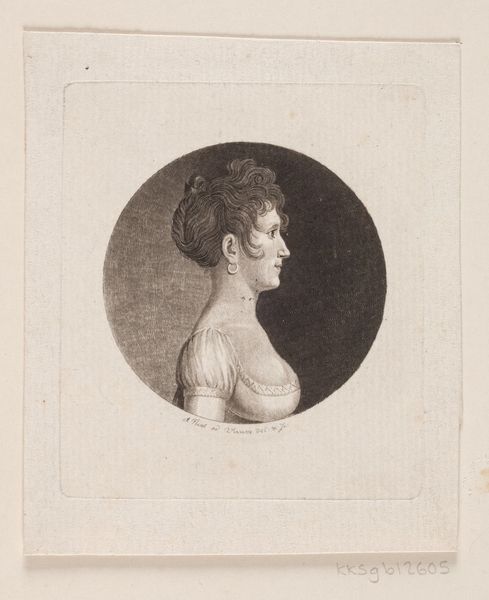
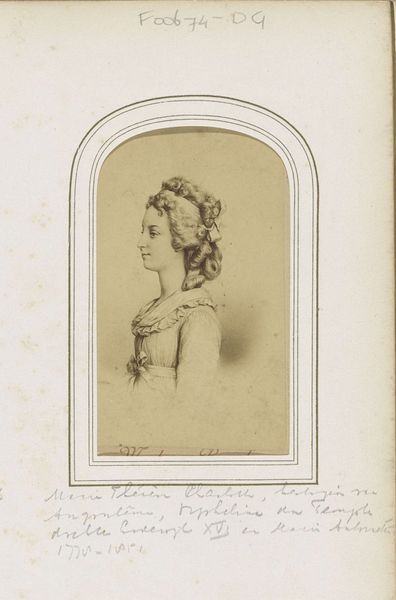
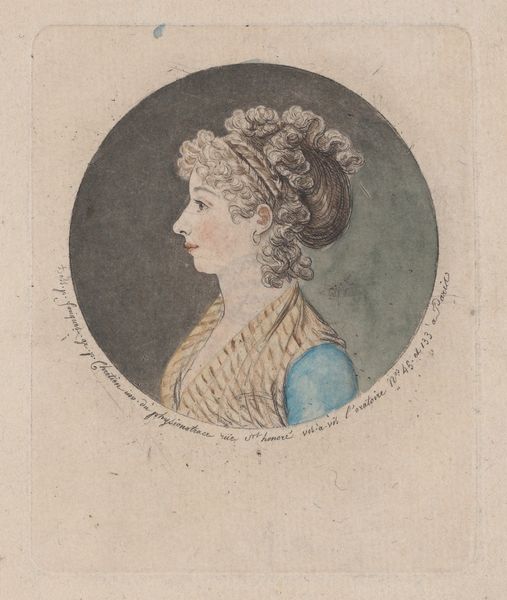
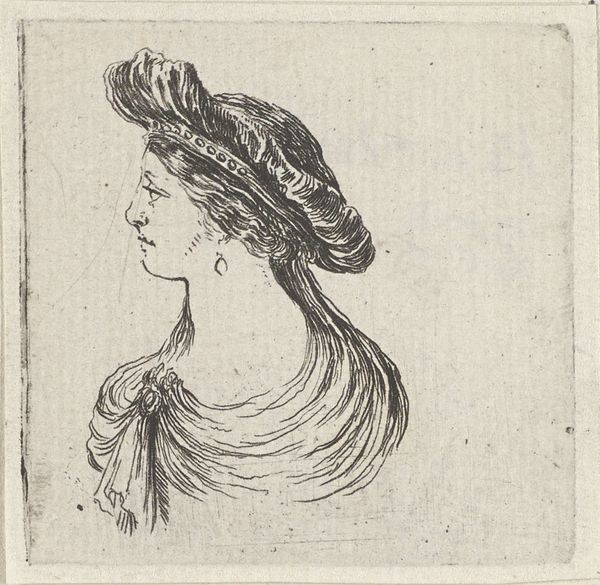
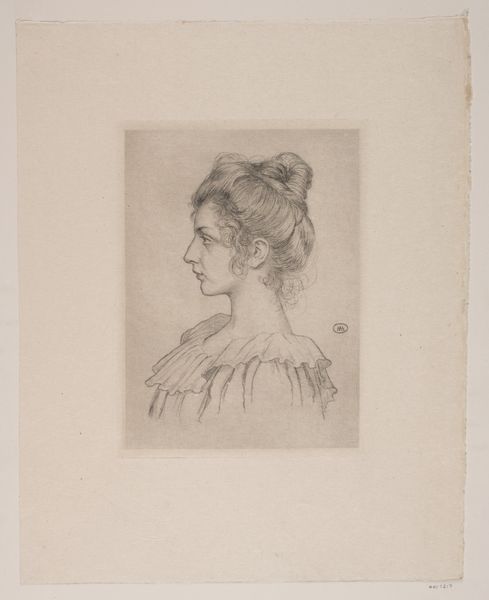
Curator: Isaac Weissenbruch's "Vrouw met een oorbel," or "Woman with an Earring," created sometime between 1836 and 1912, is on display here at the Rijksmuseum. It’s a delicate portrait, rendered in pen and ink. Editor: My immediate reaction is its elegance. The simplicity of line creates a classical profile, yet the earring introduces a subtle disruption to that formality. I’m intrigued by how something so delicate can project such refinement. Curator: The power of suggestion, isn't it? Look at the strategic use of line weight; thin hatching to denote shadow and volume against the stark negative space of the page. Semiotically, the earring can be interpreted as a marker of status, individuality, perhaps even rebellion within societal norms. Editor: Exactly. Consider the physical act: Weissenbruch’s selection of pen and ink lends itself to a mass produced image. This then challenges the concept of preciousness, as the raw materials of labor transform into accessible images for potentially the common gaze. One is impelled to reflect: where were the resources found, who oversaw the distribution, and for what public. Curator: Fascinating, that reading opens an examination beyond its aesthetic formalism to its production value within social context. But note the meticulous, albeit economical strokes shaping her face. It is an interplay between restraint and expressive flourish that elevates the subject, framing her more akin to idealized archetypes common at the time. Editor: I do agree; however, my viewpoint is that the materials selected would have influenced both his design as well as who was targeted to admire it. By reducing ornamentation to mere ink, it speaks of a different aesthetic choice to target different segments within his viewership that may find his art desirable and tasteful. Curator: So we arrive at this interesting juncture. The visual and textual combine into something wholly representative of a certain ideal, and even suggests larger contexts we’ve barely tapped into. Editor: A final glance confirms its dual significance; a portrait revealing more about labor’s potential as well as how beauty is defined during these processes.
Comments
No comments
Be the first to comment and join the conversation on the ultimate creative platform.
 Collect
 React
React Comment
More like this