tempera, painting, oil-paint
#
portrait
#
tempera
#
painting
#
oil-paint
#
holy-places
#
strong focal point
#
oil painting
#
arch
#
christianity
#
history-painting
#
italian-renaissance
#
early-renaissance
#
portrait art
Copyright: Public domain
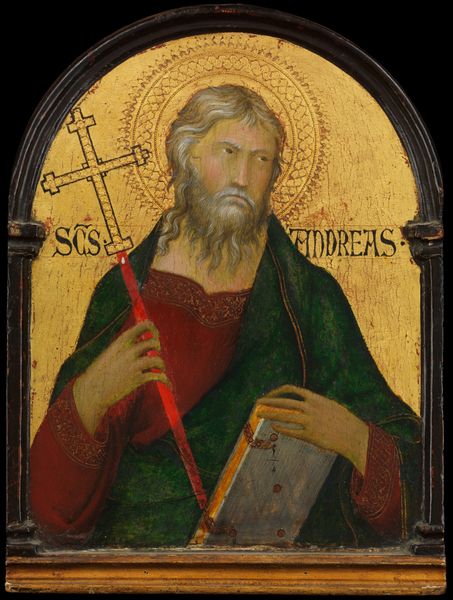
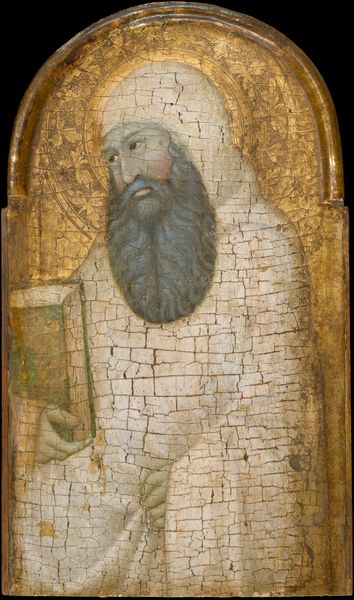
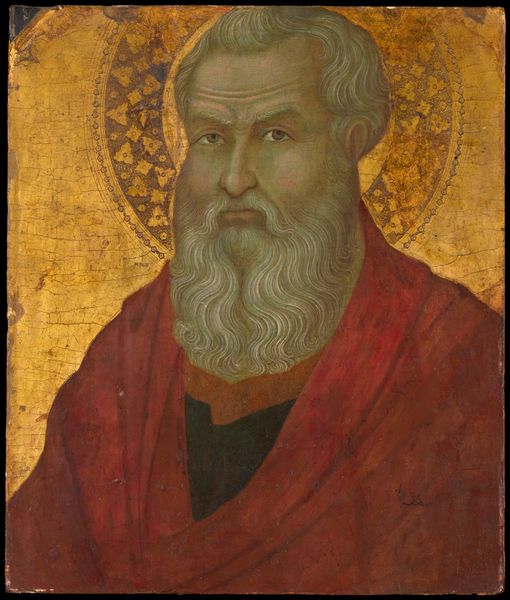
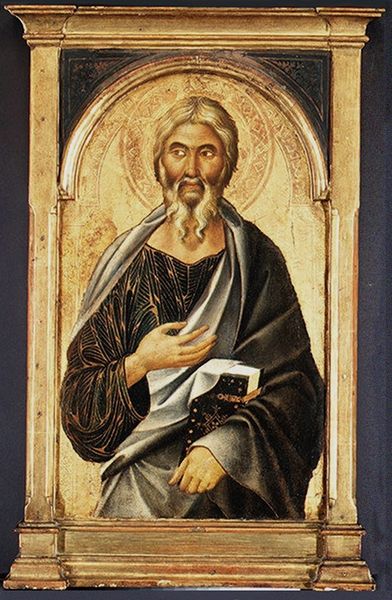
Curator: Here we have Masaccio's "Saint Andrew," tempera on panel, painted around 1426. The painting now resides in the collection of the J. Paul Getty Museum. Editor: My immediate reaction is drawn to the somber expression, and the aged figure appears both wise and burdened, framed by that striking gold background. It definitely conveys a sense of sacredness and formality, very typical for this time. Curator: Right, but think about the tempera. The pigments available, the techniques of layering… and consider the social context. These panels were often commissioned for specific locations, directing devotional gazes and enforcing church doctrine. It is material and labor intensive. Editor: Absolutely, and I think the use of symbolic elements is crucial here. St. Andrew's cross, so prominently placed, obviously points to his martyrdom. He's carrying the scriptures as a clear symbol of knowledge, wisdom and spreading Christianity, but what about his gaze directed towards heavens, don't you think? It emphasizes his devotion and faith. Curator: Indeed, but the layering of gold leaf is really central in all this; we must not forget the economic context of the Early Renaissance, the patronage of the church, and access to materials... Gold in itself signifies wealth and therefore divine endorsement and importance. Consider the underpainting too. Editor: That is certainly a perspective to take. For me the gold functions almost like a halo in its design, even though a proper halo is suggested by the pattern engraved. The book, the cross, even the architectural form framing the painting… they are all carefully arranged. Curator: Agreed. These elements contribute to constructing and reinforcing a particular image and associated beliefs within the available means of material production. The medium is central to understanding the message. Editor: It has been fascinating looking at St. Andrew in this way and thinking of not only the message being displayed, but also of the symbolic composition and visual devices Masaccio chose. Curator: And likewise, analyzing this Early Renaissance panel prompts reflections on value, craft, and devotion, showing us how art both shapes and is shaped by its era, doesn't it?
Comments
No comments
Be the first to comment and join the conversation on the ultimate creative platform.
 Collect
 React
React Comment
More like this