About this artwork
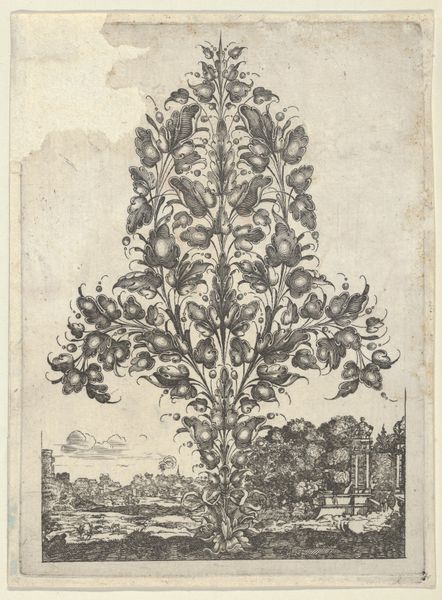
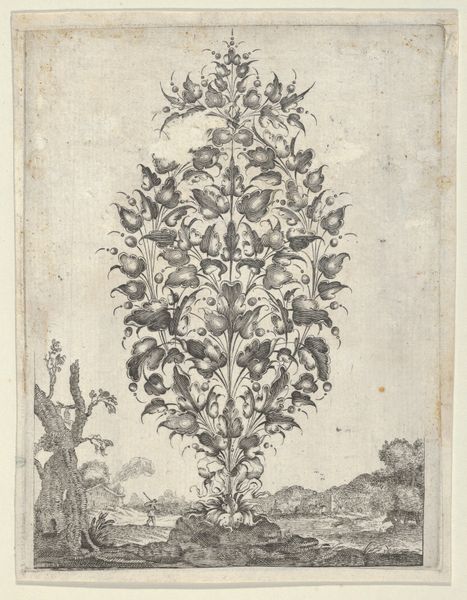
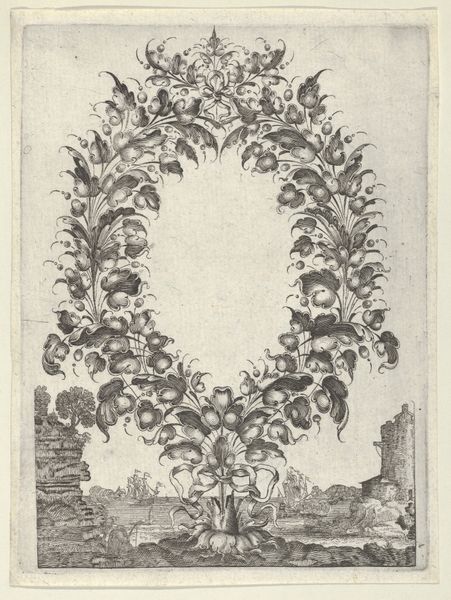
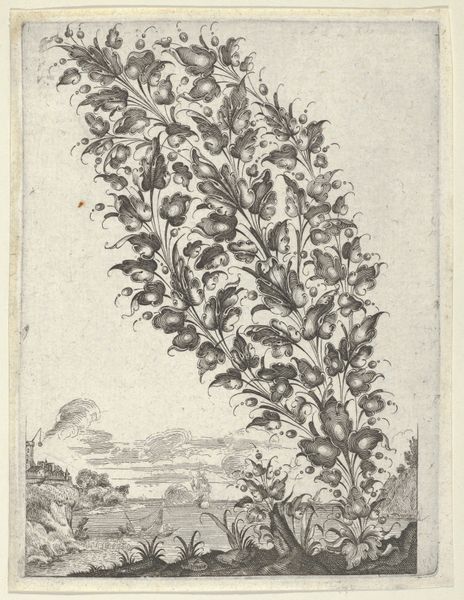
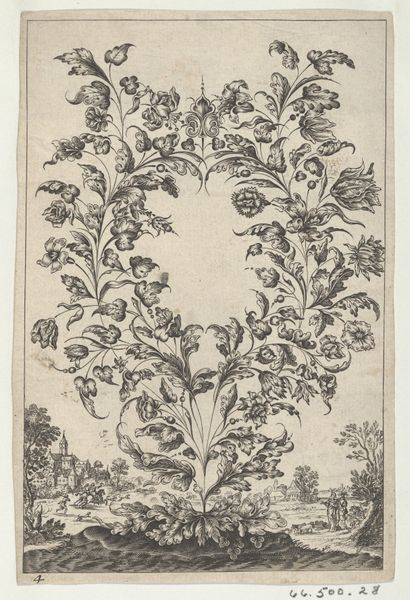
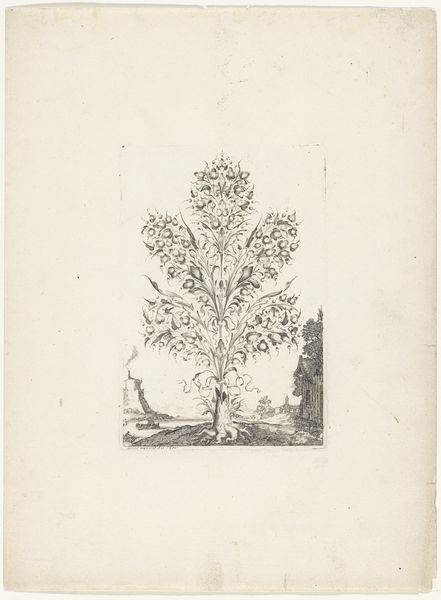
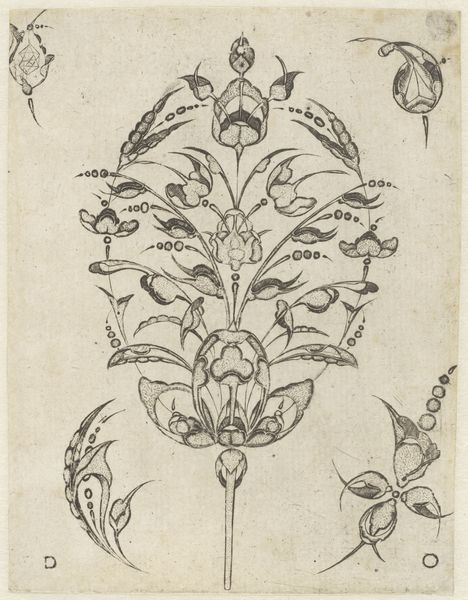
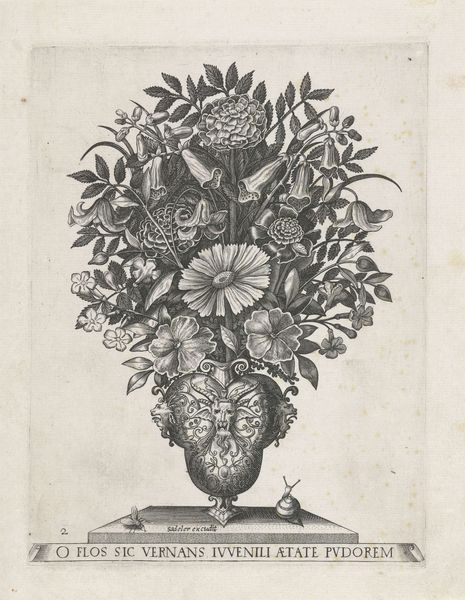
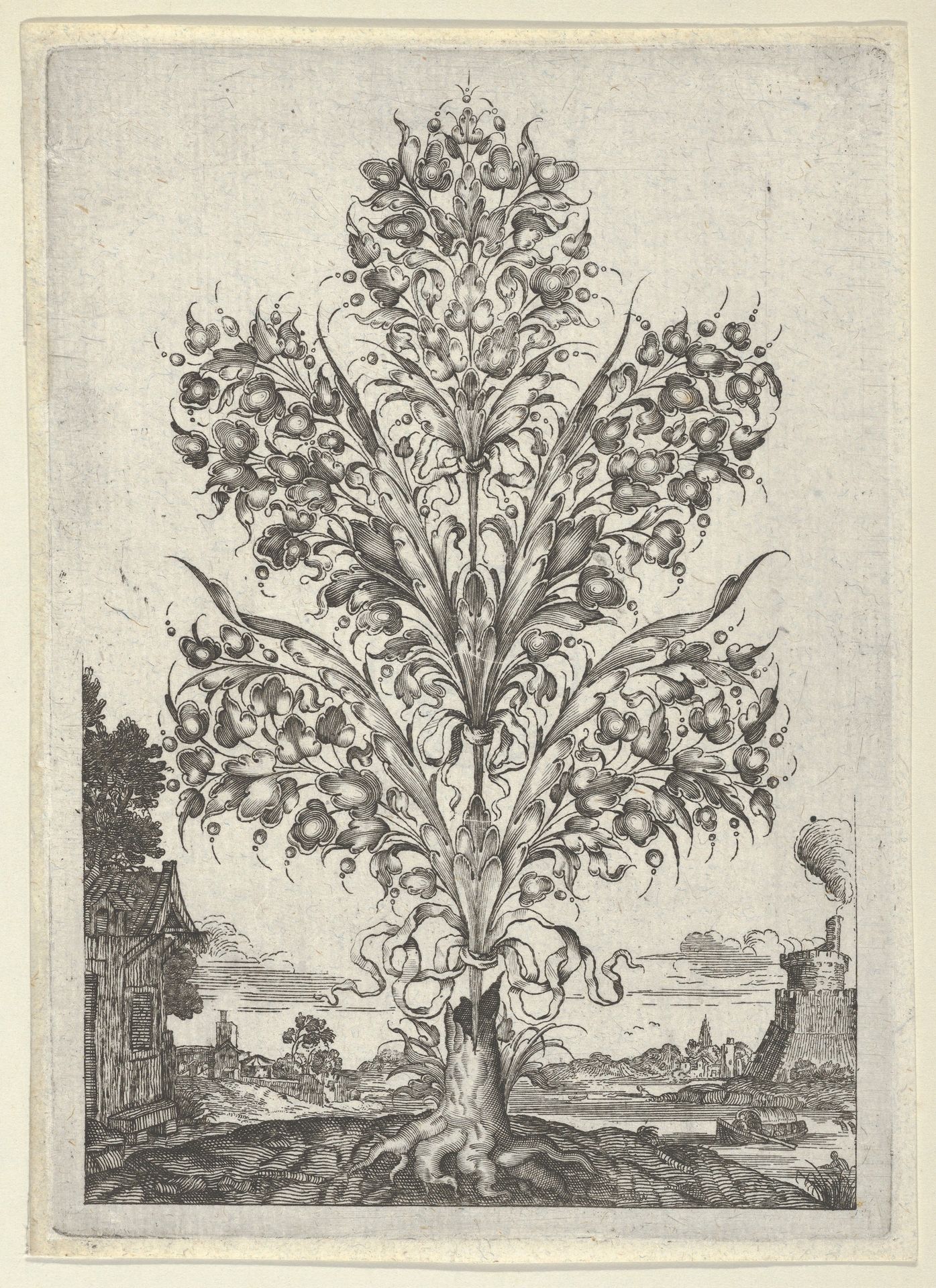
Peter Aubry II created this engraving called Goldsmith's Bouquet, from Newes Lauberbuechlein, in the 17th century. Aubry lived during a time of significant social and economic change in Europe. The booming merchant class sought luxury goods, and precious metalwork was very popular. This print comes from a series of model books for goldsmiths. Rather than presenting a realistic botanical study, the bouquet is a stylized collection of forms. The perfectly symmetrical design speaks to cultural ideals of order and harmony, and yet I wonder, what do we make of the broken tree trunk at the base of the bouquet? Model books like this were also accessible to women, who were increasingly involved in artistic and craft production. These designs allowed women to participate in the commercial art world, even if they were excluded from formal artistic training. Ultimately, this print and others like it reflect the societal values of the time, while also offering a glimpse into the creative possibilities that emerged amidst the changing social landscape.
Goldsmith's Bouquet, from Newes Lauberbuechlein
1628 - 1666


Artwork details
- Medium
- drawing, graphic-art, print, engraving
- Dimensions
- Sheet: 6 × 4 5/16 in. (15.3 × 11 cm)
- Location
- Metropolitan Museum of Art, New York, NY
- Copyright
- Public Domain
Tags
Comments
Share your thoughts
About this artwork
Peter Aubry II created this engraving called Goldsmith's Bouquet, from Newes Lauberbuechlein, in the 17th century. Aubry lived during a time of significant social and economic change in Europe. The booming merchant class sought luxury goods, and precious metalwork was very popular. This print comes from a series of model books for goldsmiths. Rather than presenting a realistic botanical study, the bouquet is a stylized collection of forms. The perfectly symmetrical design speaks to cultural ideals of order and harmony, and yet I wonder, what do we make of the broken tree trunk at the base of the bouquet? Model books like this were also accessible to women, who were increasingly involved in artistic and craft production. These designs allowed women to participate in the commercial art world, even if they were excluded from formal artistic training. Ultimately, this print and others like it reflect the societal values of the time, while also offering a glimpse into the creative possibilities that emerged amidst the changing social landscape.
Comments
Share your thoughts