Recueil d'Ornemens à l'usage des jeunes artistes 1777
0:00
0:00


Dimensions: Overall: 19 13/16 x 14 3/16 x 1 1/2 in. (50.3 x 36 x 3.8 cm)
Copyright: Public Domain
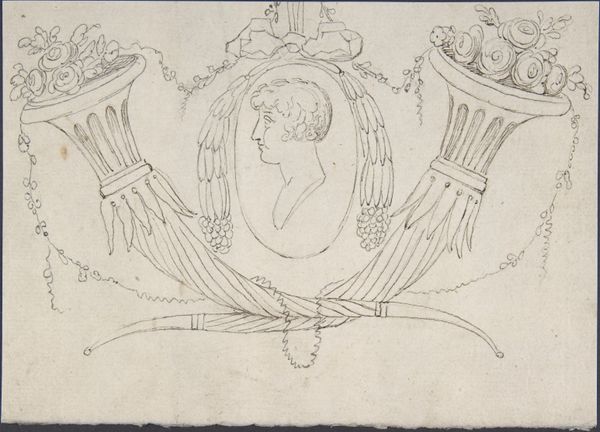
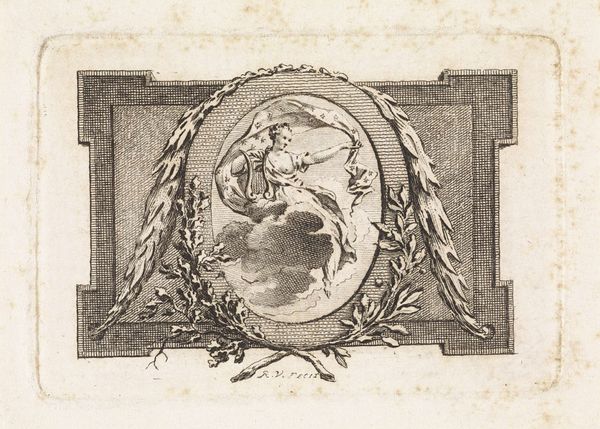
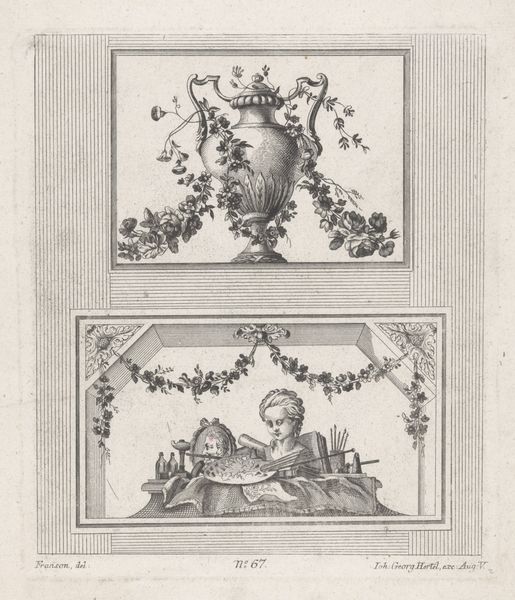
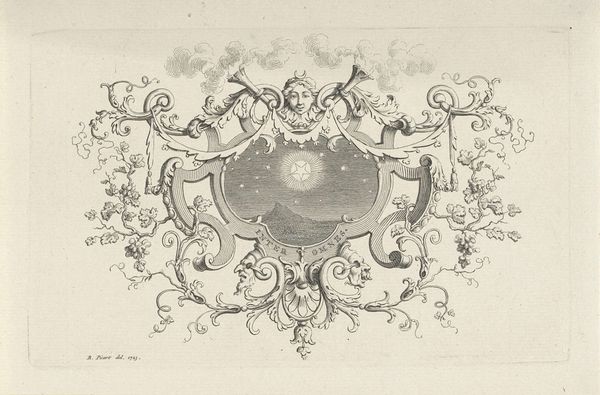
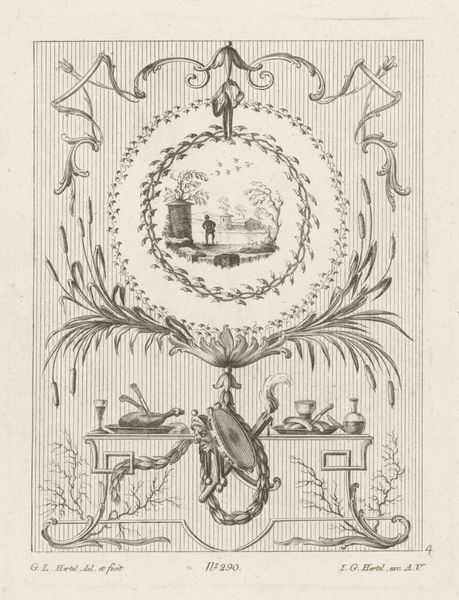
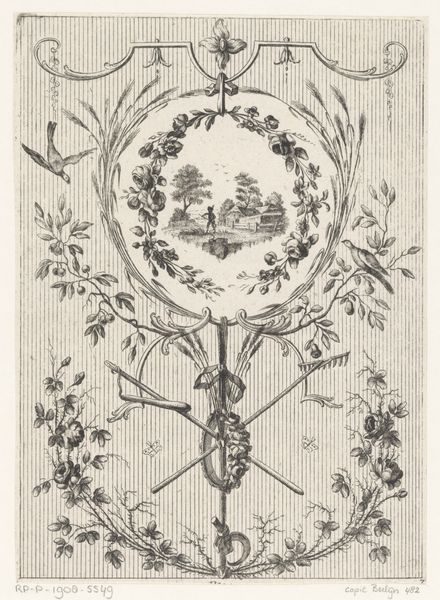
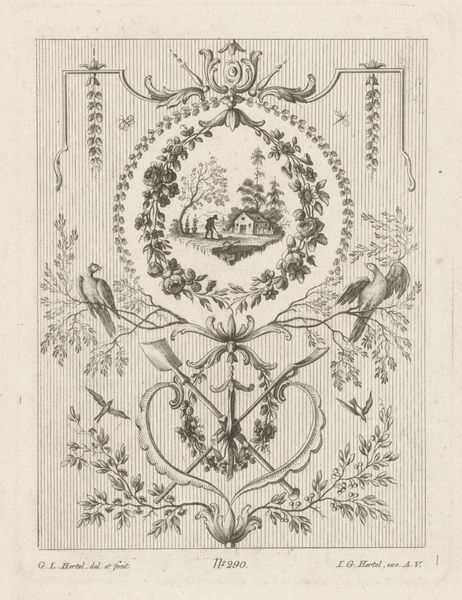
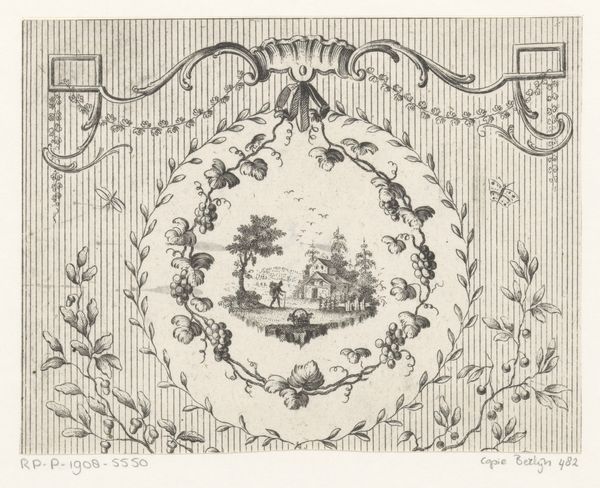
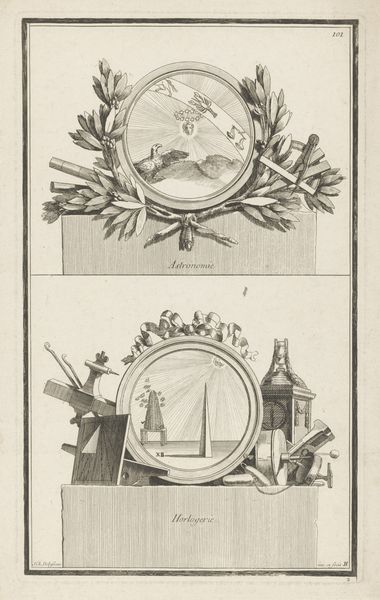
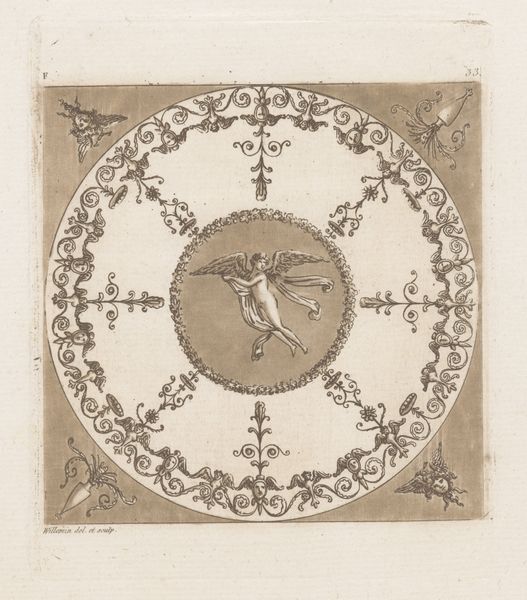
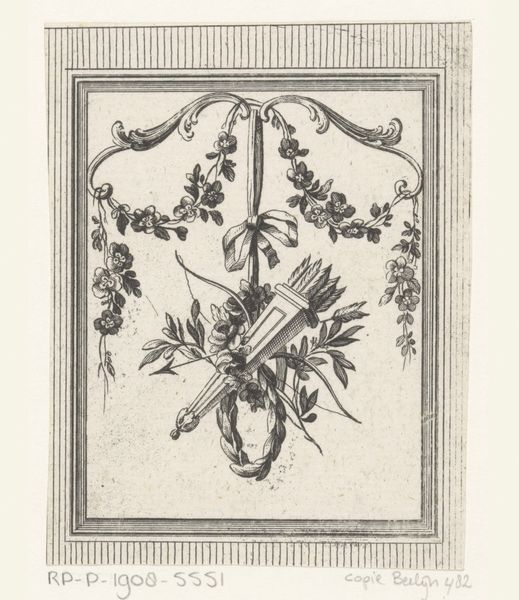
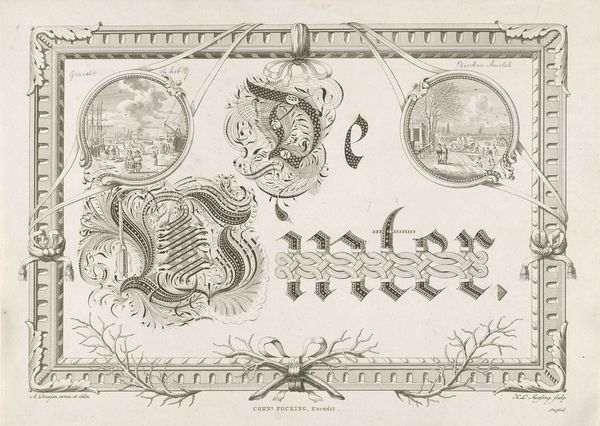
Curator: This print, “Recueil d'Ornemens à l'usage des jeunes artistes,” or "Collection of Ornaments for Young Artists," was created in 1777 by Gilles-Paul Cauvet. What strikes you first about it? Editor: It has a very ordered, neoclassical feel. I mean, it's all symmetry, right angles and those laurel wreaths...it feels very *Roman*, in a way. A bit rigid. Curator: True, the overall structure is rigidly geometric. But look closer at the individual motifs. Those garlands of fruit and flowers are exuberant! Cauvet wasn't just churning out copies; he was injecting a certain vibrancy. It almost feels as though it teeters on the edge between the Baroque and the emerging Neoclassical style. Editor: I see your point. It does offer interesting detail and balance of power. Tell me more about the context— why create this ornamental guide in the first place? Was it intended to raise or lower the barriers between artist and artisans in art making, and consumption? Curator: Ornament was central to 18th-century life. This wasn't about some lofty notion of "art for art's sake." These prints, and others like them, democratized design. A young craftsman, even without formal training, could pick up this "Recueil," see examples of current styles, and adapt them for furniture, architecture, even book bindings. It bridged the gap between artistic concept and industrial applications and therefore material culture of all classes. Editor: I agree. There's something empowering in seeing artistic knowledge being shared, made accessible through relatively cheap prints. But there is always that underlying hierarchy between 'fine art' and what we might think of 'craft'. A negotiation through print, really. The materiality and texture offer an element of creative expansion. Curator: Exactly. It really highlights how taste was being manufactured and disseminated in the late 18th century. Each panel represents unique design while speaking the same artistic language to bridge both art and utility, imagination and production. The image whispers what's timeless, what's temporary, what's possible, and what’s merely fashionable. Editor: Absolutely. We have both an artist's desire and market function in a dialogue. Thank you, Gilles-Paul Cauvet, for allowing this insightful exploration.
Comments
No comments
Be the first to comment and join the conversation on the ultimate creative platform.
 Collect
 React
React Comment
More like this