About this artwork
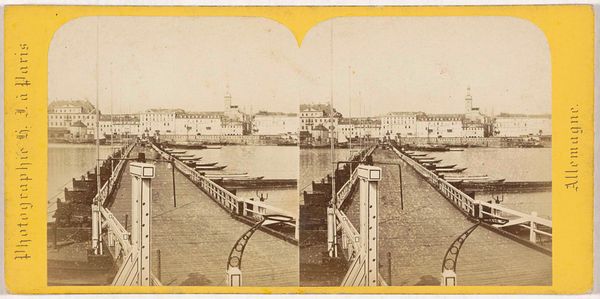
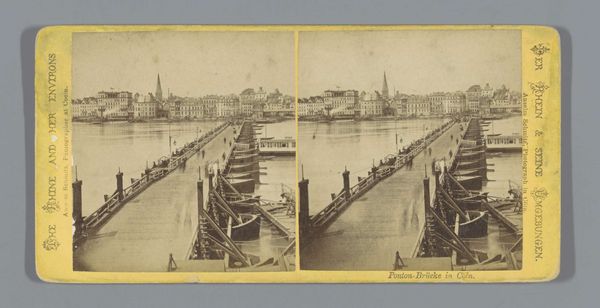
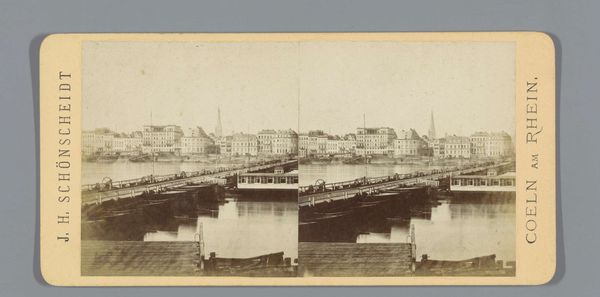
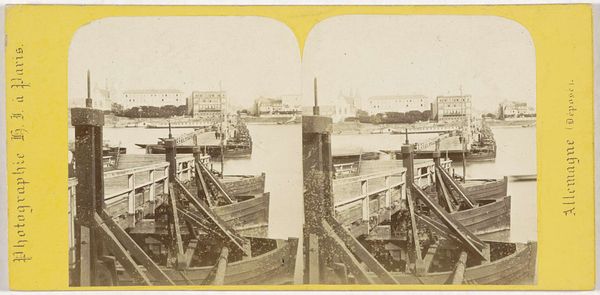
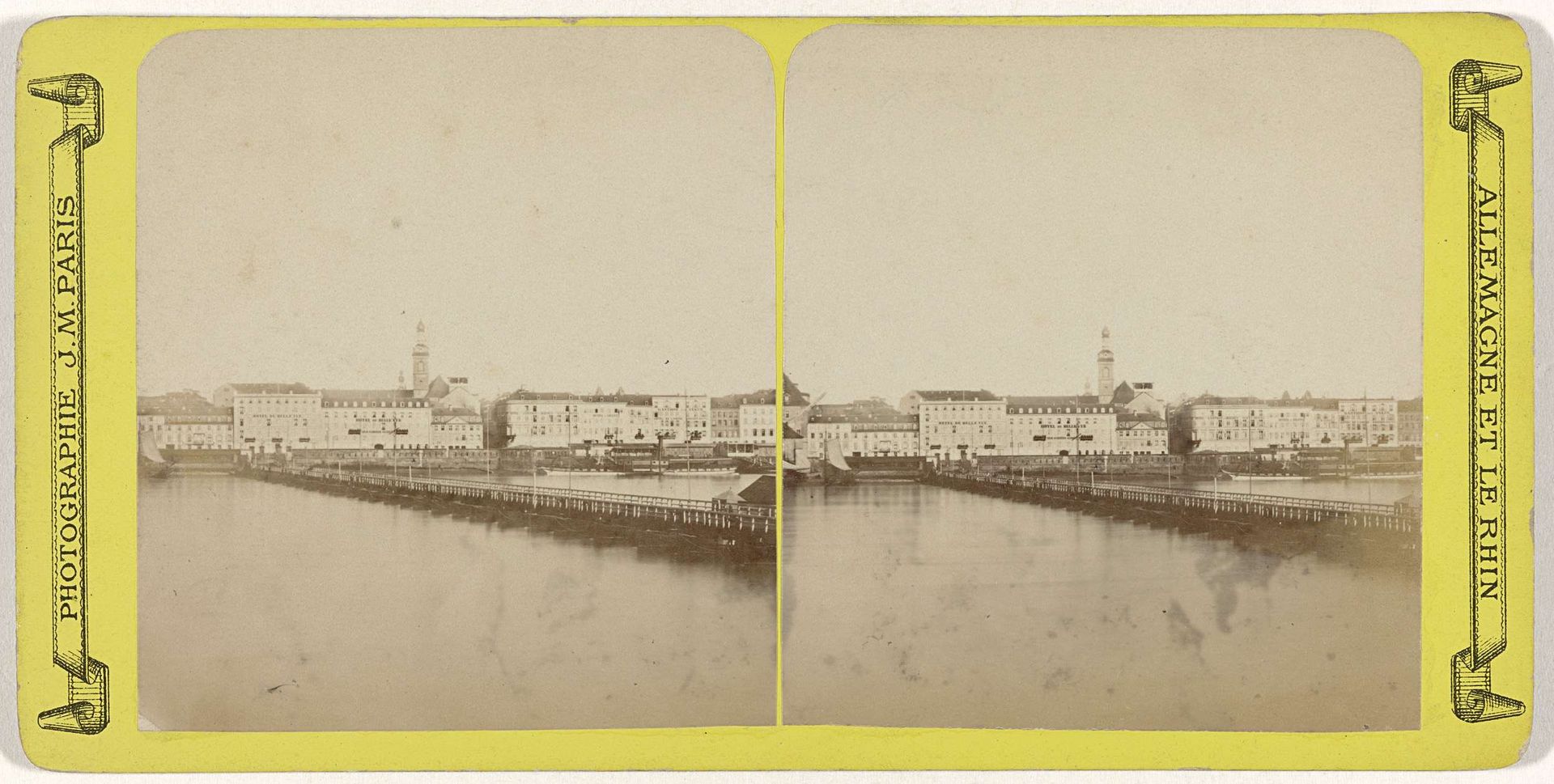
This stereoscopic photograph, by Jules Marinier, captures the bridge over the Rhine between Koblenz and Fort Ehrenbreitstein. The subdued sepia tones create a sense of distance, both temporally and spatially. Marinier's photograph is structured around a central horizontal axis formed by the bridge, which serves as a physical and visual link between the city and the fortress. The composition employs a balanced symmetry across the two images, with the city buildings mirrored, creating a unified and harmonious image. The flatness and limited tonal range emphasize the photograph's surface, drawing attention to its materiality as a constructed image rather than a mere representation. The stereoscopic effect invites us to consider how photography can manipulate perception and create its own kind of reality. This effect adds depth and volume, transforming a flat image into a three-dimensional experience. It prompts questions about the nature of representation and how we perceive and understand space. This photograph is a dialogue between form and function, inviting ongoing interpretation and critical engagement.
Botenbrug over de Rijn tussen Koblenz en fort Ehrenbreitstein
1864 - 1880

Artwork details
- Dimensions
- height 86 mm, width 173 mm
- Copyright
- Rijks Museum: Open Domain
Comments
Share your thoughts
About this artwork
This stereoscopic photograph, by Jules Marinier, captures the bridge over the Rhine between Koblenz and Fort Ehrenbreitstein. The subdued sepia tones create a sense of distance, both temporally and spatially. Marinier's photograph is structured around a central horizontal axis formed by the bridge, which serves as a physical and visual link between the city and the fortress. The composition employs a balanced symmetry across the two images, with the city buildings mirrored, creating a unified and harmonious image. The flatness and limited tonal range emphasize the photograph's surface, drawing attention to its materiality as a constructed image rather than a mere representation. The stereoscopic effect invites us to consider how photography can manipulate perception and create its own kind of reality. This effect adds depth and volume, transforming a flat image into a three-dimensional experience. It prompts questions about the nature of representation and how we perceive and understand space. This photograph is a dialogue between form and function, inviting ongoing interpretation and critical engagement.
Comments
Share your thoughts