daguerreotype, photography
#
16_19th-century
#
landscape
#
daguerreotype
#
photography
#
cityscape
Dimensions: height 84 mm, width 175 mm
Copyright: Rijks Museum: Open Domain
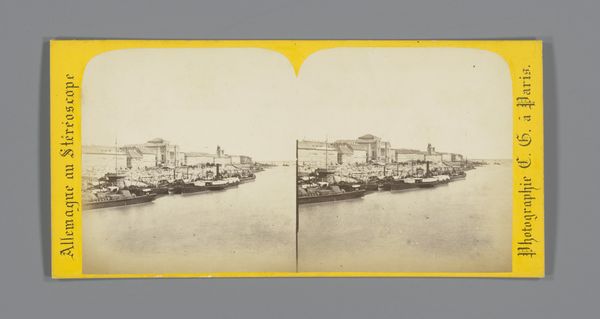
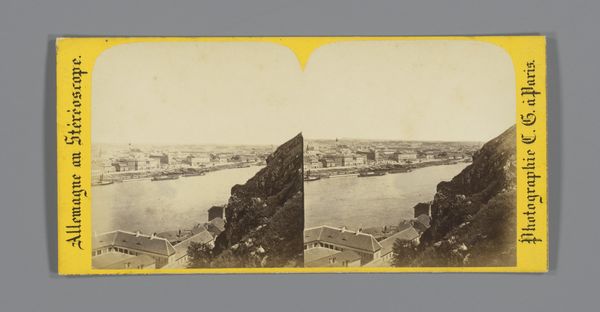
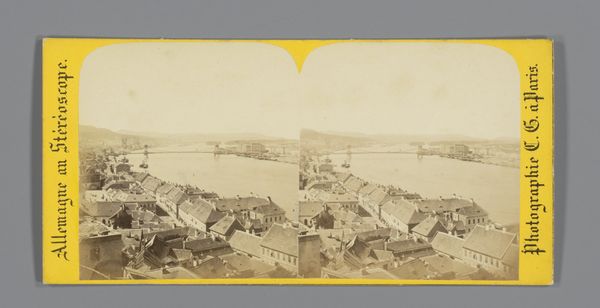
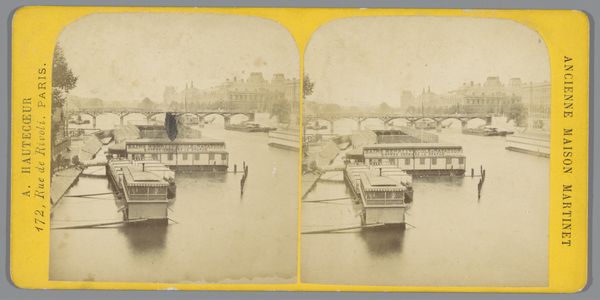
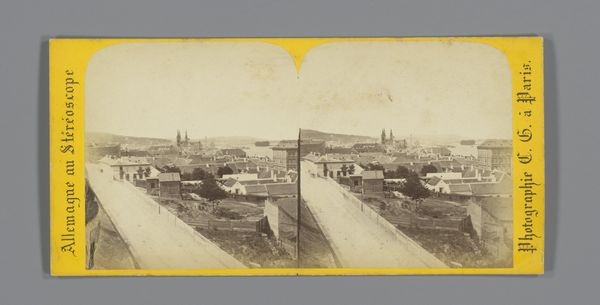
Editor: This daguerreotype from 1868, by Charles Gaudin, captures a cityscape of Pest, part of Budapest, as seen across the Danube. There’s a stillness, a quiet grandeur to the scene. I’m immediately struck by how different it looks compared to the Budapest of today! What grabs your attention when you look at this image? Curator: Oh, this whispers of time doesn’t it? For me, it’s the Danube itself, snaking its way through history. A river isn't just a body of water; it's a vein carrying the lifeblood of a city. This image isn’t merely documentation; it's a poetic slice of a world caught between industrial evolution and fading empires. Do you get that sense of change, that silent rumble of progress, reflected in the buildings on the shore? Editor: I think so, especially when I think of photography itself as a symbol of that industrial evolution, capturing fleeting moments like this one. Curator: Exactly! Imagine Gaudin setting up his camera, the delicate dance of chemistry and light needed to conjure this scene. He’s freezing a moment that’s already becoming a memory, even as it’s being captured. This wasn’t instant gratification like our phone cameras. It was almost alchemical! How do you think this photographic process influences what we see here? Editor: Knowing that it took time, that there was so much deliberate effort... it definitely gives the image a different weight, a sense of considered observation that’s harder to find in today's image deluge. Curator: Precisely. It makes you consider the choices the photographer made. This stereoscopic format too, suggesting a 3-dimensionality, adds to the sense of a palpable past. So, next time you see a cityscape, try and remember that it's not just bricks and mortar, but a layered story etched in time. Editor: Definitely something to think about. I never would have considered it that way if you hadn’t pointed that out. Thanks!
Comments
No comments
Be the first to comment and join the conversation on the ultimate creative platform.
 Collect
 React
React Comment
More like this