

1815 - 1851
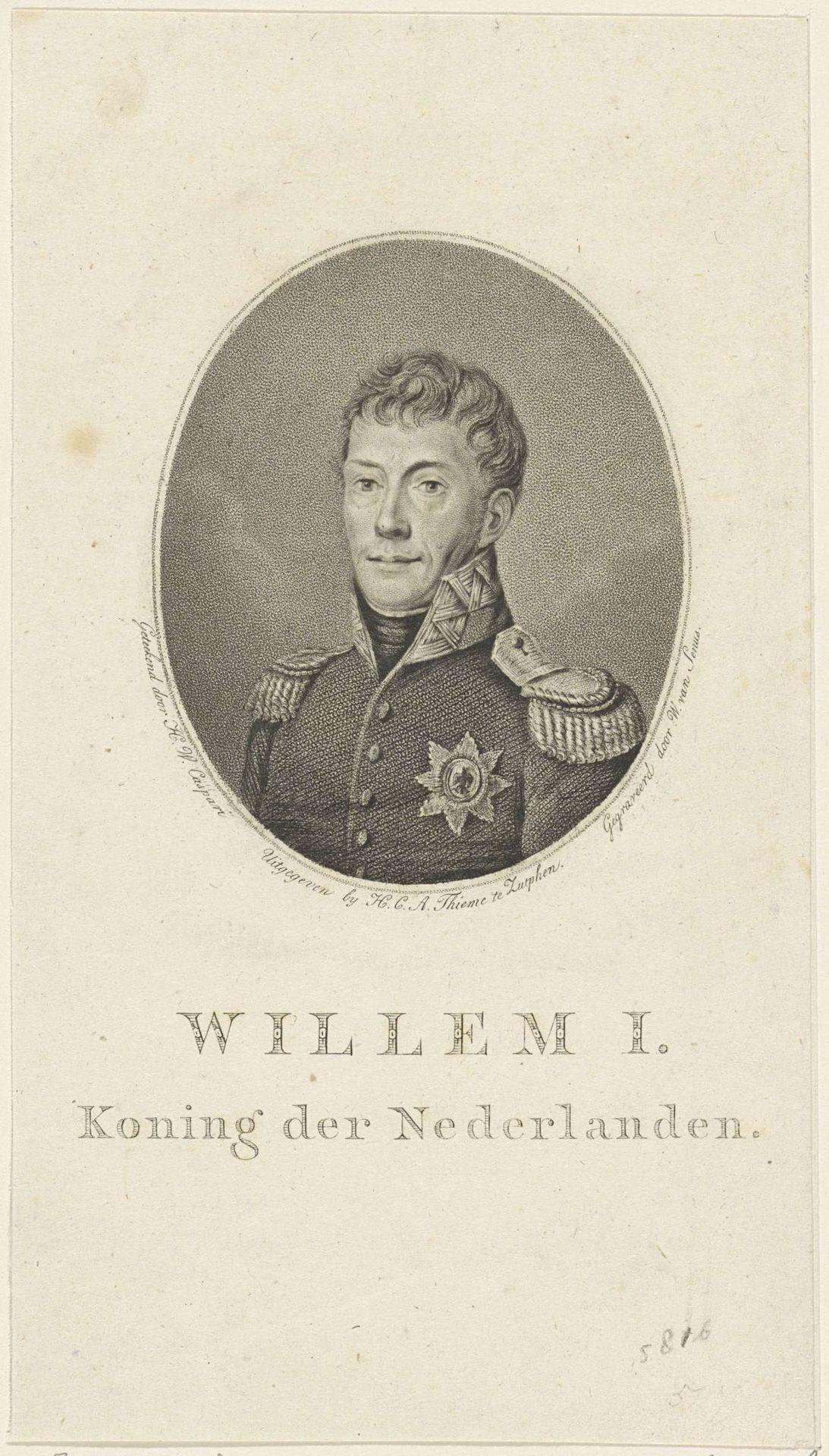
Portret van Willem I Frederik, koning der Nederlanden

Willem van Senus
1773 - 1851Location
RijksmuseumListen to curator's interpretation
Curatorial notes
Editor: Here we have a print of "Portret van Willem I Frederik, koning der Nederlanden," created sometime between 1815 and 1851. The print uses engraving on paper. It seems to capture the subject's stoicism, a sense of royal duty, perhaps? What’s most interesting to you about it? Curator: Well, let's consider the materials. The engraving process itself—the labor involved in meticulously carving that image into a plate, then printing it repeatedly. Who had access to that level of craftsmanship? Who was the audience consuming these images and what power relations are revealed via the consumption of this media. Consider that in relationship to the image: what meanings are embedded in a portrait produced via such a method? Editor: That’s interesting. I hadn't thought about the social implications of the printing process. Does the use of engraving as opposed to another medium indicate something specific about its intended function or audience? Curator: Precisely. Engraving allowed for mass production, circulating the King's image widely. It’s about power and control of representation. Consider how the rise of printmaking also parallels the increasing power of the bourgeoisie. And the material choice becomes inherently political. Were other portraiture options available at that moment, such as painting? Editor: I see, so it's less about individual artistic expression and more about the machinery of image production and its impact on society. Thank you for pointing that out! Curator: Exactly! By examining the material conditions, we gain a deeper understanding of the artwork's historical context and social significance. And that reveals layers of complexity within something seemingly straightforward.