About this artwork
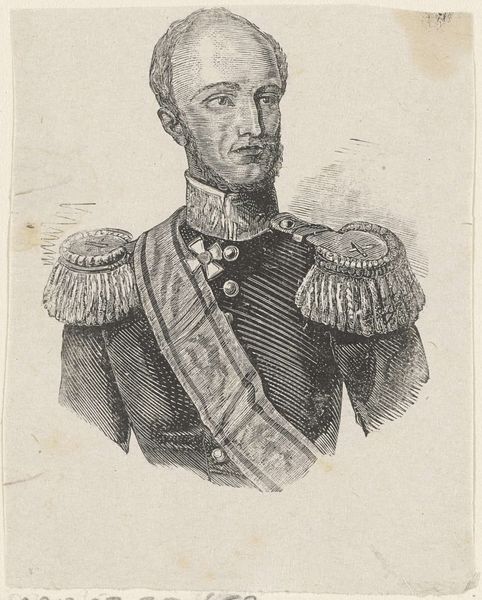
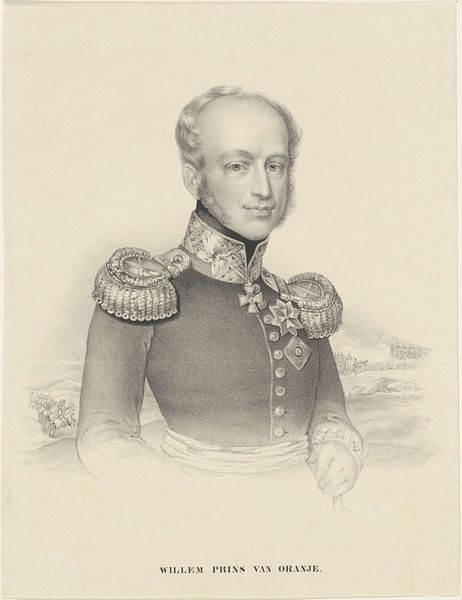
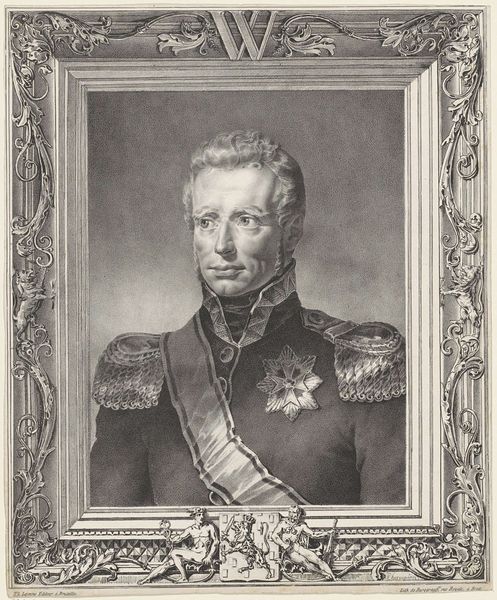
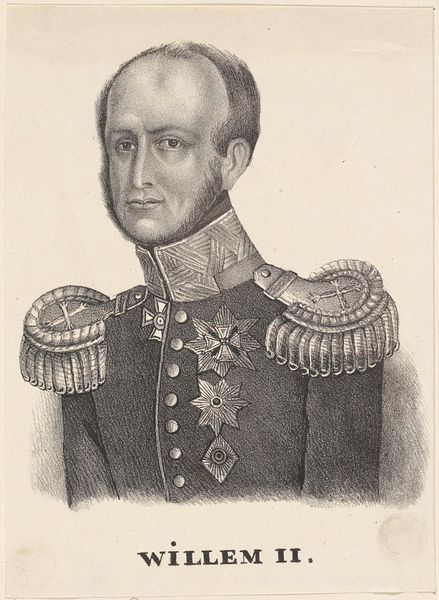
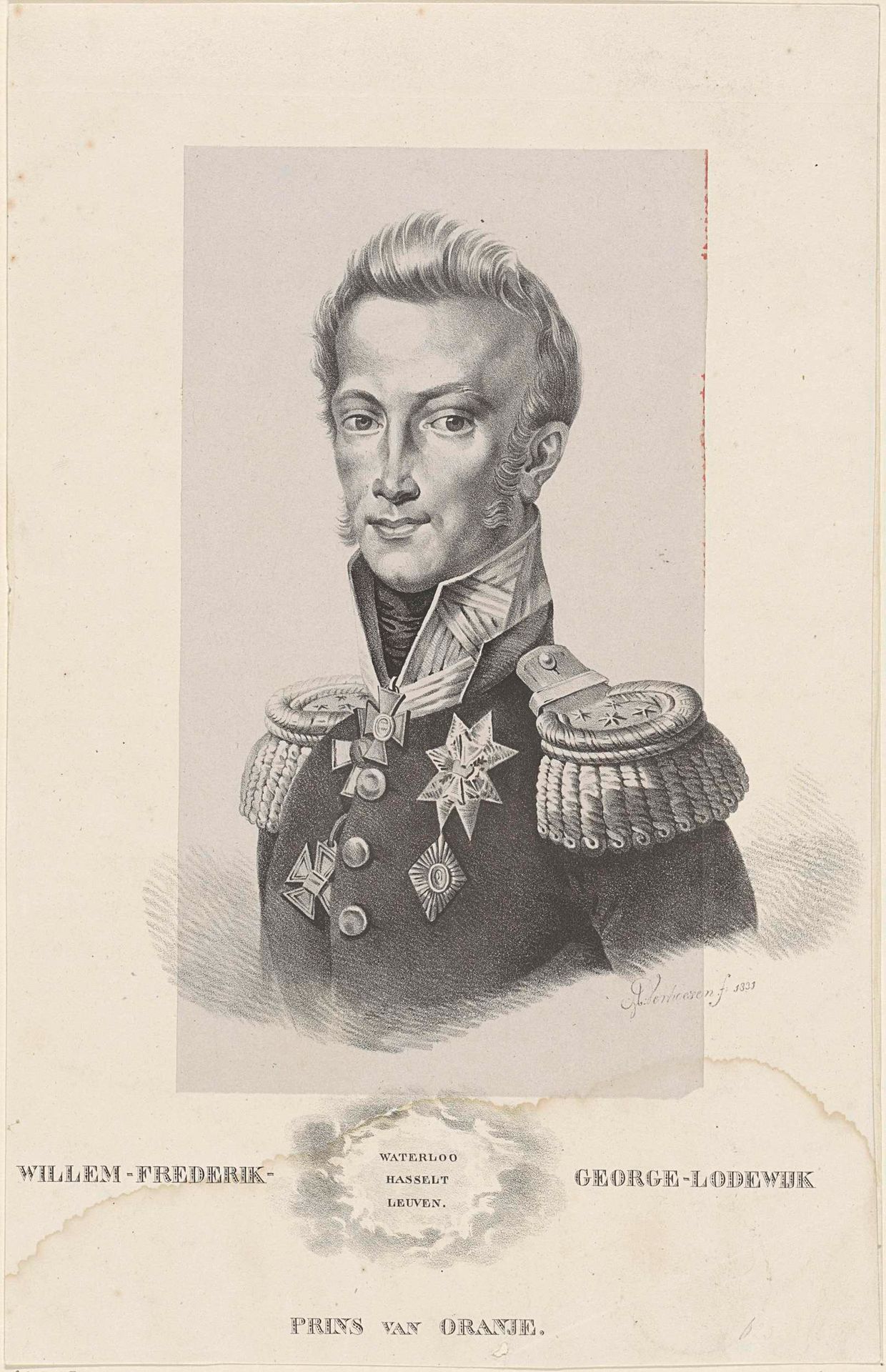
Editor: This drawing by Albertus Verhoesen, "Portrait of William II, King of the Netherlands," dating from 1831, is really striking. It's primarily rendered in pencil, and I’m immediately drawn to the precision in the depiction of his uniform and medals. How should we understand this artwork? Curator: This is interesting for how it employs the then-contemporary Romantic style for the depiction of power. Note the meticulous labor involved in translating regal authority into a reproducible, readily disseminated form like a pencil drawing. Think about how the mass production of images like this could shape public perception. Editor: That's a fascinating angle! So, you're saying the choice of a relatively "humble" material like pencil contrasts with the grandeur it represents? Curator: Precisely. Pencil, a material increasingly accessible thanks to industrialization, makes representation itself more accessible. But consider who controls the means of that representation? The artist, of course, but also the commissioner, the publisher, those who benefit from the continued image of a powerful king. Editor: It almost makes the King seem more human, accessible. But is it genuine, or a carefully constructed image meant for mass consumption? Curator: The drawing's very existence relies on the materials available, and on the social and political conditions that called for such representation. What might this portrait have meant to different segments of society at the time, and how does that understanding alter our appreciation of it today? Editor: I never thought about a pencil drawing being so loaded with context. I'm leaving with a whole new perspective on what portraits can tell us about a society. Curator: Indeed! Looking at art through the lens of its materiality and means of production can unlock deeper meanings and reveal power structures we might otherwise miss.
Portret van Willem II, koning der Nederlanden
1831

Albertus Verhoesen
1806 - 1881Location
RijksmuseumArtwork details
- Medium
- drawing, pencil
- Dimensions
- height 374 mm, width 241 mm
- Location
- Rijksmuseum
- Copyright
- Rijks Museum: Open Domain
Tags
Comments
Share your thoughts
About this artwork
Editor: This drawing by Albertus Verhoesen, "Portrait of William II, King of the Netherlands," dating from 1831, is really striking. It's primarily rendered in pencil, and I’m immediately drawn to the precision in the depiction of his uniform and medals. How should we understand this artwork? Curator: This is interesting for how it employs the then-contemporary Romantic style for the depiction of power. Note the meticulous labor involved in translating regal authority into a reproducible, readily disseminated form like a pencil drawing. Think about how the mass production of images like this could shape public perception. Editor: That's a fascinating angle! So, you're saying the choice of a relatively "humble" material like pencil contrasts with the grandeur it represents? Curator: Precisely. Pencil, a material increasingly accessible thanks to industrialization, makes representation itself more accessible. But consider who controls the means of that representation? The artist, of course, but also the commissioner, the publisher, those who benefit from the continued image of a powerful king. Editor: It almost makes the King seem more human, accessible. But is it genuine, or a carefully constructed image meant for mass consumption? Curator: The drawing's very existence relies on the materials available, and on the social and political conditions that called for such representation. What might this portrait have meant to different segments of society at the time, and how does that understanding alter our appreciation of it today? Editor: I never thought about a pencil drawing being so loaded with context. I'm leaving with a whole new perspective on what portraits can tell us about a society. Curator: Indeed! Looking at art through the lens of its materiality and means of production can unlock deeper meanings and reveal power structures we might otherwise miss.
Comments
Share your thoughts