About this artwork
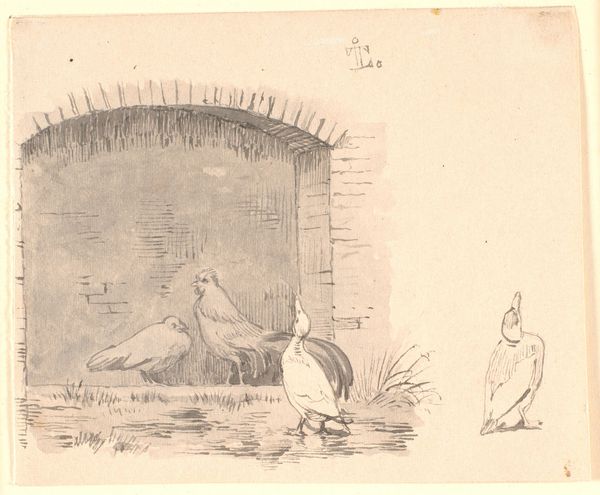
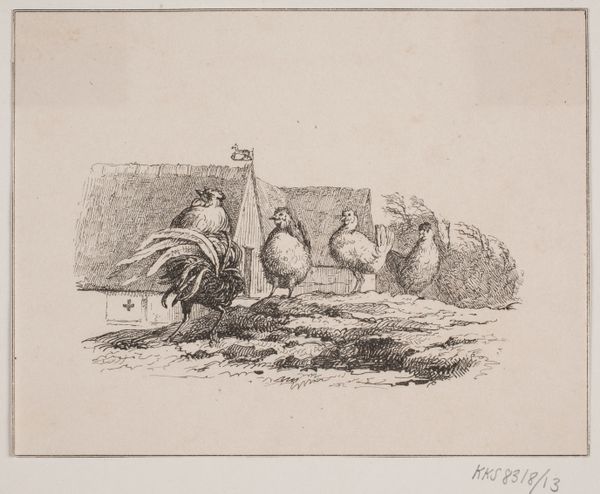
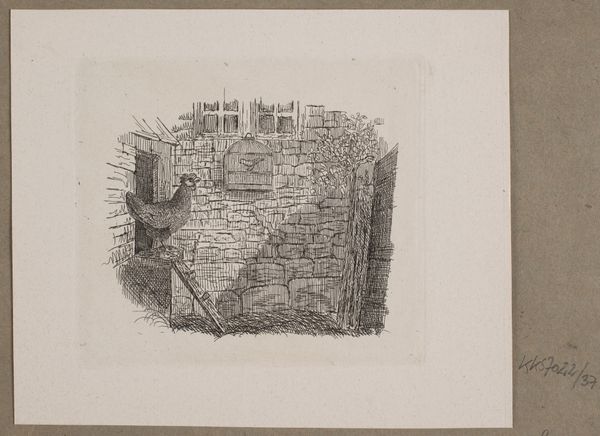
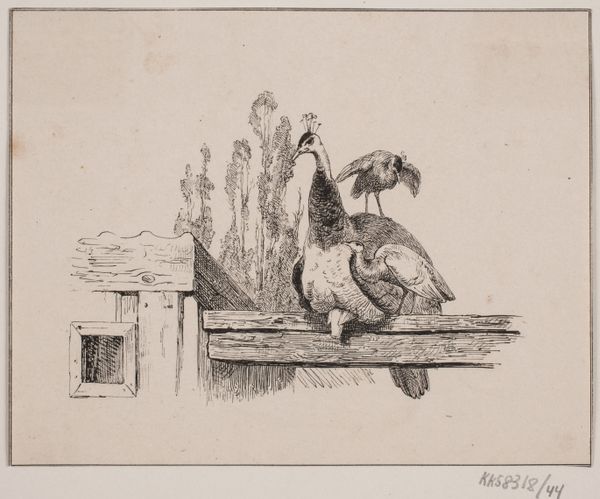
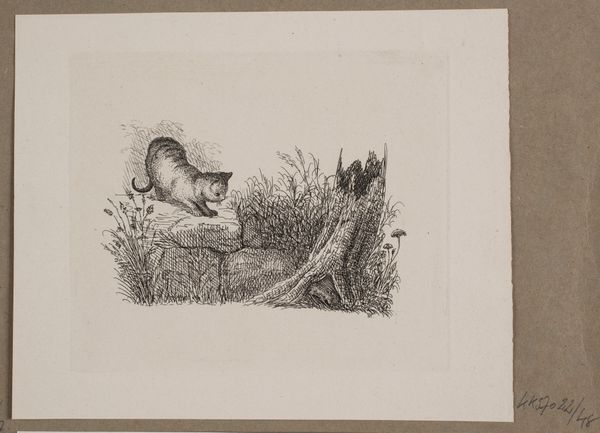
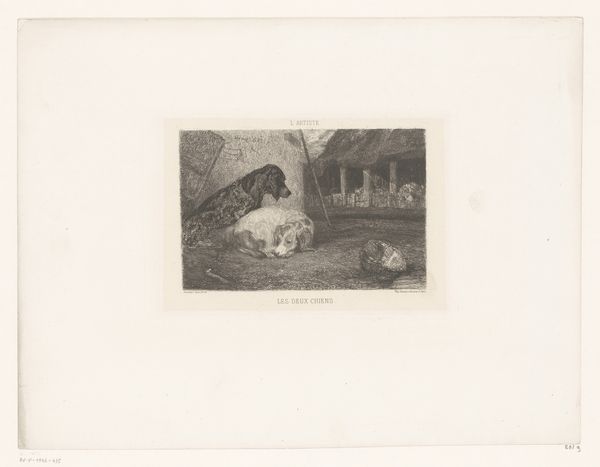
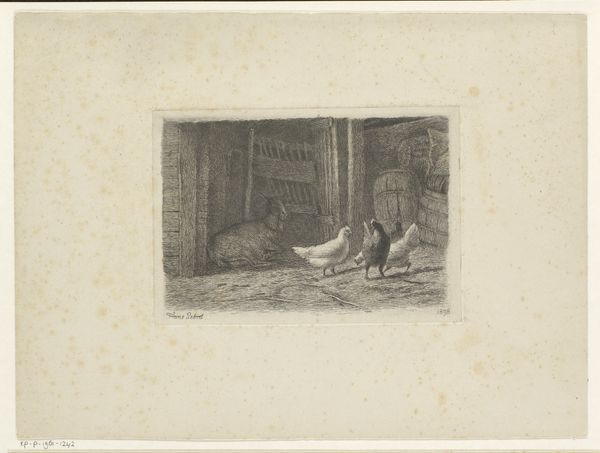
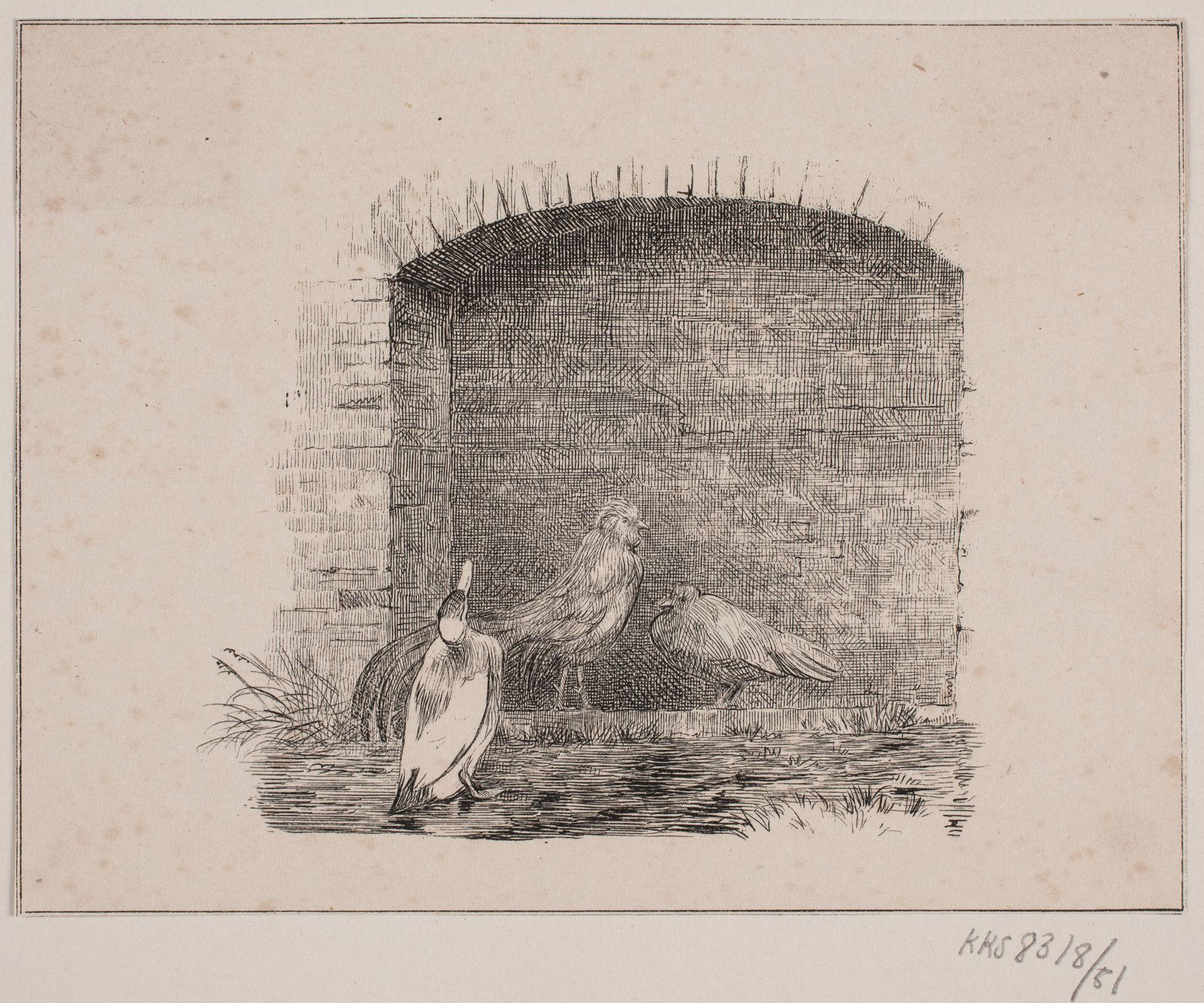
Adolph Kittendorff created this print, "Hønsene og ænderne", which translates as "The Hens and the Ducks," using etching. Made in Denmark, likely in the mid-19th century, this work offers a glimpse into the values of the time. Denmark, a largely rural society then, saw a rise in national romanticism, which idealized country life. Kittendorff, trained at the Royal Danish Academy of Fine Arts, was well-versed in the artistic conventions of his era. However, instead of grand historical scenes, Kittendorff focuses on the everyday, giving dignity to barnyard fowl. This choice might reflect a growing interest in naturalism. The print's small size suggests it was intended for a middle-class audience, perhaps as an affordable artwork. The absence of overt social commentary doesn't mean the artwork is apolitical; the very act of choosing such a subject could subtly challenge the art establishment's traditional hierarchy. Understanding the artist's training, the social context, and the institutional framework helps us appreciate the nuances of even seemingly simple works like this.
Hønsene og ænderne
1845


Artwork details
- Medium
- drawing, lithograph, print, etching, ink
- Dimensions
- 97 mm (height) x 126 mm (width) (bladmaal)
- Location
- SMK - Statens Museum for Kunst
Tags
Comments
Share your thoughts
About this artwork
Adolph Kittendorff created this print, "Hønsene og ænderne", which translates as "The Hens and the Ducks," using etching. Made in Denmark, likely in the mid-19th century, this work offers a glimpse into the values of the time. Denmark, a largely rural society then, saw a rise in national romanticism, which idealized country life. Kittendorff, trained at the Royal Danish Academy of Fine Arts, was well-versed in the artistic conventions of his era. However, instead of grand historical scenes, Kittendorff focuses on the everyday, giving dignity to barnyard fowl. This choice might reflect a growing interest in naturalism. The print's small size suggests it was intended for a middle-class audience, perhaps as an affordable artwork. The absence of overt social commentary doesn't mean the artwork is apolitical; the very act of choosing such a subject could subtly challenge the art establishment's traditional hierarchy. Understanding the artist's training, the social context, and the institutional framework helps us appreciate the nuances of even seemingly simple works like this.
Comments
Share your thoughts