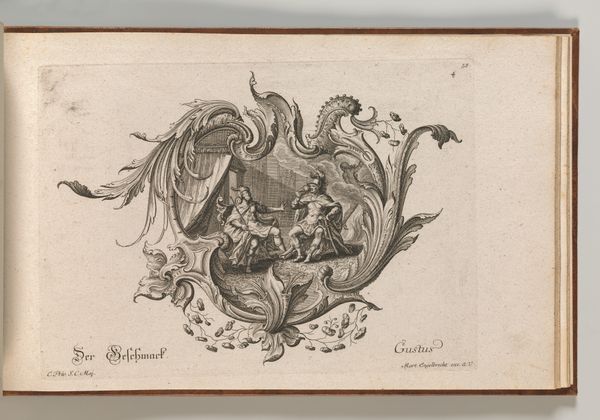
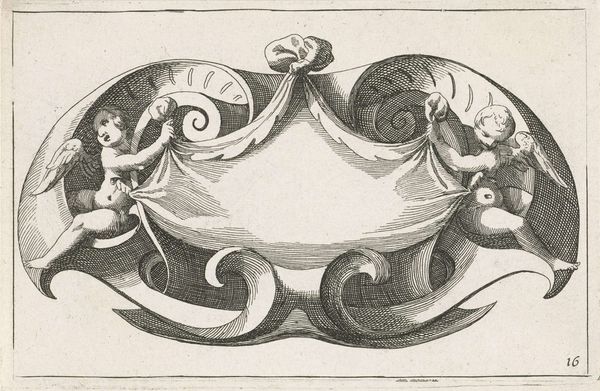
print, engraving
#
baroque
# print
#
pen illustration
#
old engraving style
#
line
#
history-painting
#
engraving
Dimensions: height 223 mm, width 302 mm
Copyright: Rijks Museum: Open Domain
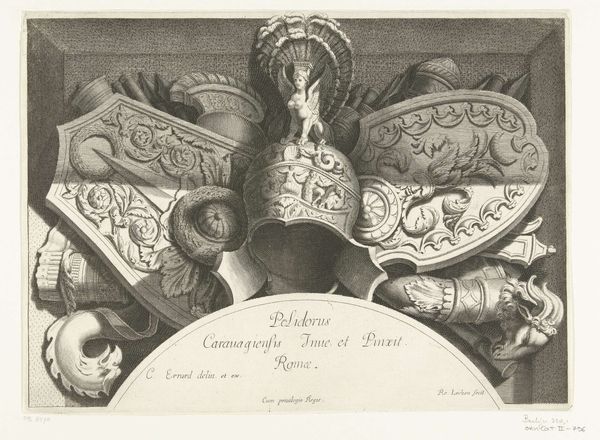
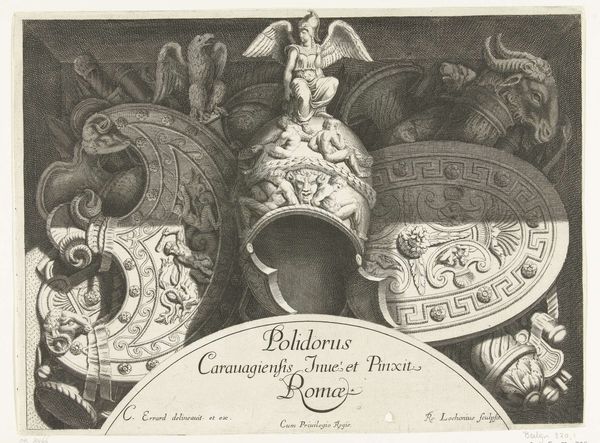
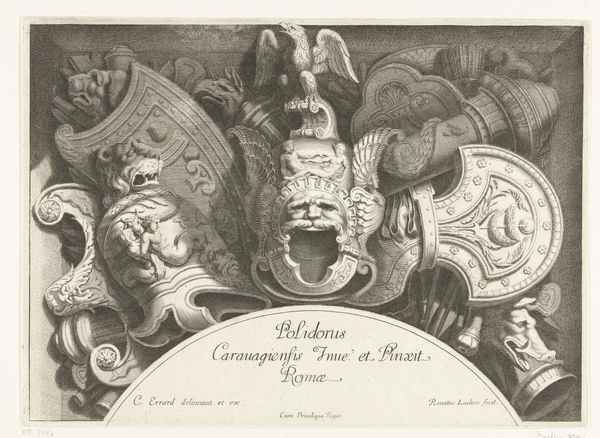
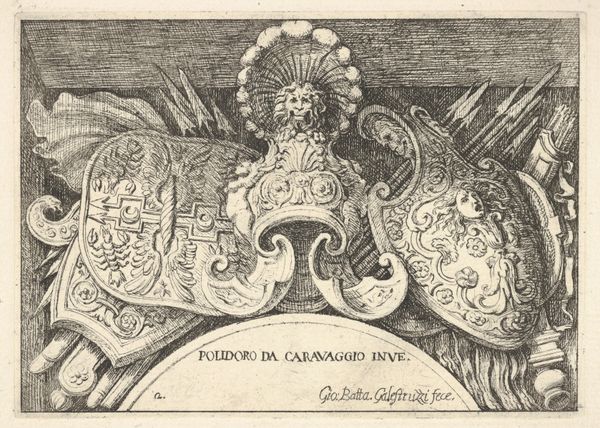
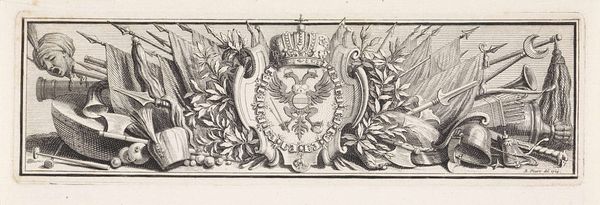
Georges Tournier created this print, "Helm bekroond met leeuw," using etching—a process where lines are incised into a metal plate with acid, then inked and printed. Unlike traditional drawing, etching allows for intricate detail and tonal variation through controlled chemical action. The print depicts a helmet adorned with a lion, flanked by shields and other decorative elements. Tournier, or the artist he copied, skillfully used line work to create the illusion of depth and texture, giving the impression of three-dimensional objects on a two-dimensional surface. Etching, as a repeatable process, democratized image-making in a way, making art more accessible beyond painting. The labor is divided, with the designer creating the image, the etcher transferring it to the plate, and the printer producing the final work. In this way, the print reflects the rise of commercial image production during this period. Considering the context of its creation helps us understand how the artwork blurs the lines between fine art and craft.
Comments
No comments
Be the first to comment and join the conversation on the ultimate creative platform.
 Collect
 React
React Comment
More like this