1604 - 1670
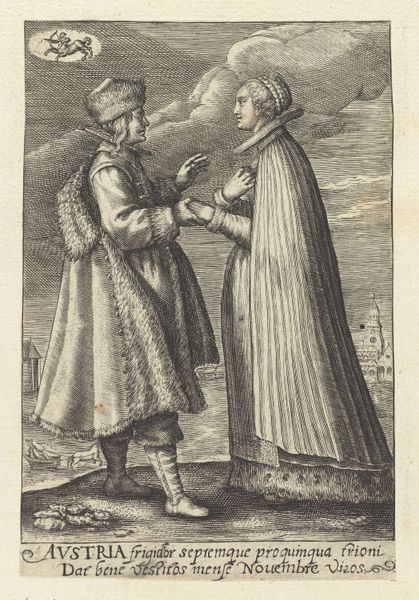
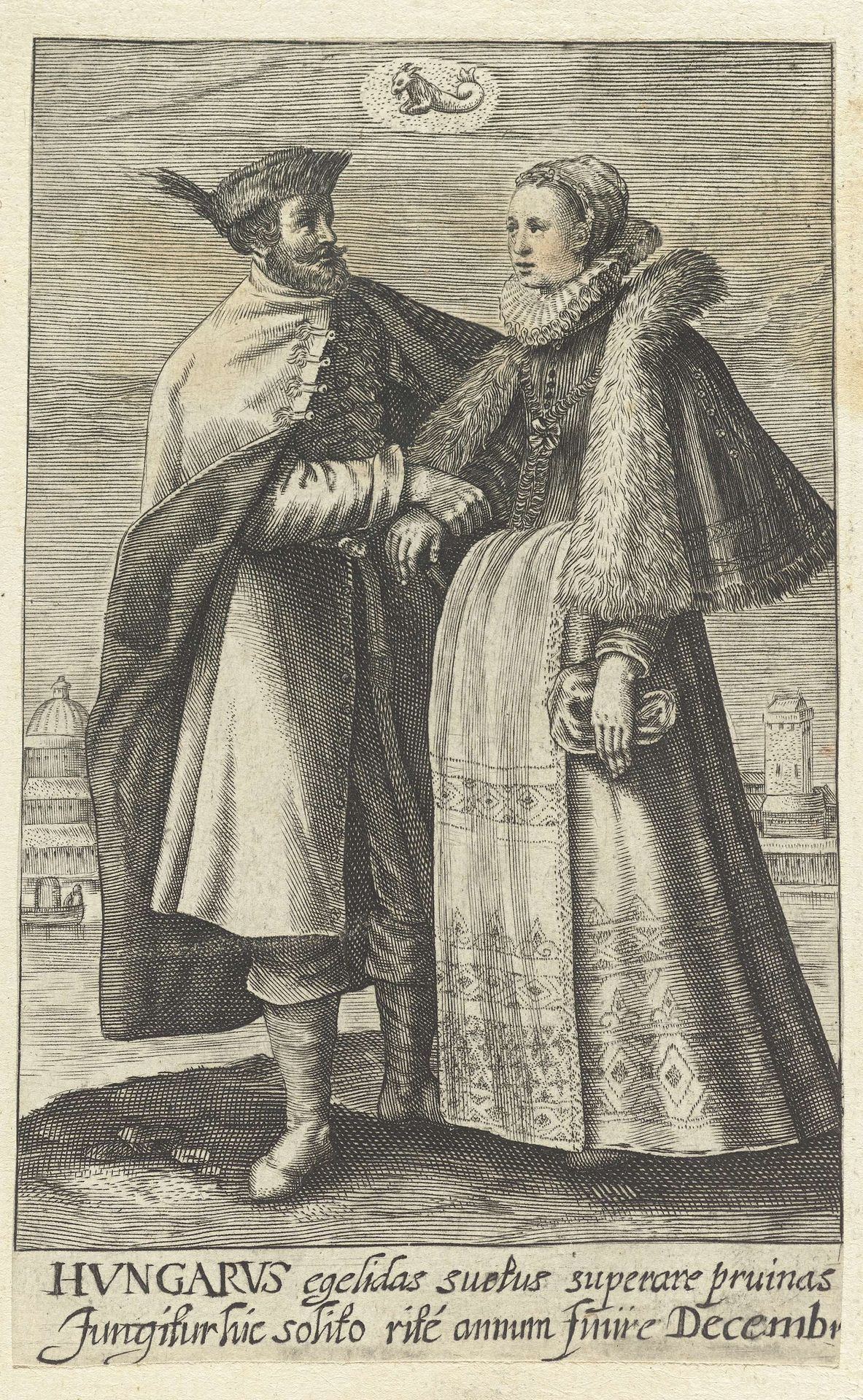
December: paar uit Hongarije

Crispijn van de (II) Passe
1597 - 1670Location
RijksmuseumListen to curator's interpretation
Curatorial notes
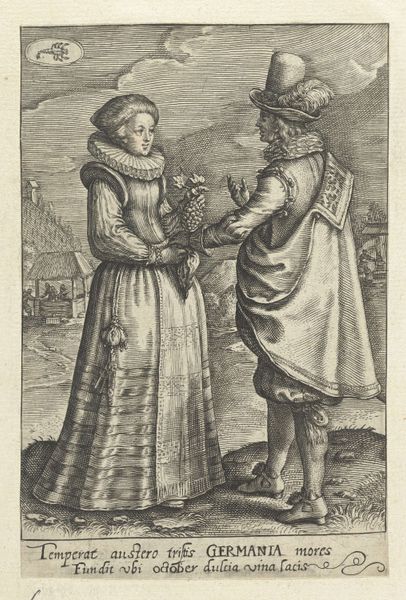
This engraving, "December: Pair from Hungary," was created by Crispijn van de Passe the Younger in the Netherlands, sometime around the early 17th century. It offers a glimpse into the era's fascination with cultural difference, and the commercial market for images of foreign people. The print depicts a well-to-do Hungarian couple, likely nobility, dressed in what were considered their distinctive national costumes. Note how the artist meticulously renders the details of their garments, such as the fur trim and the intricate embroidery, all intended to convey an authentic image of Hungarian identity. In the background, a generic European city alludes to the international context for these images. Prints like these catered to a growing appetite for knowledge about the wider world, but we need to be aware that these images were also shaped by the cultural biases and limited understandings of the Dutch printmakers and their audiences. To understand this image better, one might research the history of fashion, Dutch printmaking, and early modern European encounters with other cultures. In doing so, we acknowledge that meaning in art is not fixed, but shaped by social and institutional forces.