c. 18th century
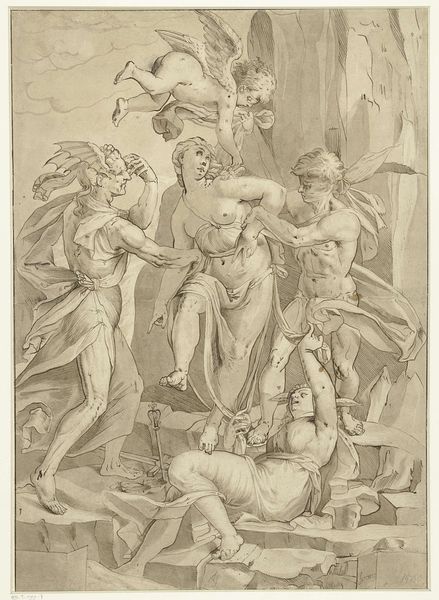
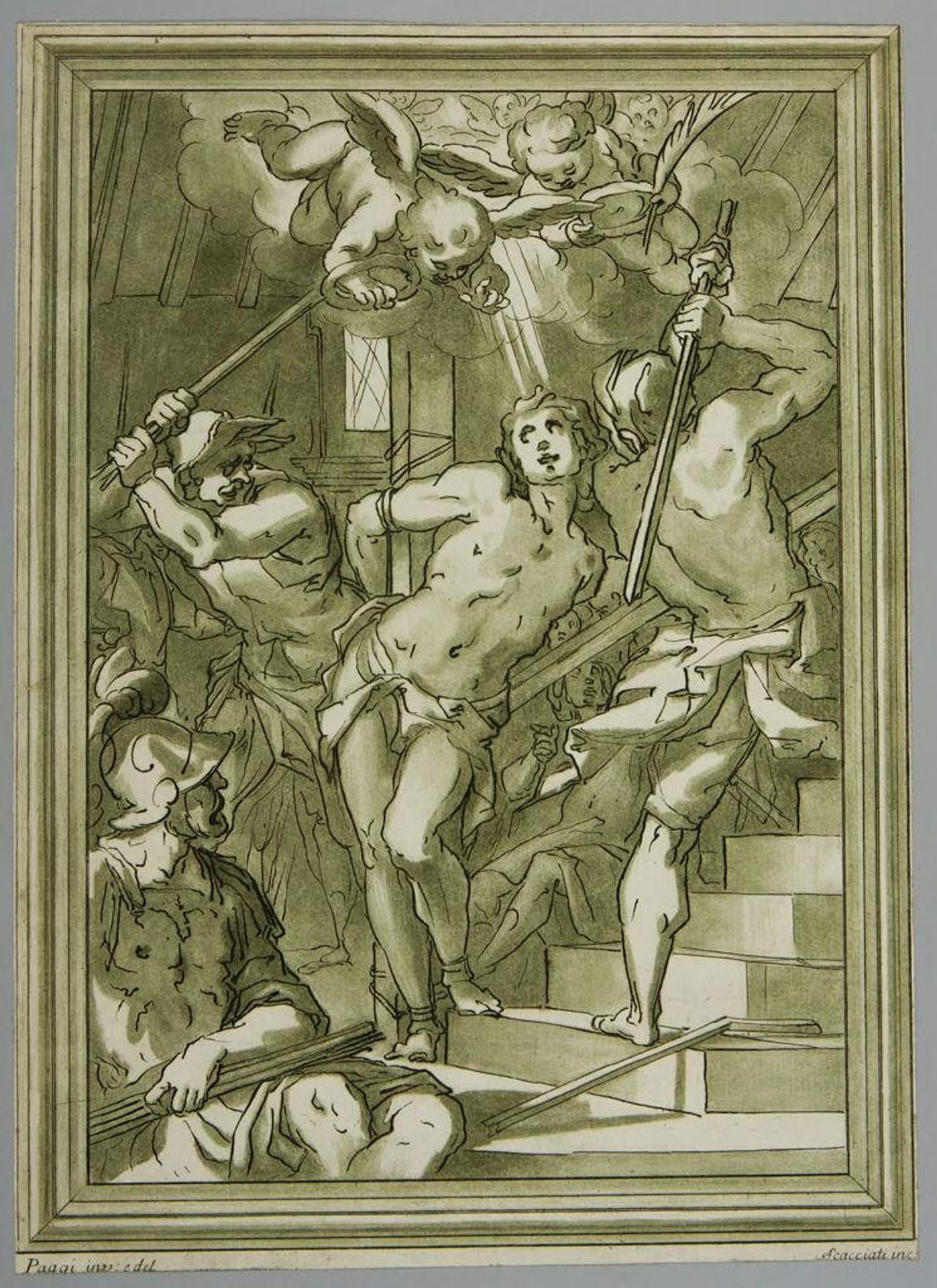
Flagellation


Listen to curator's interpretation
Curatorial notes
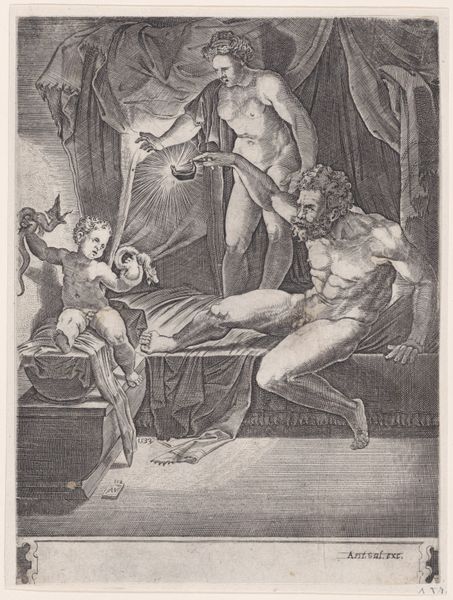
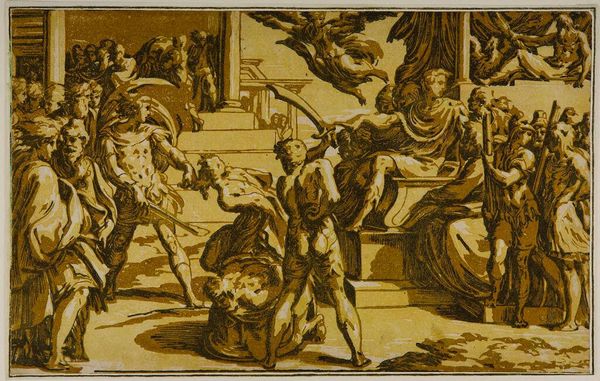
Editor: This is Andrea Scacciati's "Flagellation," and the museum dates it to around the 18th century. It seems to be done with ink wash and depicts a violent scene. What stands out to you when you view it? Curator: The violence is overt, yes, but let’s consider the context. Scacciati, working within a heavily religious society, is participating in a long history of depicting Christ’s suffering. How does this imagery serve as a form of social control? Editor: Social control? I hadn't considered that. Curator: The depiction of suffering, especially divinely sanctioned suffering, normalizes pain and obedience. Note the cherubs above, bathed in light. It reinforces a hierarchical structure, doesn’t it? Editor: So it’s not just a religious scene, but a reinforcement of power? I see that now. Thanks! Curator: Precisely. And by recognizing this, we can better understand the artwork's role within its historical and social landscape.