About this artwork
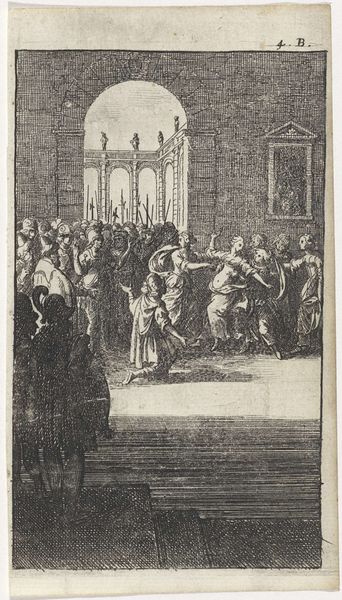
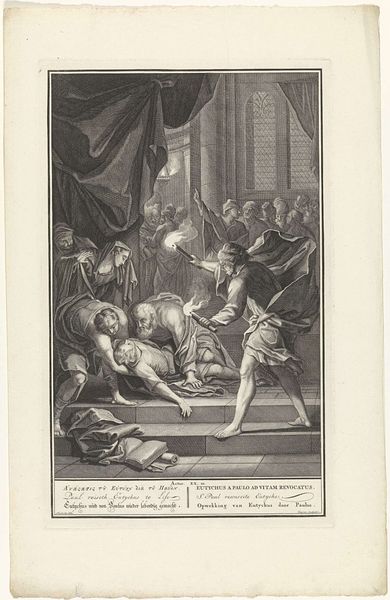
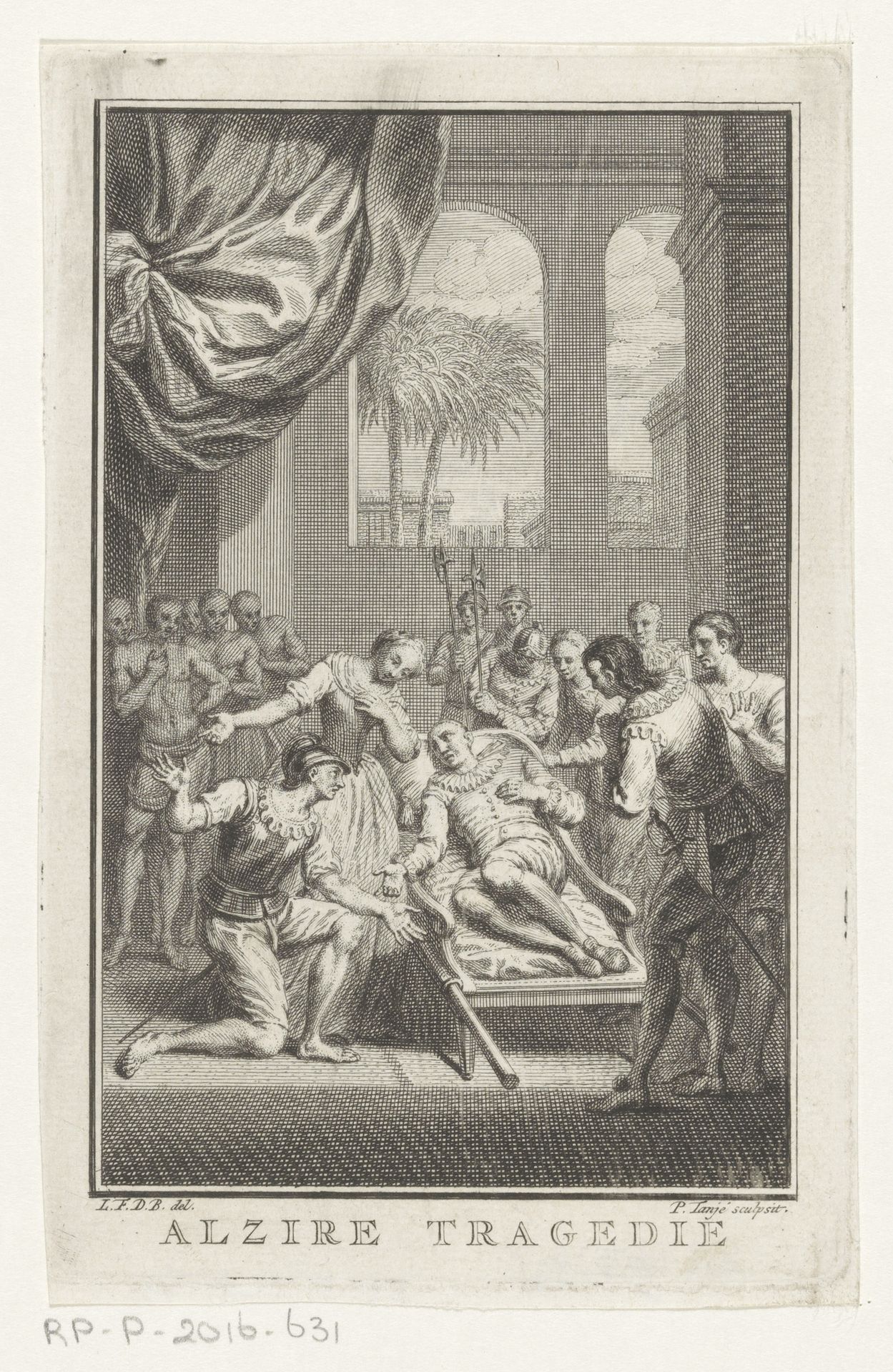
Pieter Tanjé created this engraving, titled 'Man on Deathbed', in the 18th century. We see a man lying on what looks like a simple stretcher, surrounded by concerned figures. The palm tree visible through the window, standing tall against the sky, is no mere backdrop. It has ancient roots as a symbol of victory, eternal life, and transcendence. Echoes of this symbolism can be found in ancient Roman art, where palm fronds celebrated military triumph, and in early Christian iconography, where they represented the faithful's victory over death. Observe how the gesture of support, with figures reaching out to the dying man, mirrors depictions of mourning found across cultures and eras, from ancient Greek funerary steles to Renaissance paintings of the Deposition. These gestures tap into our collective memory, evoking a primal understanding of loss and compassion. The image powerfully engages viewers on a deep, subconscious level. Like a restless spirit, the palm has resurfaced, evolved, and taken on new meanings in different historical contexts. The symbol, like the human spirit, persists, adapted to new narratives yet forever tethered to its ancient origins.

Artwork details
- Dimensions
- height 151 mm, width 99 mm
- Location
- Rijksmuseum
- Copyright
- Rijks Museum: Open Domain
Comments
Be the first to share your thoughts about this work.
About this artwork
Pieter Tanjé created this engraving, titled 'Man on Deathbed', in the 18th century. We see a man lying on what looks like a simple stretcher, surrounded by concerned figures. The palm tree visible through the window, standing tall against the sky, is no mere backdrop. It has ancient roots as a symbol of victory, eternal life, and transcendence. Echoes of this symbolism can be found in ancient Roman art, where palm fronds celebrated military triumph, and in early Christian iconography, where they represented the faithful's victory over death. Observe how the gesture of support, with figures reaching out to the dying man, mirrors depictions of mourning found across cultures and eras, from ancient Greek funerary steles to Renaissance paintings of the Deposition. These gestures tap into our collective memory, evoking a primal understanding of loss and compassion. The image powerfully engages viewers on a deep, subconscious level. Like a restless spirit, the palm has resurfaced, evolved, and taken on new meanings in different historical contexts. The symbol, like the human spirit, persists, adapted to new narratives yet forever tethered to its ancient origins.
Comments
Be the first to share your thoughts about this work.