1936
Sofa


Listen to curator's interpretation
Curatorial notes
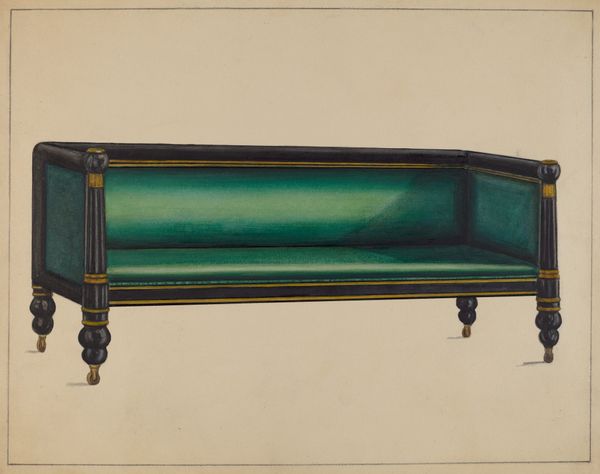
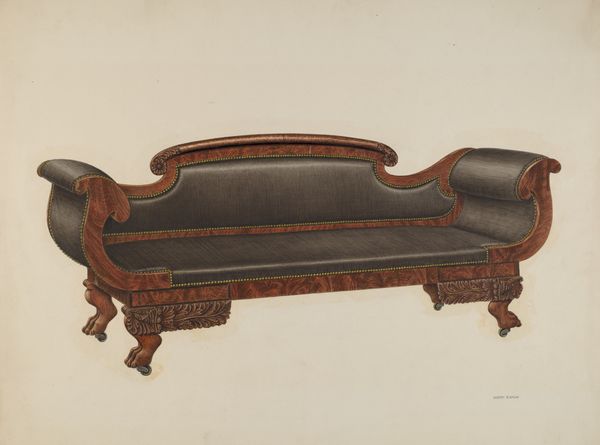
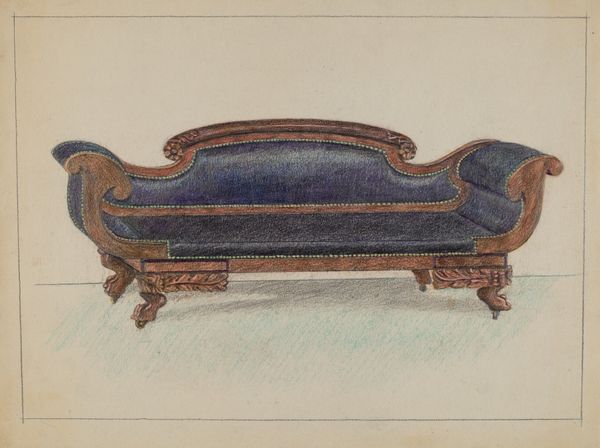
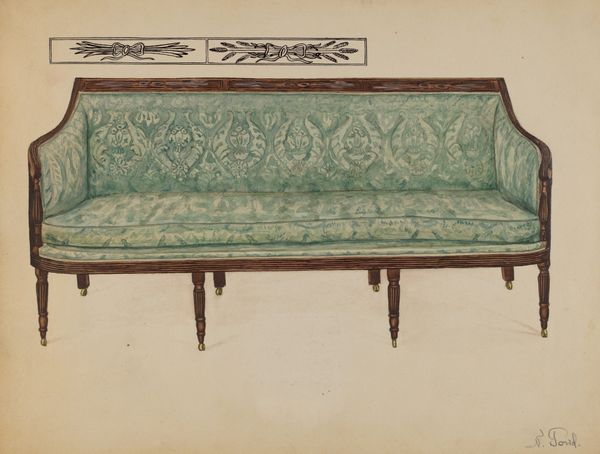
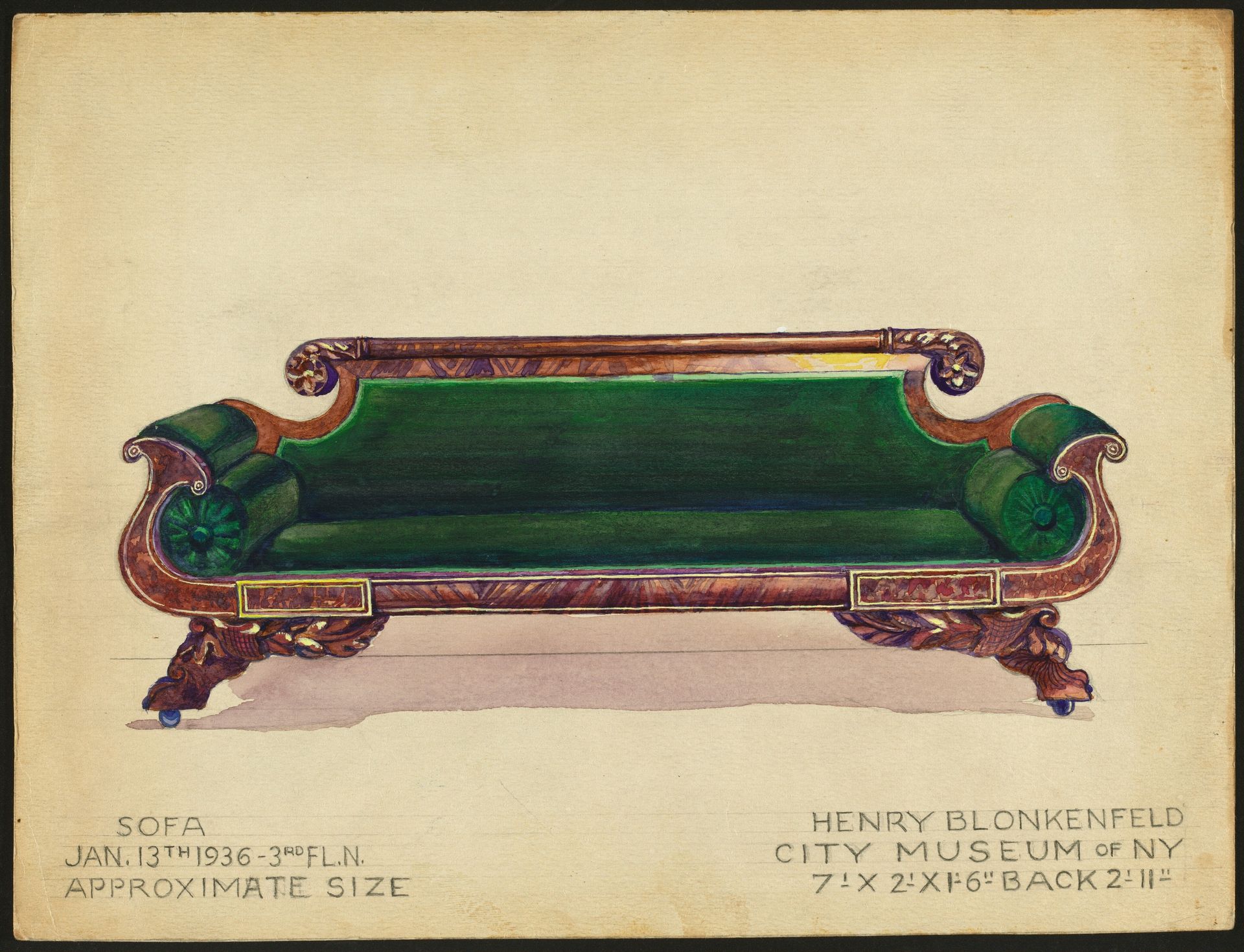
Curator: Standing before us is Henry Blonkenfeld's "Sofa," a drawing from January 13th, 1936, rendered in coloured pencil. It appears to be a design schematic for a piece of furniture. Editor: My first impression is one of slightly faded grandeur. The emerald green velvet contrasts beautifully with the dark, almost mahogany-colored wood, but there's a certain melancholy to it, as if it belonged to a time long past. Curator: I agree. It evokes a strong sense of nostalgia. Blonkenfeld's drawing, beyond just illustrating the sofa itself, speaks to the era's design sensibilities. Consider the weightiness, the opulence even, of the carving and the luxurious fabric. These elements, understood within their historical context, were tied to a specific aspiration of refinement. This was during the Great Depression. Did luxury like this sofa become out of reach for ordinary citizens? Editor: Absolutely. The positioning of this design drawing within the "City Museum of NY," reveals a tension—it speaks to both aspiration and potential exclusion. The design, rendered with such care, hints at the power structures that shaped consumption, display, and, inevitably, class division within urban life. One wonders how many people even sat on these types of couches in 1936. It also begs the question of where it belongs – on display in an archive of design or on a stage set depicting the luxury of a past era? Curator: A really compelling point. It makes one question the very act of preservation. By framing this object as a 'drawing' of a sofa rather than 'the sofa', do we flatten its political relevance and confine its value solely to aesthetics or design history? Shouldn’t we also consider its social biography? Editor: Precisely! Thinking through these designs allow us to see the tensions and complexities of 1930s America and perhaps also understand better who it was intended for. Curator: Understanding it also provides an opportunity to challenge some stereotypes around furniture design, linking the practice of creating what we sit on or lie on directly to our history. Editor: Absolutely. That connection brings design to life!