About this artwork
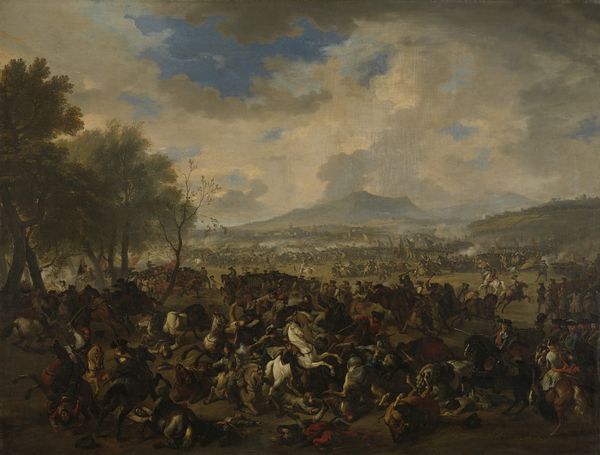
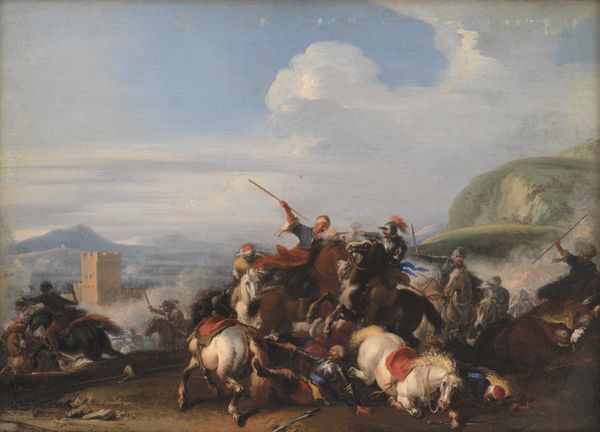
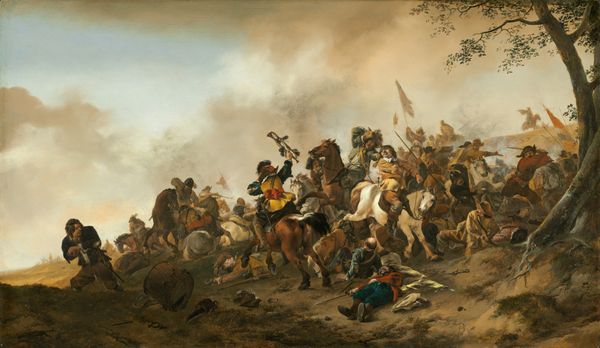
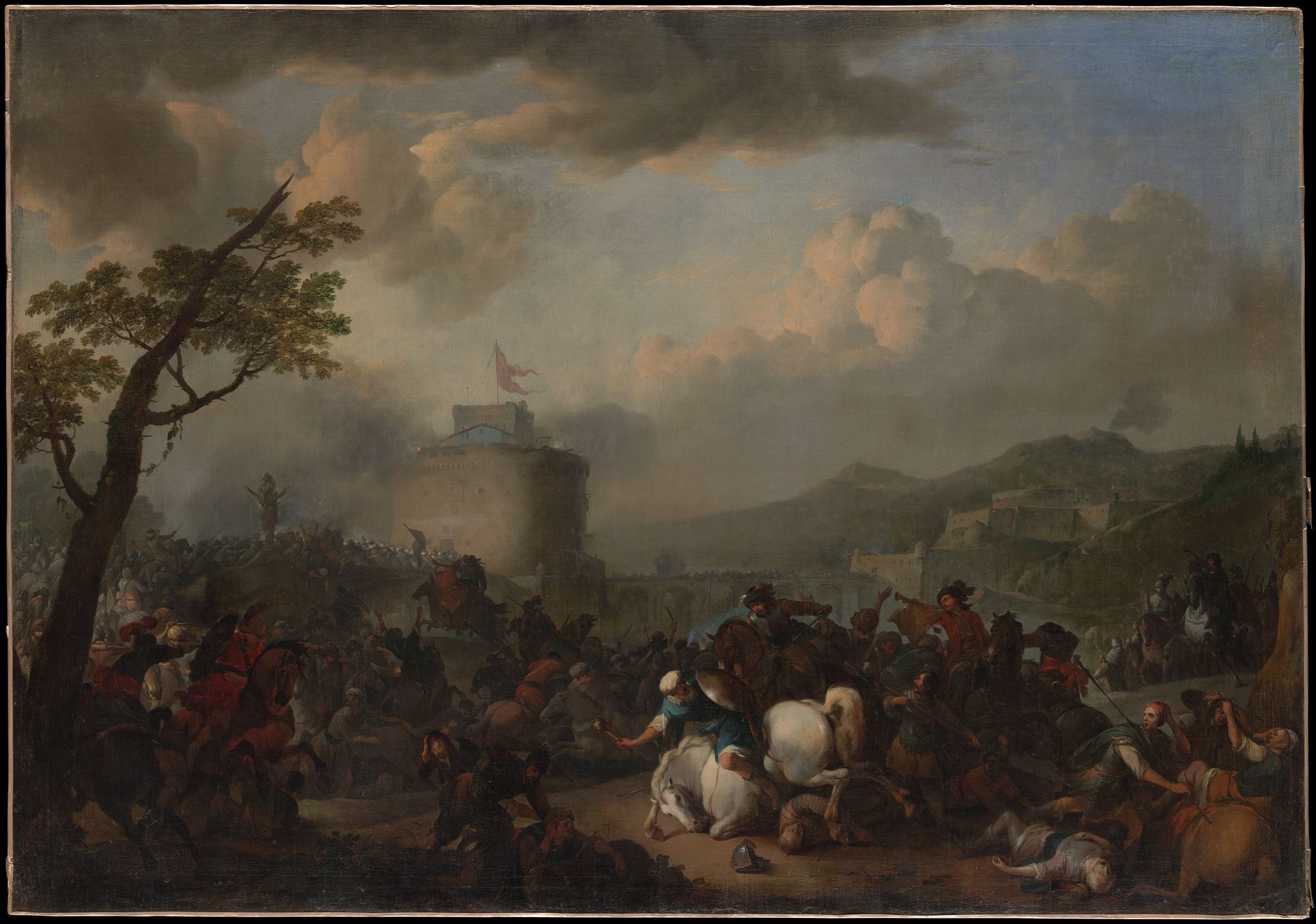
Johannes Lingelbach created "Battle Scene" during the Dutch Golden Age, a period marked by both immense artistic achievement and the brutal realities of war and colonial expansion. Lingelbach, who spent considerable time in Rome, brings an Italianate sensibility to a subject matter that was both common and fraught. The painting presents a chaotic melee of soldiers, horses, and fallen bodies set against a fortified structure. Battle scenes like this one can seem to glorify military conflict, yet they often obscure the complex power dynamics inherent in warfare. Who are these combatants? What are they fighting for? And who benefits from their struggle? Lingelbach’s work invites us to consider how the spectacle of battle masks the suffering and loss experienced by those caught in its throes. Does this painting serve as a heroic narrative, or does it hint at the futility and human cost of conflict?
Battle Scene
1671

Johannes Lingelbach
1622 - 1674
The Metropolitan Museum of Art
Metropolitan Museum of Art, New York, NYArtwork details
- Medium
- painting, oil-paint
- Dimensions
- 44 3/8 x 63 1/4 in. (112.7 x 160.7 cm)
- Location
- Metropolitan Museum of Art, New York, NY
- Copyright
- Public Domain
Tags
Comments
Share your thoughts
About this artwork
Johannes Lingelbach created "Battle Scene" during the Dutch Golden Age, a period marked by both immense artistic achievement and the brutal realities of war and colonial expansion. Lingelbach, who spent considerable time in Rome, brings an Italianate sensibility to a subject matter that was both common and fraught. The painting presents a chaotic melee of soldiers, horses, and fallen bodies set against a fortified structure. Battle scenes like this one can seem to glorify military conflict, yet they often obscure the complex power dynamics inherent in warfare. Who are these combatants? What are they fighting for? And who benefits from their struggle? Lingelbach’s work invites us to consider how the spectacle of battle masks the suffering and loss experienced by those caught in its throes. Does this painting serve as a heroic narrative, or does it hint at the futility and human cost of conflict?
Comments
Share your thoughts