Dimensions: height 84 mm, width 51 mm
Copyright: Rijks Museum: Open Domain
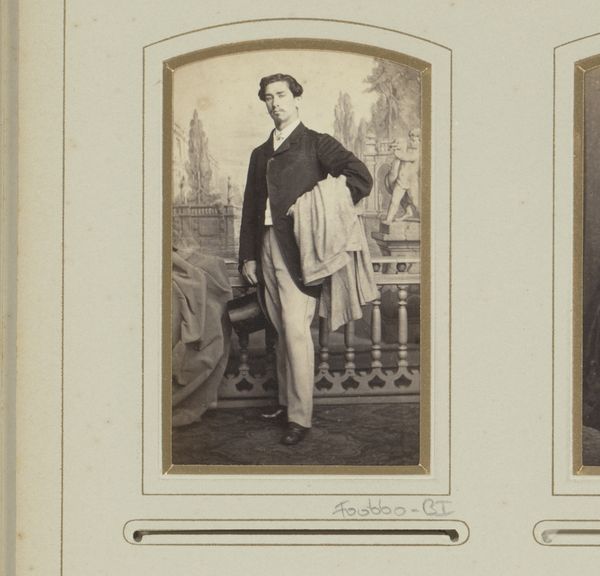
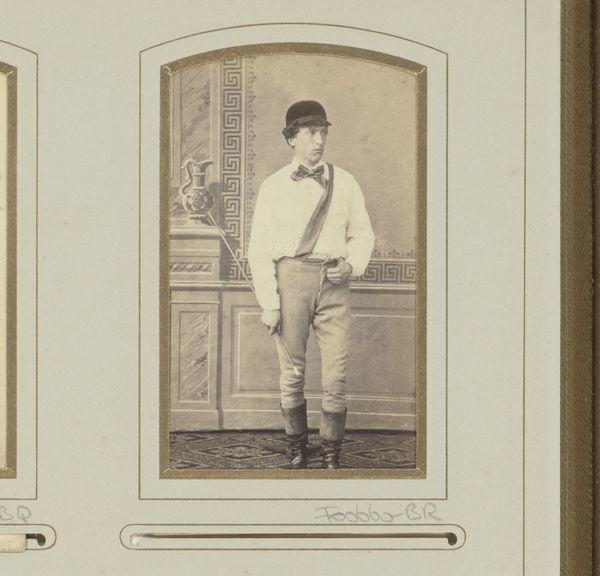
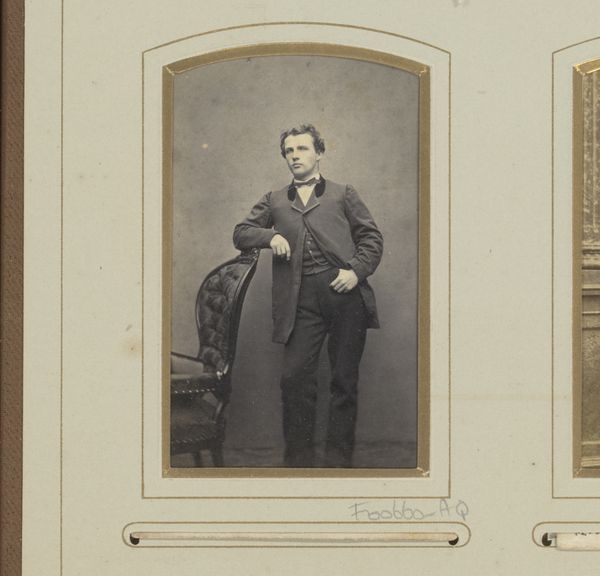
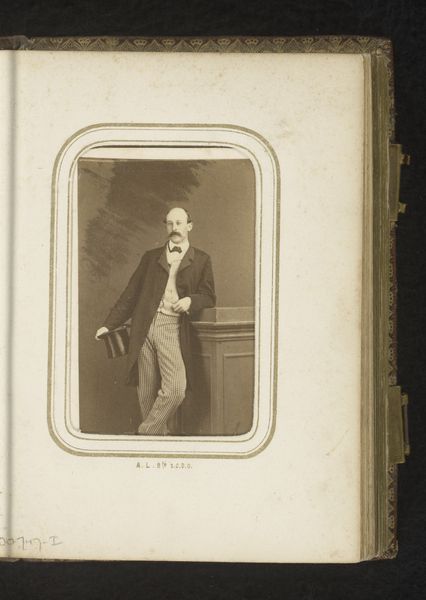
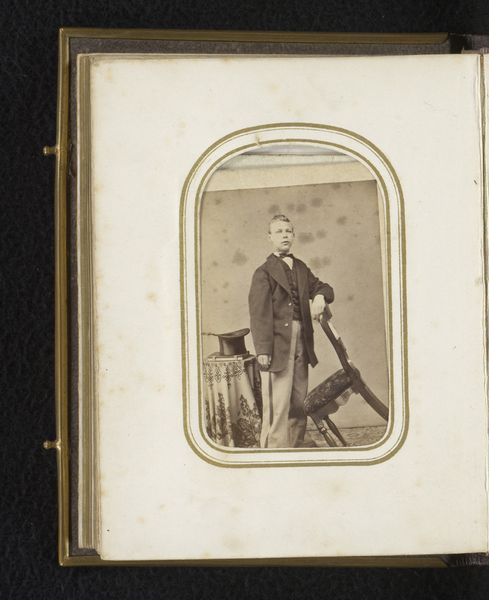
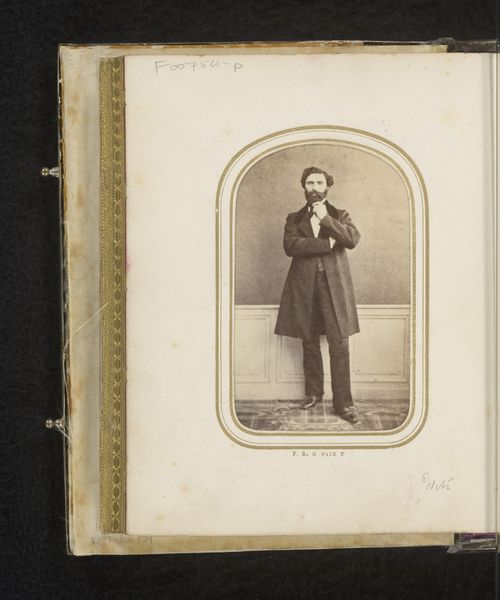
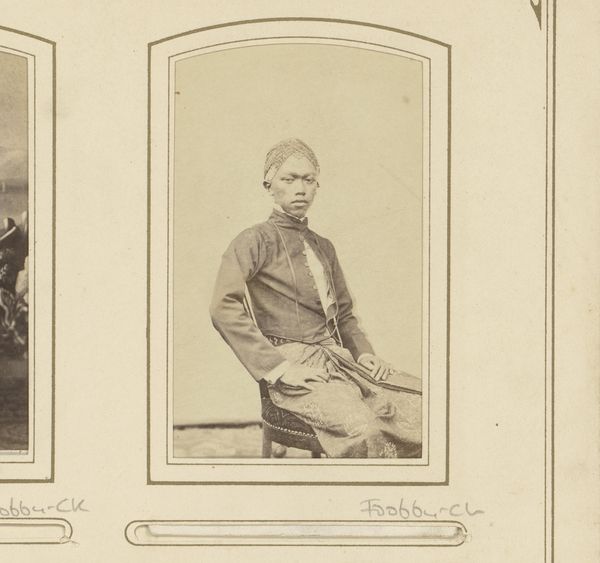
Editor: Here we have “Portret van een jonge man met hoed en fluit, zittend op een zuil,” or, “Portrait of a Young Man with Hat and Flute, Sitting on a Column,” a gelatin-silver print from between 1850 and 1900, attributed to Auguste Blanche. The young man, dressed quite formally, looks dreamily off into the distance. What stands out to you? Curator: The performative nature of this realism strikes me. He is both himself and an archetype. Note how the "column" serves more as a stage prop than a structural element. Think about the burgeoning middle class at this time and their aspirations. The portrait signifies upward mobility and perhaps even artistic leanings suggested by the flute. Does this resonate with other portraiture of the era? Editor: That's fascinating, I hadn't considered it as a performative act. Many portraits of this era appear to have serious sitters, this one with his gaze upward and slight smile seems much more whimsical and approachable. Do you think it's his class that allows him to be this way? Curator: Potentially, class plays a role, certainly. The way we use and consume images plays a pivotal role in shaping class consciousness. Consider the burgeoning photographic industry and how this makes portraits affordable for a wider range of people who aspire to a new level of societal standing. The deliberate "realism" here crafts a relatable persona. Editor: So the proliferation of photography enables this democratization of portraiture, but still plays into constructing and reflecting social class aspirations? Curator: Exactly. How the portrait operates in the public sphere—displayed, exchanged, circulated—amplifies these meanings and aspirations. What new questions about its social function does that open for you? Editor: I'm left wondering, if it’s a performative act for social mobility, how “real” can such an image truly be? Thank you. Curator: Indeed. Reflecting on the tensions between realism, performance, and societal aspirations embedded within this portrait has opened my eyes to deeper layers within such seemingly simple images.
Comments
No comments
Be the first to comment and join the conversation on the ultimate creative platform.
 Collect
 React
React Comment
More like this