1778
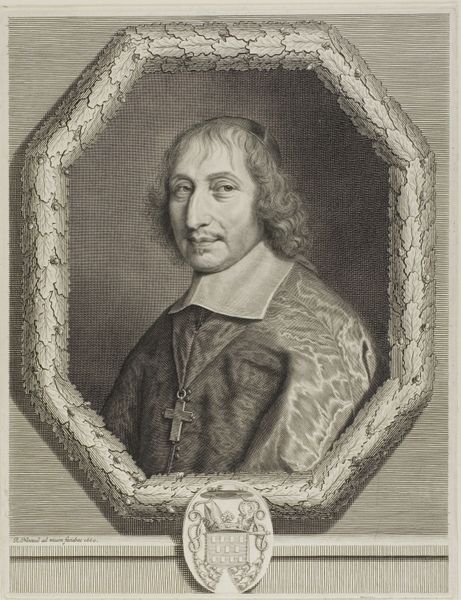
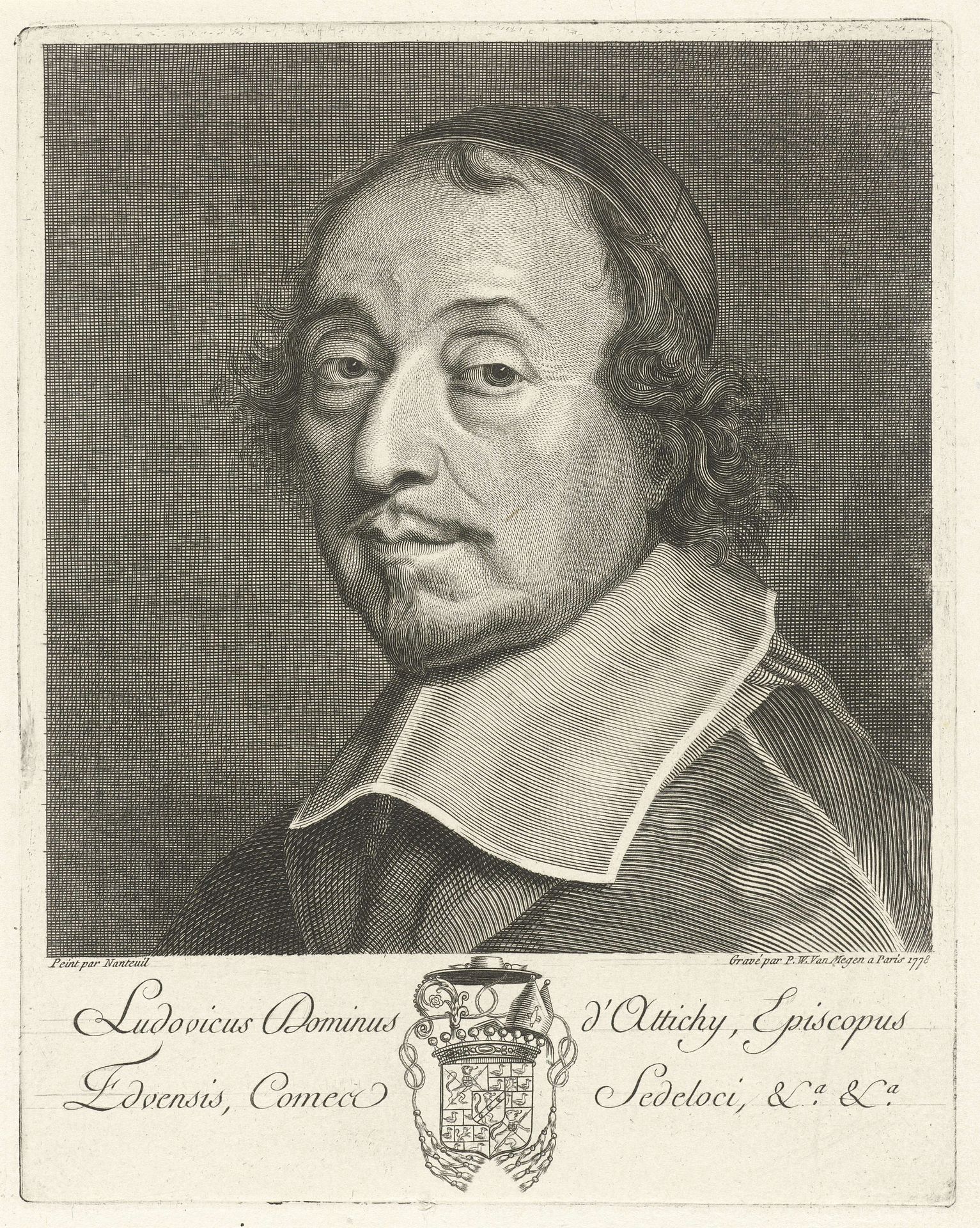
Portret van Louis Doni d'Attichy

Pieter Willem van Megen
1750 - 1785Location
RijksmuseumListen to curator's interpretation
Curatorial notes
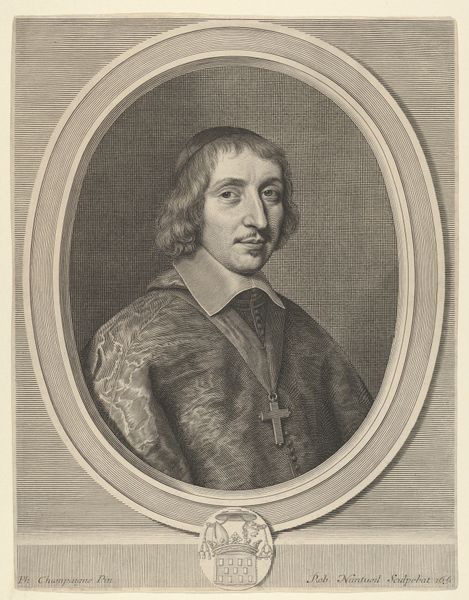
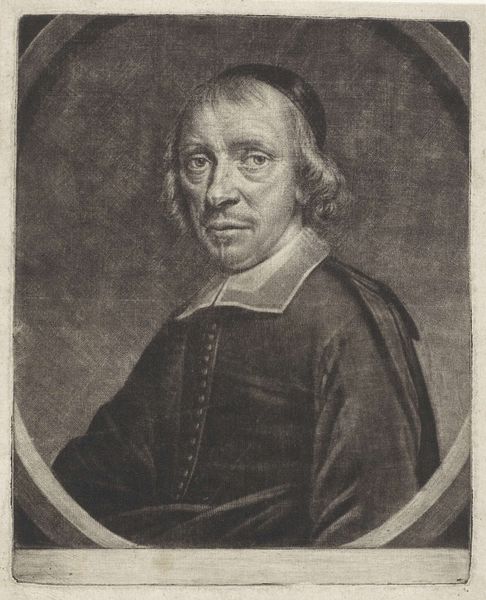
Curator: This engraving, dating back to 1778, depicts "Portret van Louis Doni d'Attichy." The artist, Pieter Willem van Megen, rendered a distinguished member of the clergy. It’s currently held at the Rijksmuseum. Editor: It’s quite striking, even a little unsettling. There's something about the directness of his gaze, combined with the precise detail of the engraving, that gives it an almost hyper-realistic quality, despite its age. Curator: Yes, the engraving process allows for that sharp clarity. Engravings, especially portraits like this, served an important social function in the 18th century. They weren't simply artistic expressions. They acted as visual records of status, power, and identity, circulated widely to reinforce social hierarchies. Editor: The inclusion of the coat of arms reinforces that. It roots the image not just in the personal but in a lineage and a set of inherited privileges. I’m interested in how these portraits perform identity, carefully constructed and projected to establish and maintain social dominance. Does his gaze communicate authority or a certain guardedness, given his position? Curator: Perhaps a bit of both? His official role is signified through attire, yet van Megen manages to subtly hint at an individual behind the clerical image. You can trace how the formal Baroque portraiture of the time gradually started giving way to a more naturalistic representation. Editor: And what about the circulation of these images? It must have played a significant role. An engraving allows for multiple reproductions, so the person’s likeness gets dispersed among different social spheres. This helps establish familiarity and enforces recognition. It solidifies not just visual identity, but the cultural and political relevance attached to that identity. Curator: Exactly. Print culture allowed for wider access, even if it remained stratified along class lines. Prints helped build and sustain reputations beyond immediate social circles. It shows how individuals sought to use visual media to control their image and manage how they were seen. Editor: I think it really invites you to consider the politics inherent in portraiture. Looking at the work, you see not just a face, but the face of power, meticulously constructed for a public that would scrutinize, interpret, and respond. Curator: Precisely. The artwork presents Louis Doni d’Attichy within the specific socio-political environment of his time. Editor: Leaving us to critically engage with its message about identity, faith, and power even today.