
Curatorial notes
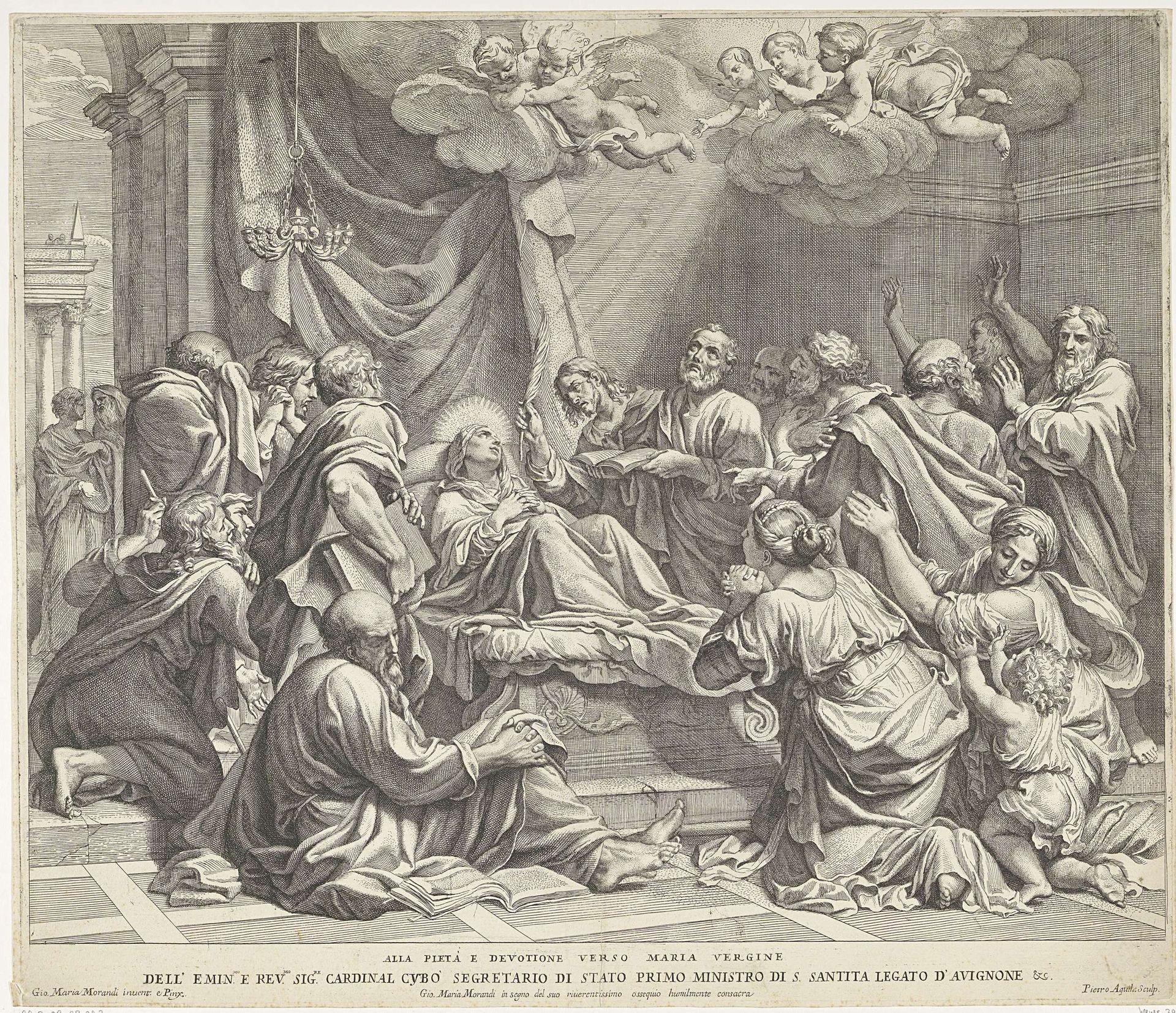
Editor: Here we have "Het sterfbed van Maria," or "The Deathbed of Mary," an engraving by Pietro Aquila dating sometime between 1660 and 1692. The scene feels very dramatic, with a lot of figures and strong directional lines. What's striking to you about it? Curator: Considering the period, and Aquila’s role as a printmaker reproducing works, I think it’s key to view this not just as an isolated image but as a visual artifact embedded in 17th-century religious and political currents. How would an image like this, disseminated through prints, function in shaping popular piety and bolstering the Church’s authority? Notice the inscription at the bottom – "Dedicated to Cardinal Cybo..." Editor: So it's partly a propaganda piece? Curator: "Propaganda" may be too strong a word, but it's undoubtedly a form of visual rhetoric. Think about it – the baroque style itself, with its theatricality and emotional intensity, was very much embraced by the Counter-Reformation. Now, given that this was for Cardinal Cybo, do you see how the composition reflects the values of those circles? The engraving promotes both religious devotion and a specific, hierarchical social order with the Church at its apex. Editor: I hadn’t considered the political implications so directly, but it makes sense. It's less about pure artistic expression and more about visually reinforcing power structures. Curator: Precisely. What new thoughts about historical contexts does this highlight? Editor: This has given me an appreciation for art's role in shaping historical perspectives. I'm also taking away that it's critical to see beyond surface appearances and investigate underlying messages!