About this artwork
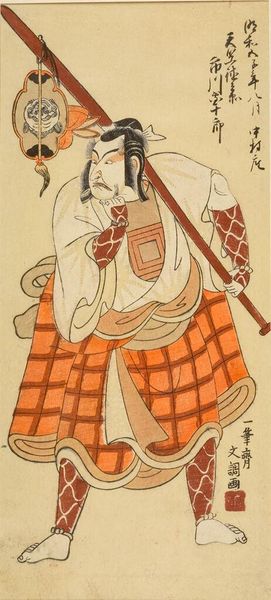
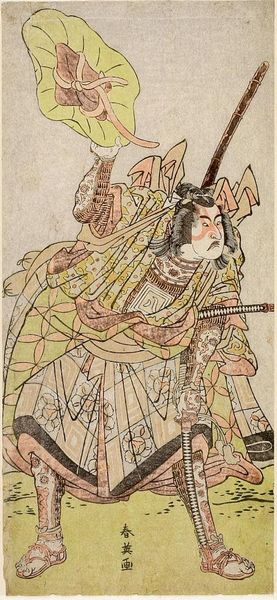
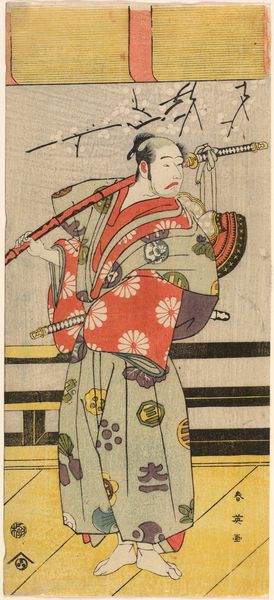
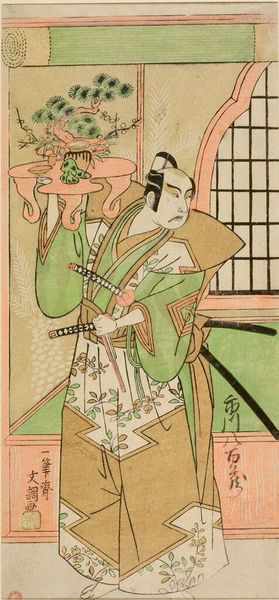
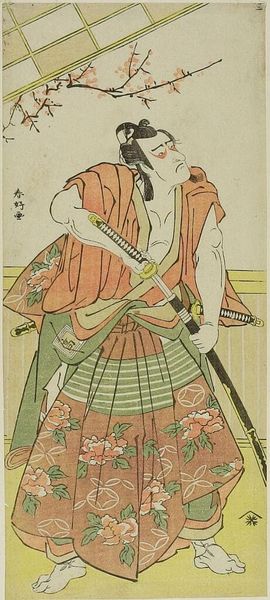
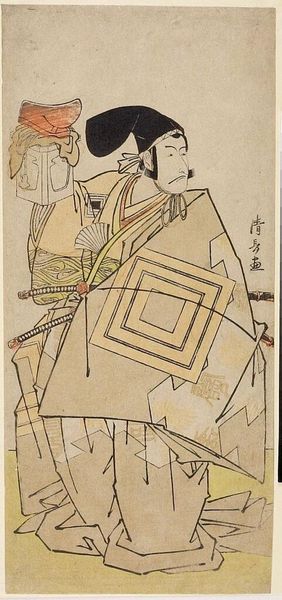
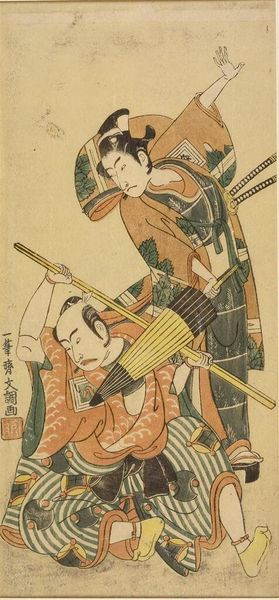
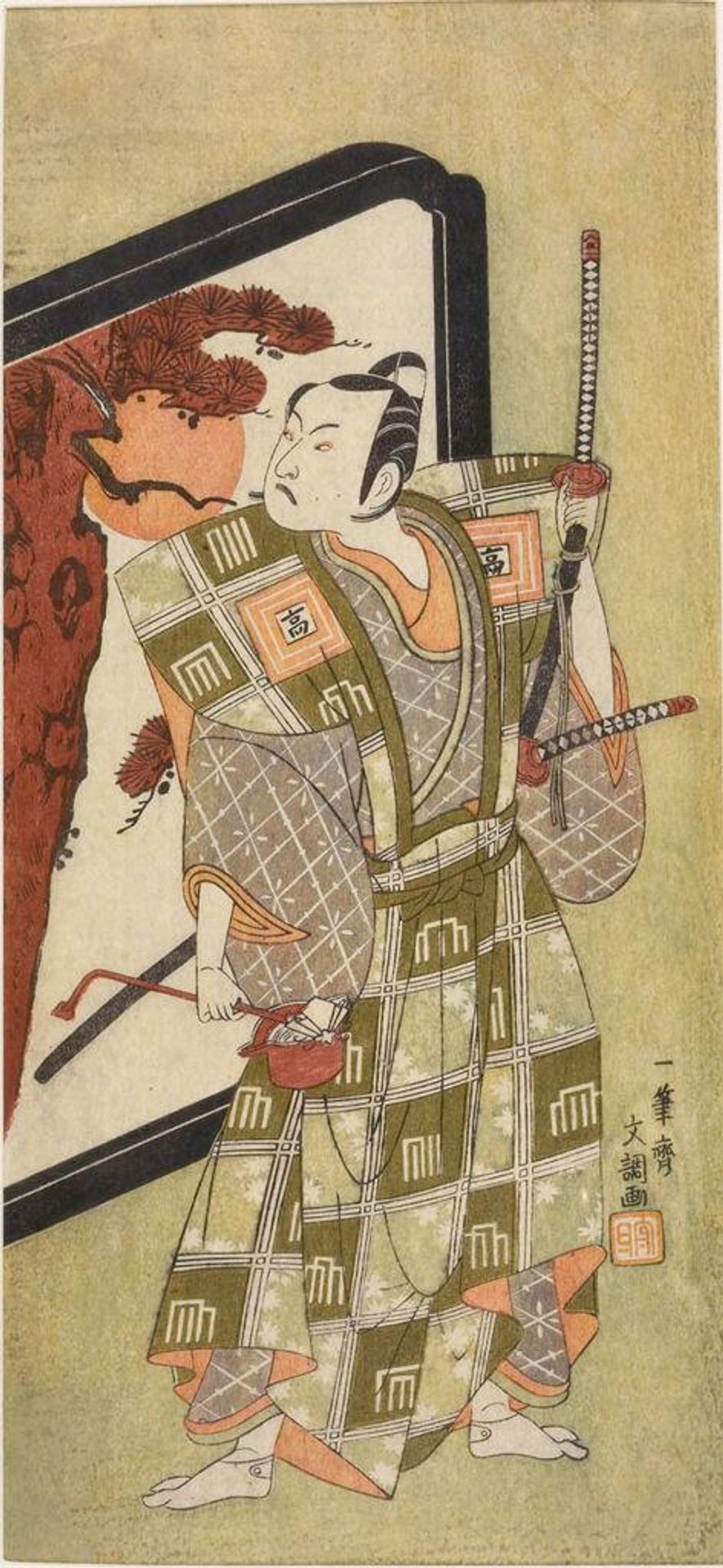
Editor: Here we have "Actor Ichikawa KomazÅ as a Samurai" by Ippitsusai BunchÅ, housed at the Harvard Art Museums. The actor's pose seems quite theatrical. What can you tell me about its cultural significance? Curator: It is crucial to consider ukiyo-e prints like this within the context of Edo period Japan. These actor prints, known as yakusha-e, were incredibly popular. They functioned almost like celebrity endorsements, reflecting and shaping public fascination with Kabuki theatre. Notice how the artist emphasizes the actor's stylized makeup and elaborate costume; what do those details communicate to you? Editor: Well, the makeup exaggerates his expression, and the costume seems to indicate his character's status and role in the play. So, it's about portraying both the actor and the character he embodies. Curator: Precisely. This print is not just a portrait; it's a commodity, a visual representation of fame and a reflection of the vibrant entertainment culture of the time. Reflect on how that intersects with similar celebrity culture today. Editor: I never considered how prints like this reflect the cultural landscape of their time. Thanks!
Actor Ichikawa KomazÅ AS A SAMURAI c. 18th century


Artwork details
- Dimensions
- Paper: H. 30.4 cm x W. 14.5 cm (11 15/16 x 5 11/16 in.)
- Location
- Harvard Art Museums
- Copyright
- CC0 1.0
Comments
No comments
About this artwork
Editor: Here we have "Actor Ichikawa KomazÅ as a Samurai" by Ippitsusai BunchÅ, housed at the Harvard Art Museums. The actor's pose seems quite theatrical. What can you tell me about its cultural significance? Curator: It is crucial to consider ukiyo-e prints like this within the context of Edo period Japan. These actor prints, known as yakusha-e, were incredibly popular. They functioned almost like celebrity endorsements, reflecting and shaping public fascination with Kabuki theatre. Notice how the artist emphasizes the actor's stylized makeup and elaborate costume; what do those details communicate to you? Editor: Well, the makeup exaggerates his expression, and the costume seems to indicate his character's status and role in the play. So, it's about portraying both the actor and the character he embodies. Curator: Precisely. This print is not just a portrait; it's a commodity, a visual representation of fame and a reflection of the vibrant entertainment culture of the time. Reflect on how that intersects with similar celebrity culture today. Editor: I never considered how prints like this reflect the cultural landscape of their time. Thanks!
Comments
No comments