About this artwork
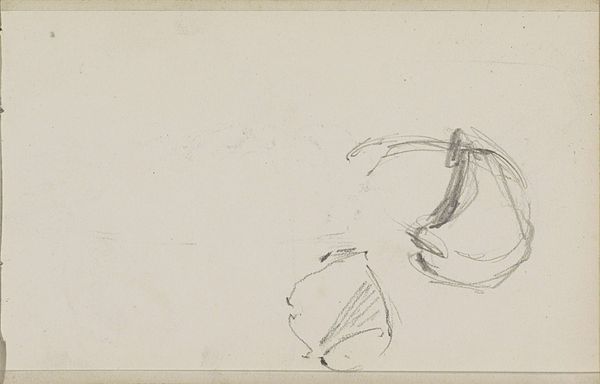
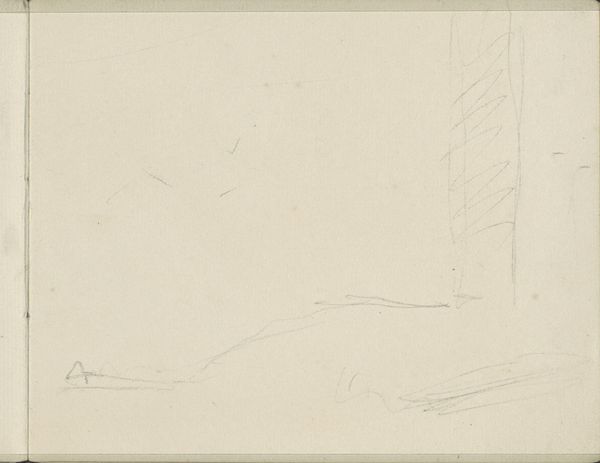
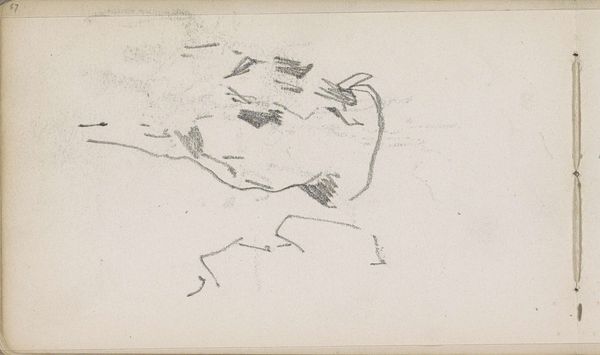
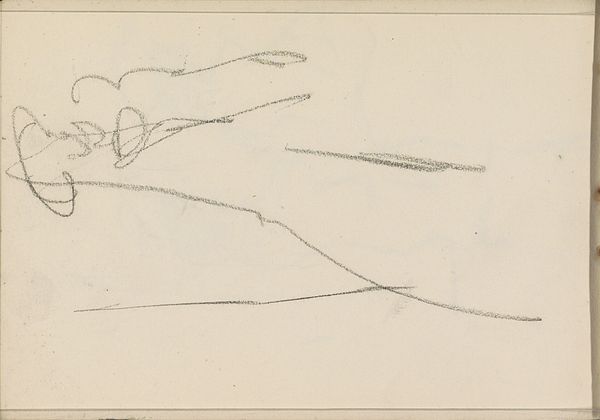
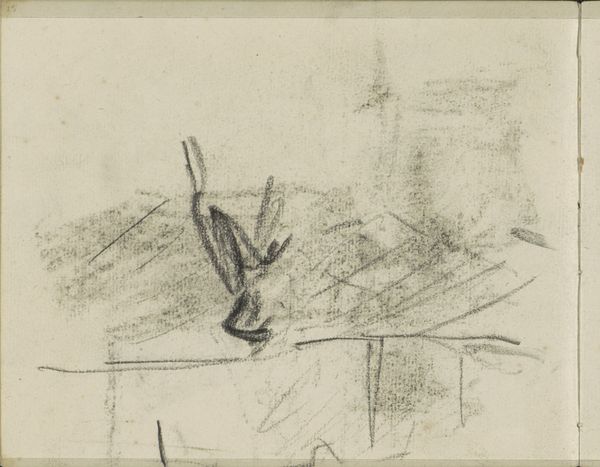
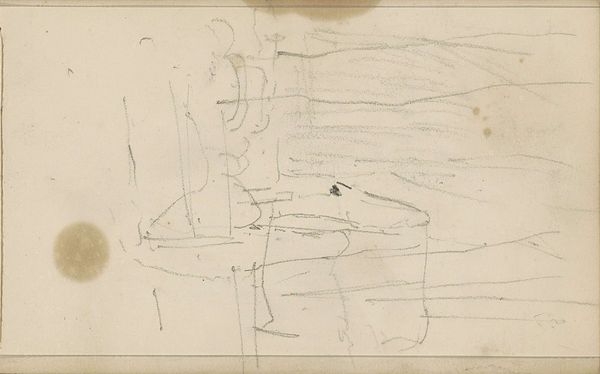
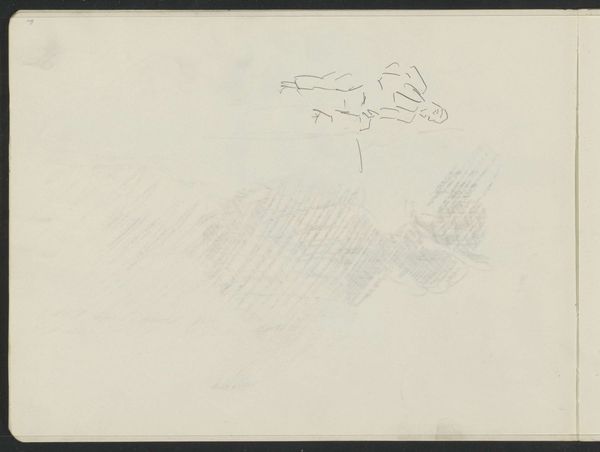
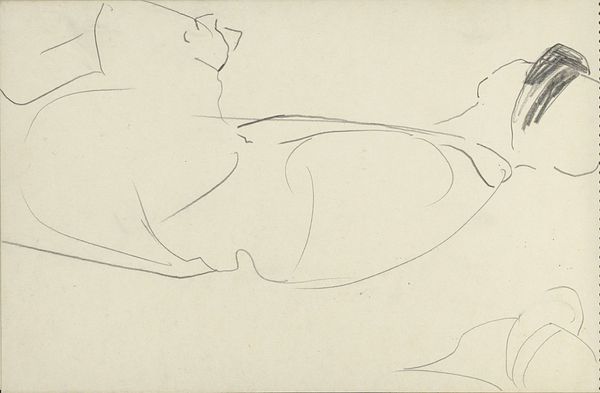
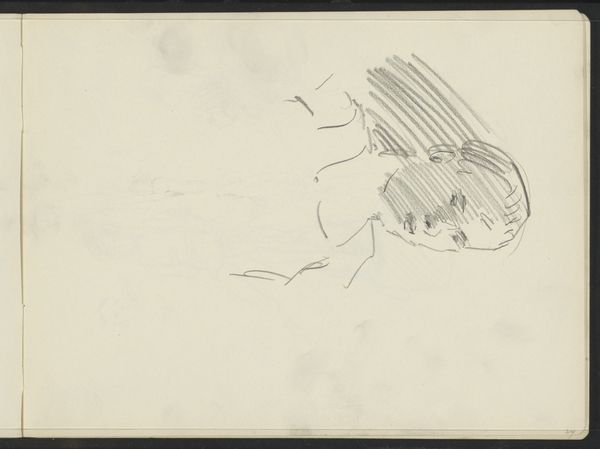
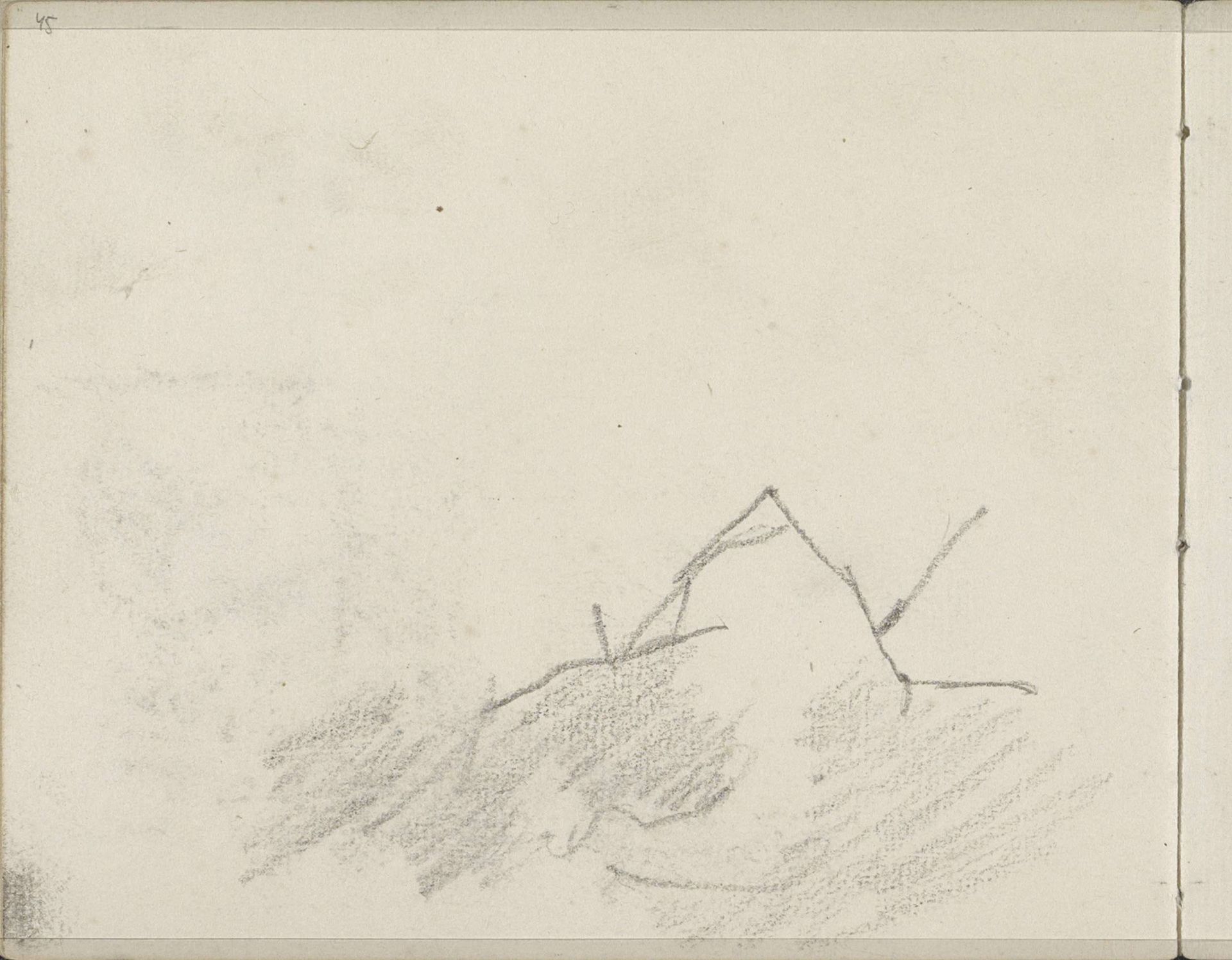
Editor: So, here we have George Hendrik Breitner’s, "Studie, mogelijk van daken met een wolkenlucht," a pencil drawing made sometime between 1886 and 1891. It strikes me as incredibly sparse, almost unfinished. What can you tell us about this seemingly simple sketch? Curator: It's interesting how you perceive it as unfinished. Considering the urban transformation occurring in Amsterdam during Breitner's time, this sketch speaks volumes about his engagement with the city's socio-political landscape. How do you think the choice of subject matter and medium reflects the broader context of Amsterdam at the turn of the century? Editor: Well, the quick, almost fleeting, pencil lines seem to capture a sense of rapid change. It's as if he’s trying to document the city as it's being rebuilt around him. But, why choose such a seemingly mundane subject matter? Curator: Precisely. Breitner was drawn to capturing the everyday life of the working class, a subject often ignored in mainstream art at the time. He sought to represent the social realities of Amsterdam's rapidly changing urban environment. How does this depiction of rooftops and sky, rather than grand boulevards, challenge or subvert conventional artistic themes? Editor: It definitely feels like a deliberate move away from idealised cityscapes, highlighting the more gritty, unglamorous side of urban development. I hadn't really thought about how much his choices reflect a commentary on the city's politics of imagery. Curator: Exactly! And seeing through that lens might also reveal the undercurrents of social change. This artwork then offers a powerful commentary on urban transformation and its impact on society. Editor: This has really opened my eyes to how much history and social context can be packed into such a simple sketch. Thank you.
Studie, mogelijk van daken met een wolkenlucht
c. 1886 - 1891

George Hendrik Breitner
1857 - 1923Location
RijksmuseumArtwork details
- Medium
- drawing, pencil
- Location
- Rijksmuseum
- Copyright
- Rijks Museum: Open Domain
Tags
Comments
Share your thoughts
About this artwork
Editor: So, here we have George Hendrik Breitner’s, "Studie, mogelijk van daken met een wolkenlucht," a pencil drawing made sometime between 1886 and 1891. It strikes me as incredibly sparse, almost unfinished. What can you tell us about this seemingly simple sketch? Curator: It's interesting how you perceive it as unfinished. Considering the urban transformation occurring in Amsterdam during Breitner's time, this sketch speaks volumes about his engagement with the city's socio-political landscape. How do you think the choice of subject matter and medium reflects the broader context of Amsterdam at the turn of the century? Editor: Well, the quick, almost fleeting, pencil lines seem to capture a sense of rapid change. It's as if he’s trying to document the city as it's being rebuilt around him. But, why choose such a seemingly mundane subject matter? Curator: Precisely. Breitner was drawn to capturing the everyday life of the working class, a subject often ignored in mainstream art at the time. He sought to represent the social realities of Amsterdam's rapidly changing urban environment. How does this depiction of rooftops and sky, rather than grand boulevards, challenge or subvert conventional artistic themes? Editor: It definitely feels like a deliberate move away from idealised cityscapes, highlighting the more gritty, unglamorous side of urban development. I hadn't really thought about how much his choices reflect a commentary on the city's politics of imagery. Curator: Exactly! And seeing through that lens might also reveal the undercurrents of social change. This artwork then offers a powerful commentary on urban transformation and its impact on society. Editor: This has really opened my eyes to how much history and social context can be packed into such a simple sketch. Thank you.
Comments
Share your thoughts