drawing, pencil
#
drawing
#
pencil sketch
#
landscape
#
figuration
#
pencil
#
horse
#
realism
Dimensions: height 284 mm, width 201 mm
Copyright: Rijks Museum: Open Domain
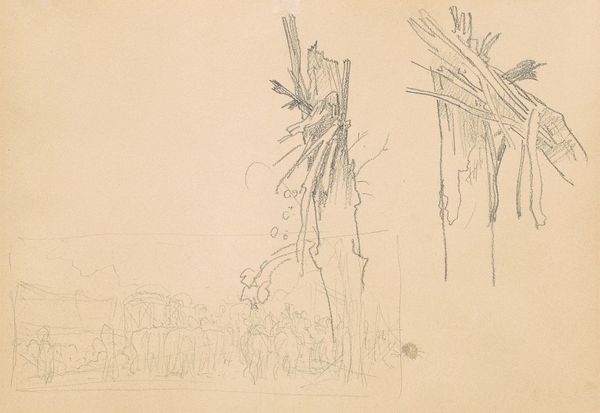
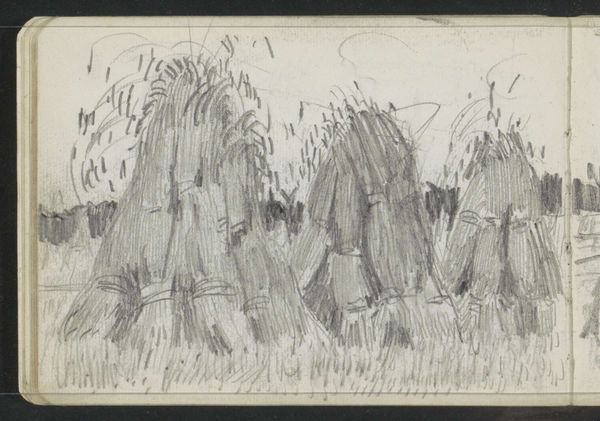
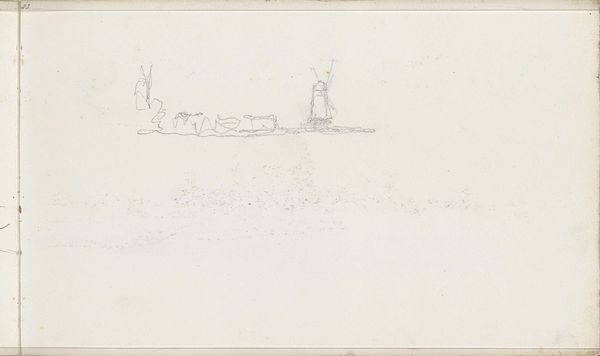
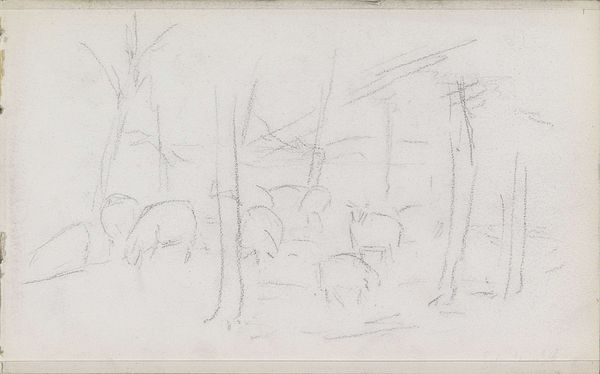
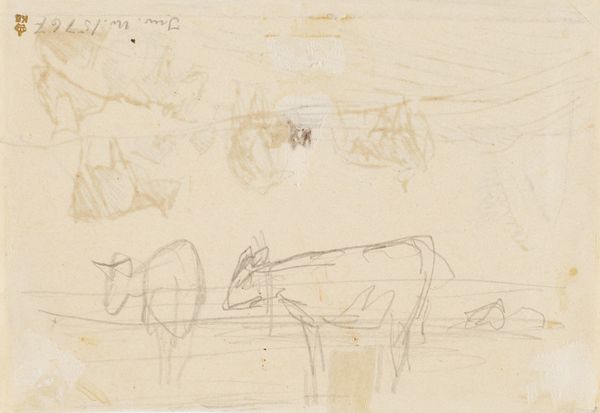
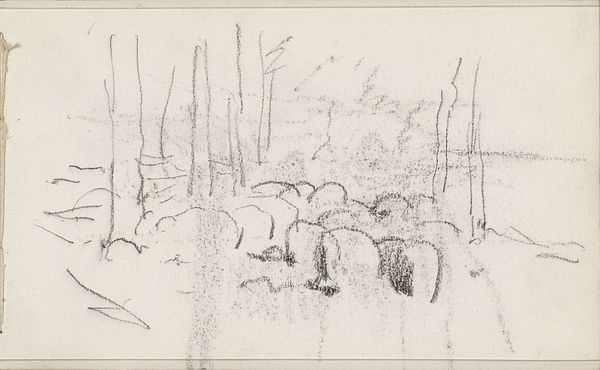
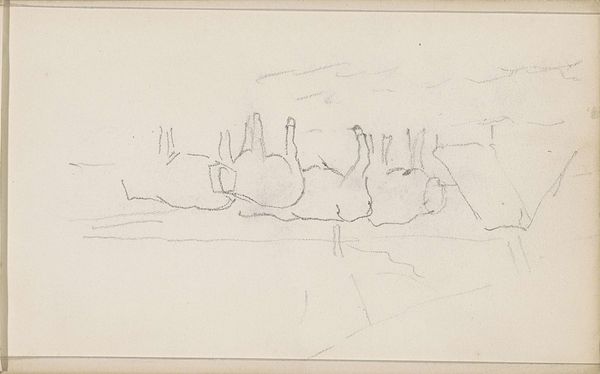
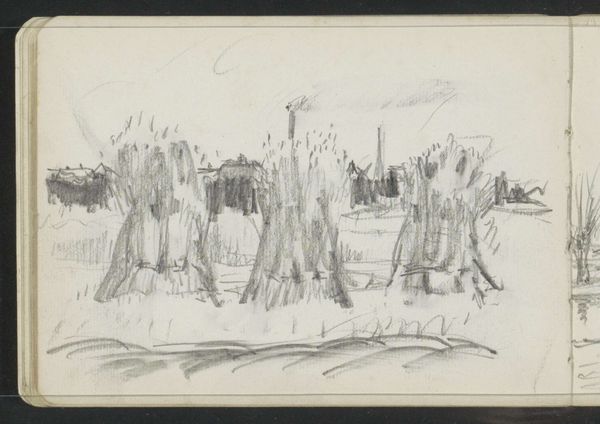
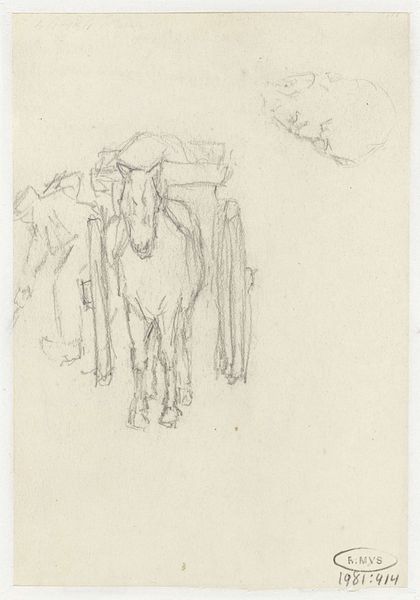
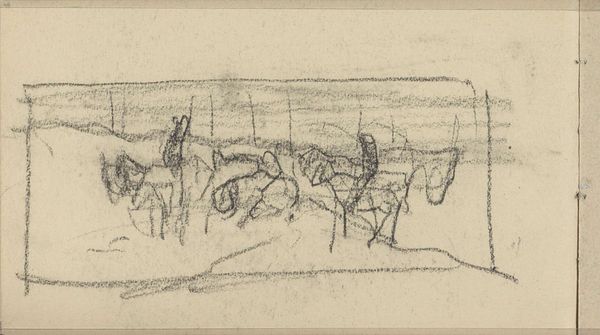
Editor: So, this delicate pencil sketch by Jozef Israëls, likely made between 1834 and 1911, is titled "Seven Stacks of Wheat and a Horse." There's a quietness to the scene. I'm struck by how utilitarian it feels. What do you make of it? Curator: Utilitarian is a good starting point. Consider the labor embedded within this seemingly simple drawing. The stacks, the horse… These elements point to the physical exertion involved in agriculture. Look closely at the marks made by the pencil. Are they quick and functional, or are they deliberate, showcasing artistic skill? Editor: They feel functional. Like a record of something seen, maybe a study for a larger painting. I'm less aware of it as "art" and more aware of it as a document. Curator: Exactly. Israëls' process and material choices here emphasize the raw elements of rural life. Consider the social context too. How does depicting this scene, rather than, say, a portrait of nobility, comment on labor, class, and perhaps even consumption during that time? Are these stacks meant to feed someone or line someone else’s pockets? Editor: I never thought of that. It's interesting to consider how this relates to class structures. A drawing of such an everyday scene. So, what looks simple shows Israëls making an intentional artistic statement about society. Curator: Precisely! What appears to be just a humble sketch offers a deeper understanding of the relationship between materiality, labor, and social commentary in 19th-century art. Editor: I see it now, I was stuck on how light it was. The materials reflect labor and social implications in this period and it does challenge art to serve for something beyond the "high". Thanks for highlighting that. Curator: Of course. It shows that even a simple scene holds complexities. The pencil line itself bears the weight of those social conditions.
Comments
No comments
Be the first to comment and join the conversation on the ultimate creative platform.
 Collect
 React
React Comment
More like this