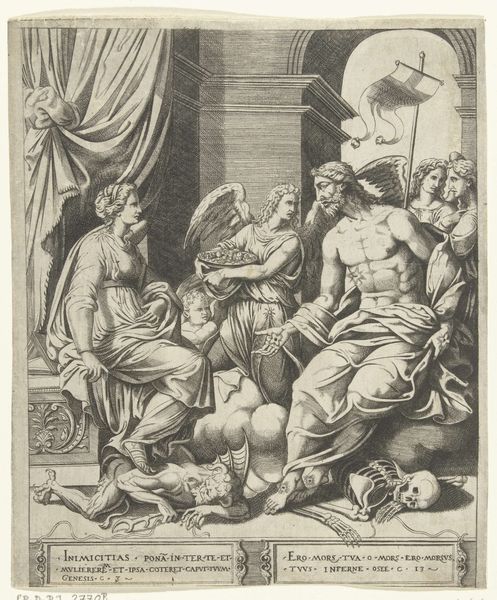
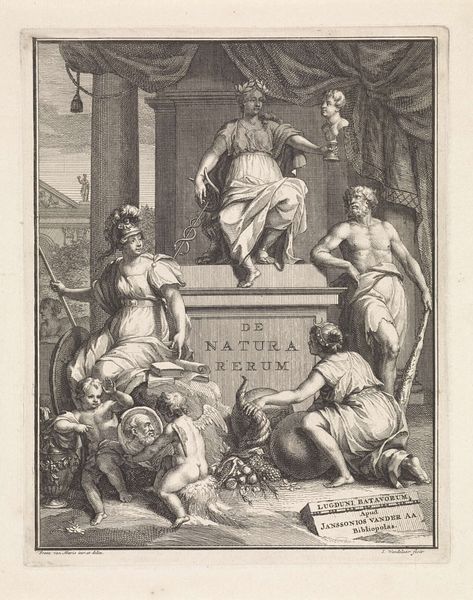
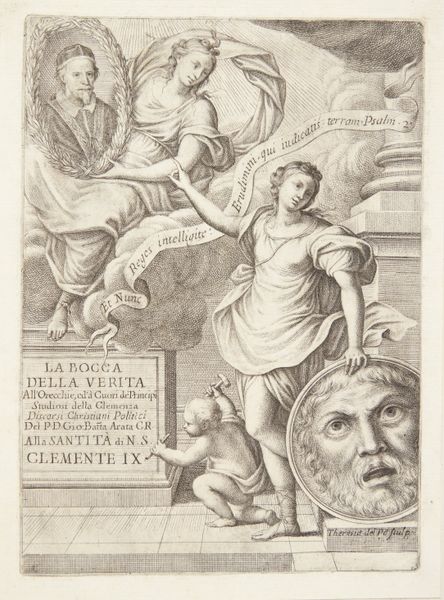
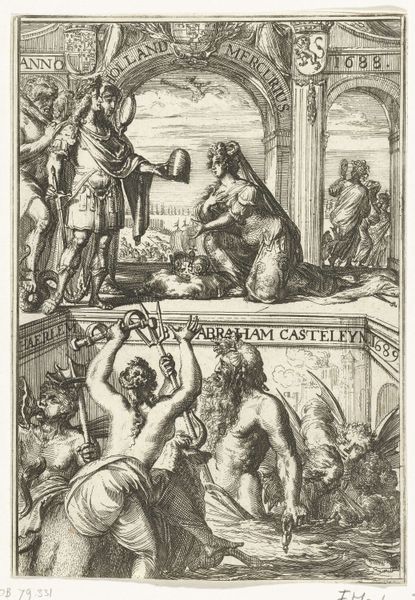
print, engraving
#
baroque
# print
#
old engraving style
#
figuration
#
line
#
history-painting
#
engraving
Dimensions: height 178 mm, width 127 mm
Copyright: Rijks Museum: Open Domain
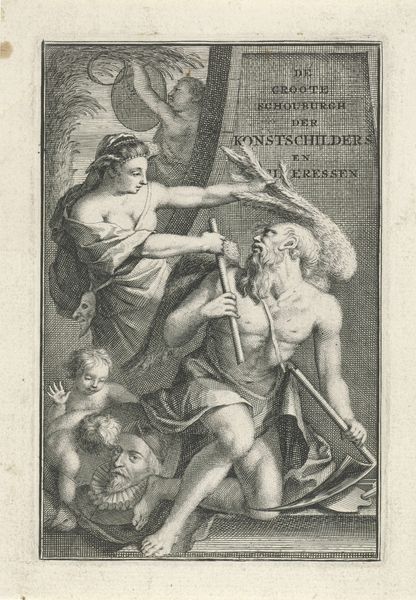
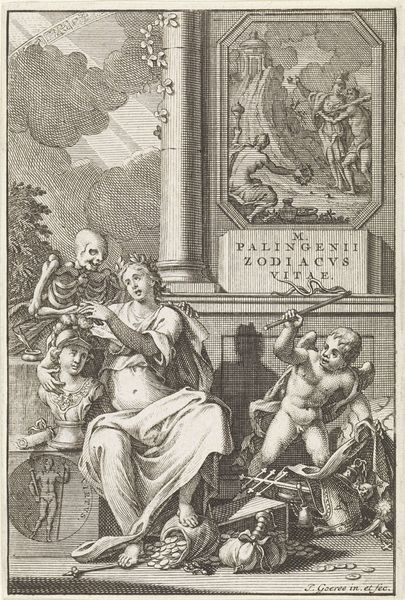
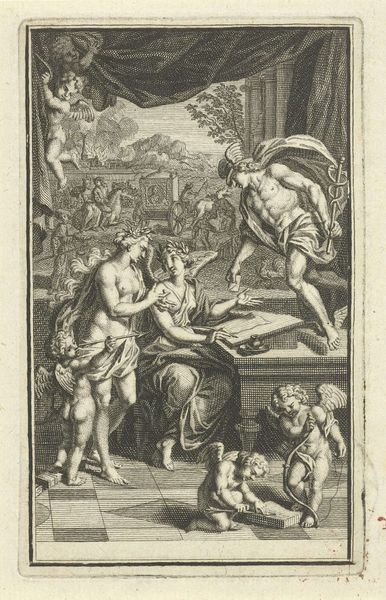
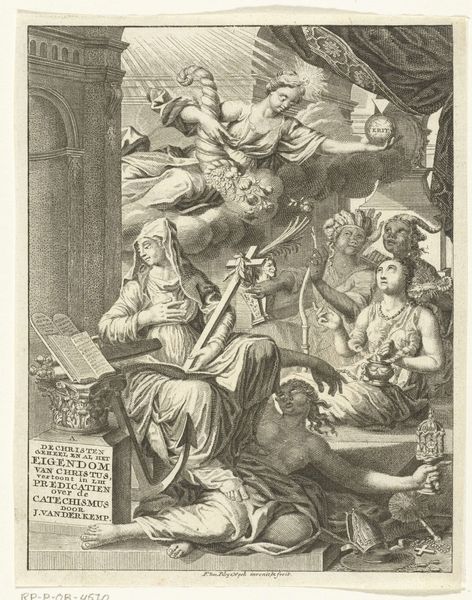
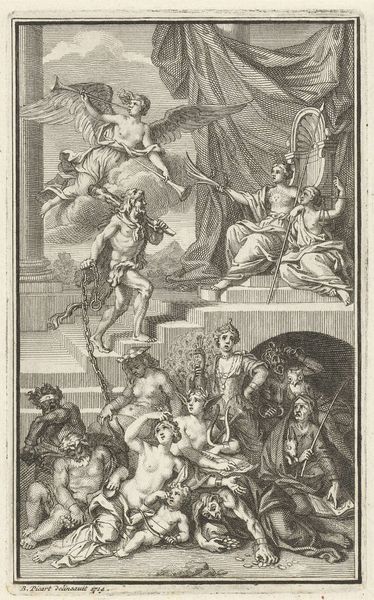
Editor: So, this is "Vrouw in Grieks gewaad," or "Woman in Greek Robe," an engraving from 1715. It's a bit different from what I usually study; the stark lines and monochrome create a strangely haunting atmosphere. What draws your eye when you look at it? Curator: It's funny you say "haunting." It whispers tales of layered artistry. The composition’s a play—see how the figures, with that classic Baroque flourish, frame the text, turning words into images and vice versa? The woman, draped and poised, seems almost a muse. But, notice the little cupid there? To me, it's mischievous; a hint that this ‘heroic epistle’ is about to get a bit complicated. Editor: Complicated how? I was mainly struck by the technical skill of the engraving, the detail they got with just lines... Curator: Think of the source material, Ovid’s "Heroides"—letters from mythological women to their absent lovers. Now consider, Amsterdam 1715. Isn’t there something subversive, presenting passionate women’s voices when societal expectations were rather different? Do you get the impression it could be read with various… let’s say, rebellious undercurrents, back then? Editor: That’s a great point; I hadn't really considered that! So, it’s not just a pretty picture; it's part of a conversation. Curator: Exactly! Every flourish tells a story, a dialogue between artist, writer, and, yes, even us, centuries later. Editor: This makes me want to explore other engravings and Baroque art more in depth! It also goes to show how every work of art is a record of its time and the artists reflection. Curator: It’s all connected, every line, every shadow. The beauty lies in unraveling it all.
Comments
No comments
Be the first to comment and join the conversation on the ultimate creative platform.
 Collect
 React
React Comment
More like this