engraving
#
portrait
#
allegory
#
baroque
#
old engraving style
#
figuration
#
line
#
history-painting
#
engraving
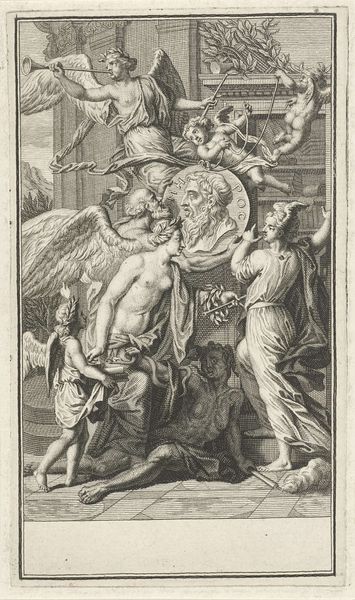
Dimensions: width 81 mm, height 120 mm
Copyright: Rijks Museum: Open Domain
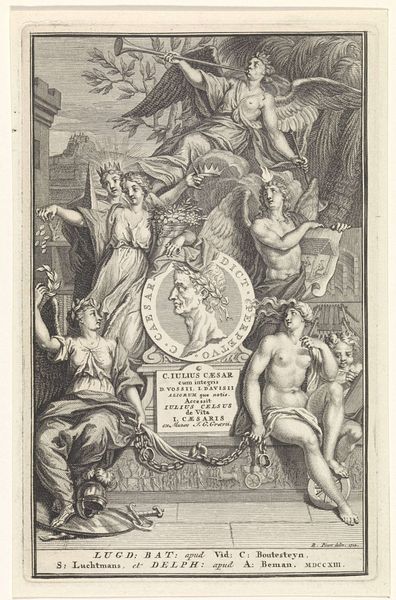
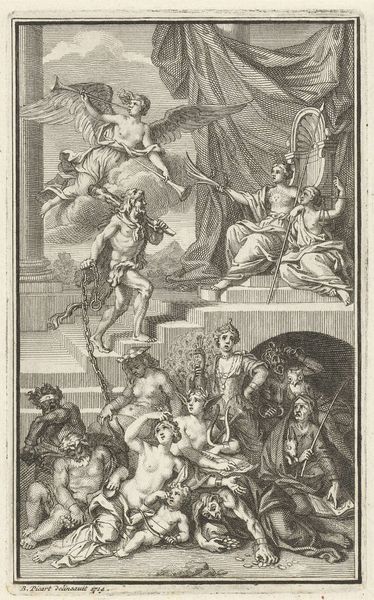
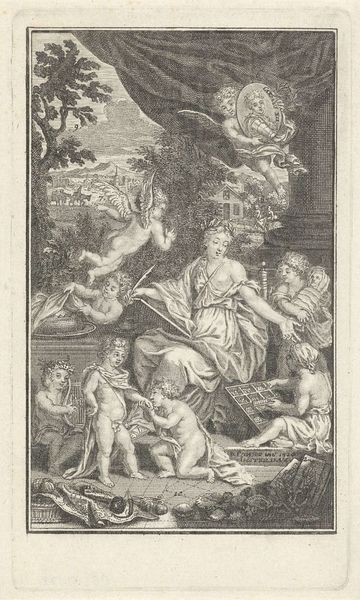
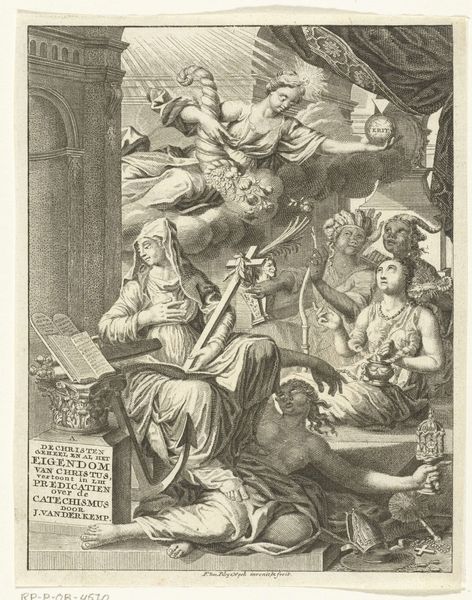
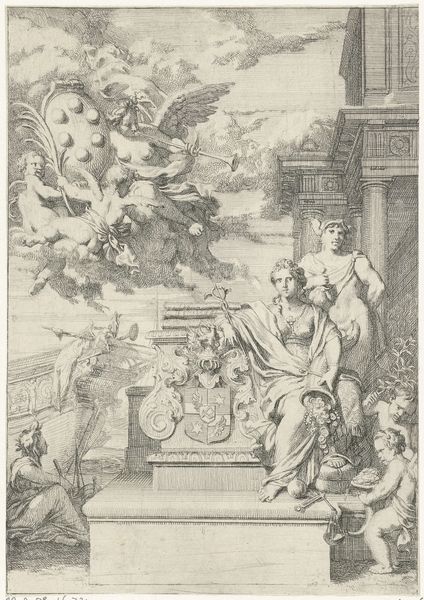
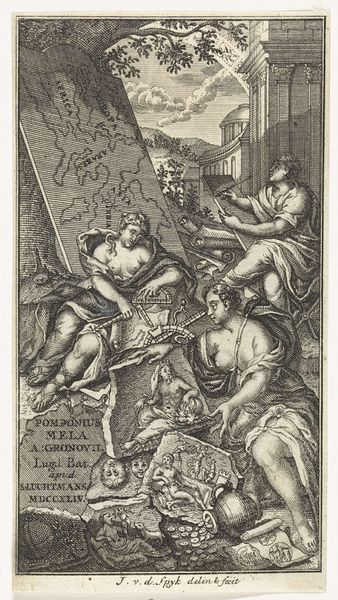
Curator: Here we have Jan Goeree's "Allegory on the Choice Between Worldly and Spiritual Goods," an engraving dating back to 1722, now residing in the Rijksmuseum. Quite a complex piece! My initial impression? Chaos. It feels crowded, almost claustrophobic, with so many elements vying for attention. What do you make of it? Editor: It absolutely *is* dense, isn't it? I see this fraught negotiation between sacred and profane desires rendered visible, revealing societal anxieties around morality and wealth in the 18th century. The engraving performs the labor of visualizing deeply uneven ideological terrain. Curator: The symbolism is layered, as we see with the skeleton whispering temptations, a Cupid figure wreaking havoc on worldly possessions, and the seated figure poised between them, and it asks us to read what is at stake in making the "right choice." Death and divinity, forever present, and a human scale caught in the middle. Editor: Precisely. The objects around her—money spilling from an upturned pot, instruments being destroyed, a statue—these all gesture towards the fleeting and ultimately destructive nature of earthly pleasures. The cupid, far from the symbol of love, acts more as an agent of worldly destruction. Curator: Note, also, how the skeleton isn’t presented as inherently menacing. It’s offering her a crown, while also whispering directly into her ear. Goeree invites us to remember memento mori in visual culture, in that all choices, good and bad, are tinged with awareness of death. The Zodiac reference behind the woman and cupid alludes to destiny and a universal fate. Editor: Which is profoundly unnerving. Is the figure choosing "spiritual goods," or merely resigned to them through a kind of despair regarding earthly gains? There is something very politically charged here too, because wealth, piety, and governance are all in bed together in 18th-century Europe, which Goeree may critique or perhaps seek to validate. Who can discern who influences who in such complex, fraught visual compositions? Curator: An important point, about the ambiguous moral. I think the lack of clarity forces us to consider our own values, reflecting on what guides our decisions between transient joys and, perhaps, lasting fulfillment. Ultimately, this is where visual analysis matters, allowing us to pause, think, and reflect upon those symbols and consider a legacy of thought over many centuries. Editor: I agree entirely. What looks initially like a distant, almost opaque image becomes, upon closer inspection, a surprisingly urgent call for personal reflection in relation to political-religious regimes. Art history invites the world, forces conversation, doesn’t it?
Comments
No comments
Be the first to comment and join the conversation on the ultimate creative platform.
 Collect
 React
React Comment
More like this