About this artwork
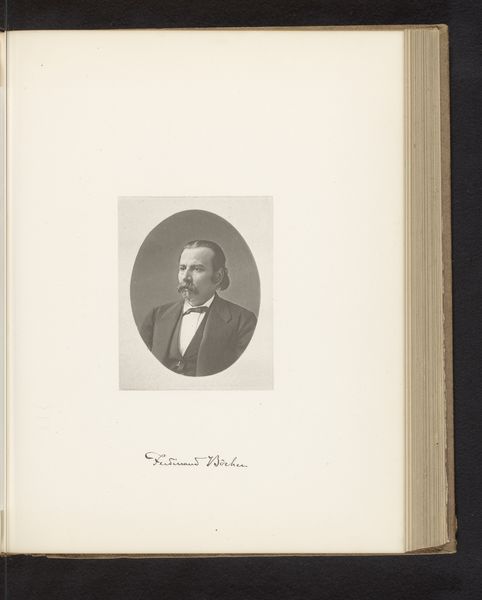
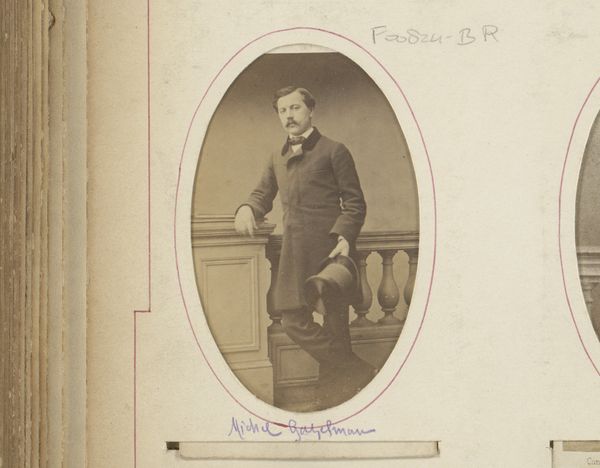
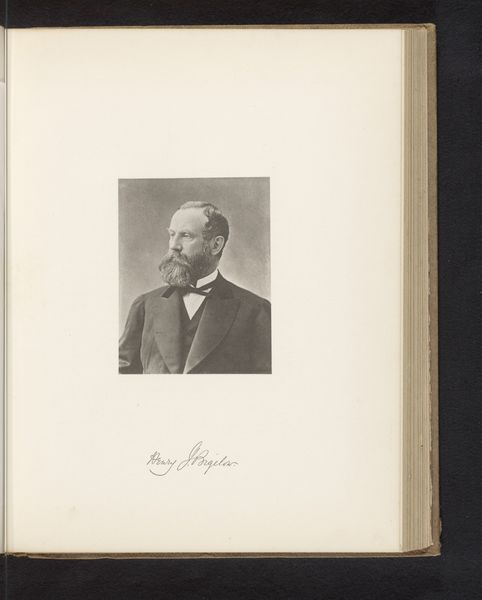
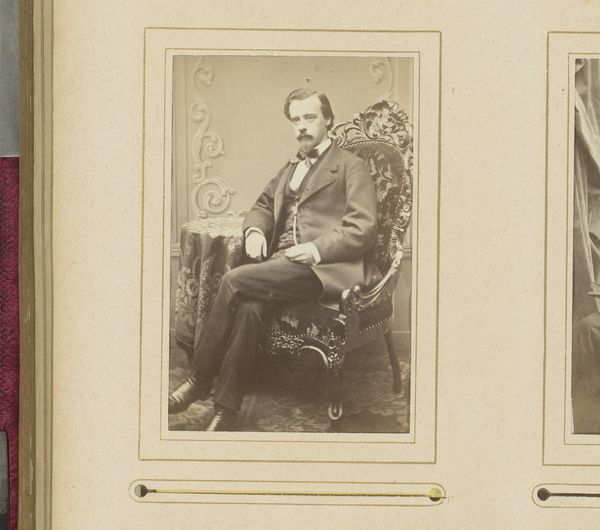
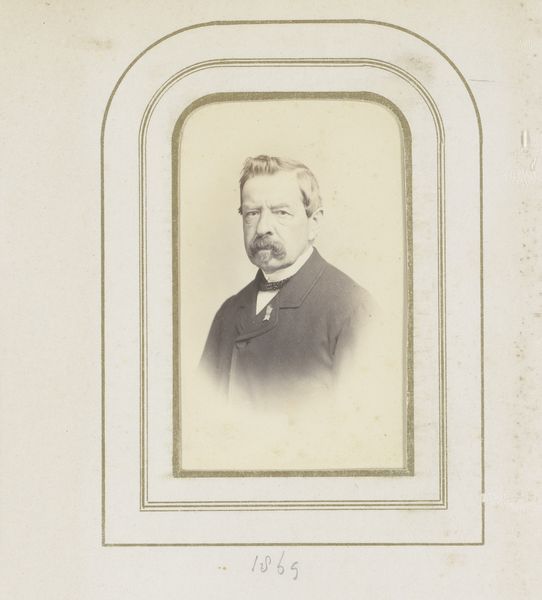
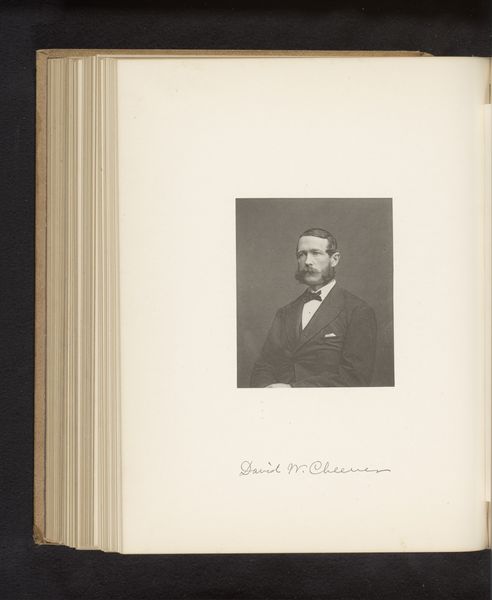
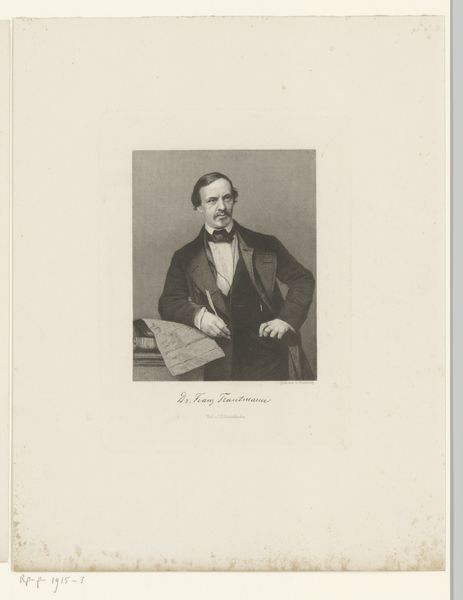
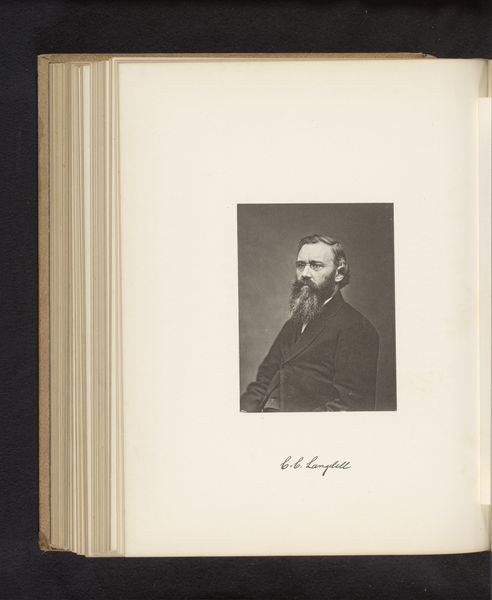
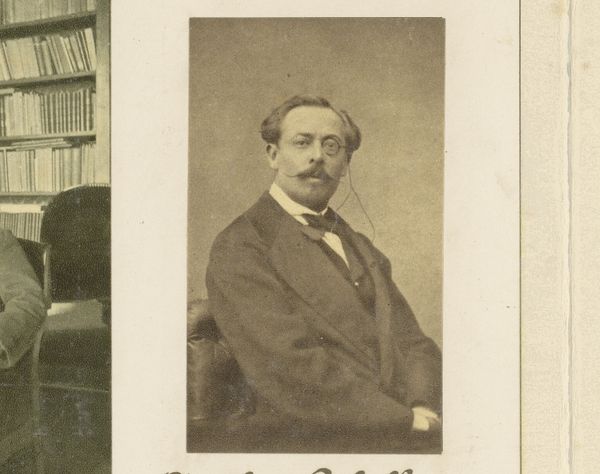
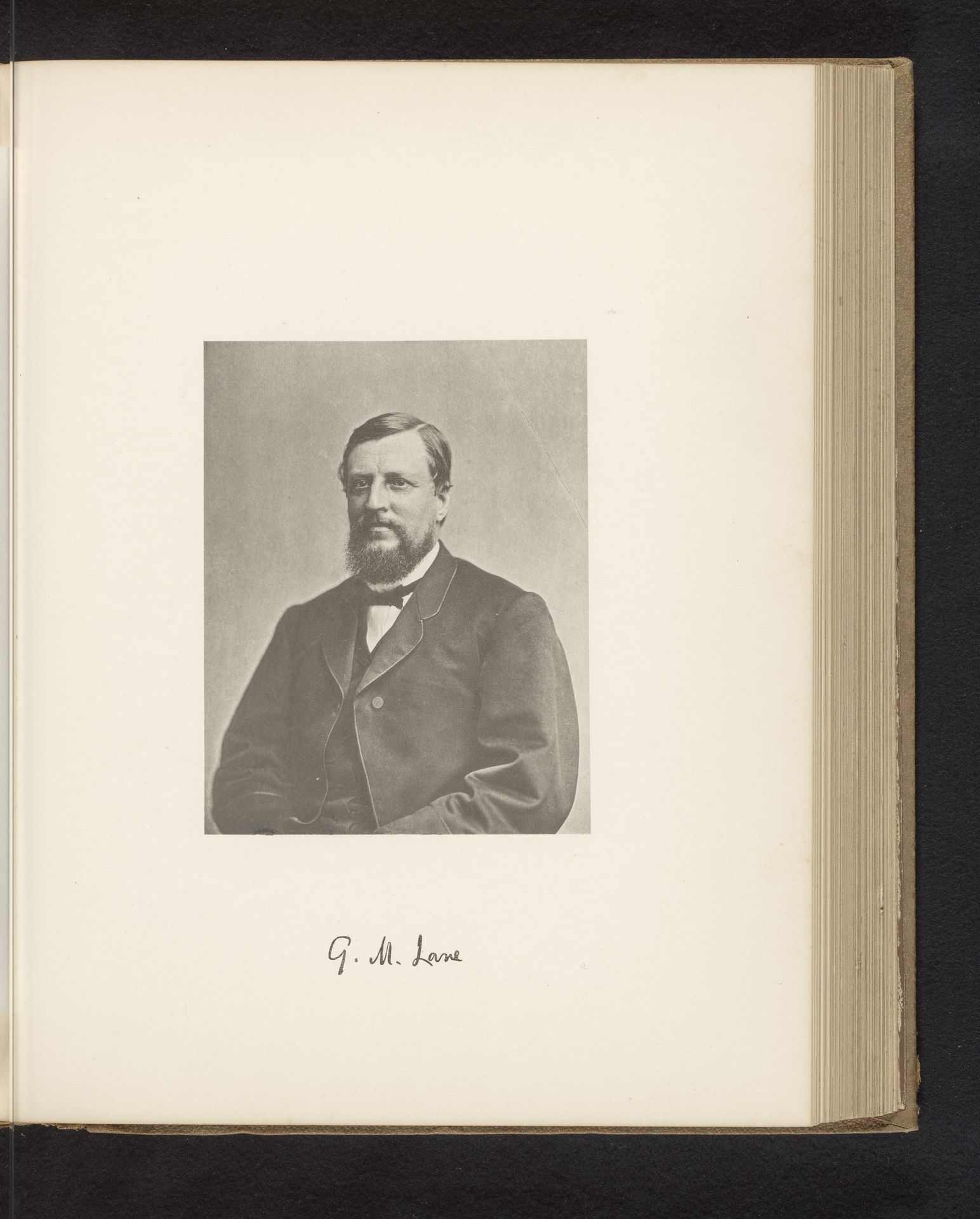
Editor: Here we have a "Portret van George Martin Lane," an albumen and gelatin silver print dating to before 1875. There's something quite formal about this image; I'm drawn to the way the light interacts with his dark suit. What do you see in this piece? Curator: The materiality is compelling, isn't it? Think about the process itself: the careful coating of glass plates with light-sensitive emulsions, the precise timing of exposure, the darkroom labor involved in developing and printing. And consider the social context: photography at this time was becoming more accessible, but still a specialized craft. The creation of this portrait would have involved considerable skill and resources. How does knowing that impact your viewing experience? Editor: It definitely makes me think more about the photographer's skill, and about Lane’s social standing if he could afford this portrait to be made. I hadn't really thought about the labor involved previously, focusing more on Lane himself. Curator: Exactly. This image is not simply a reflection of an individual; it’s a material object produced through specific labor practices and reflective of certain social conditions. The chemicals used, the printing techniques, the dissemination of these images - these factors all contribute to the meaning of the work. The photographic album as well… It turns photography into something precious that exists on a personal level. Does this help to look past just subject matter in favor of an emphasis on material means? Editor: Yes, definitely! Focusing on the materials and the labor involved in creating the print really shifts the focus. I am left thinking not just about the portrait itself, but about the broader industry and society that produced it. Curator: And that industry created a kind of celebrity itself by capturing sitters for generations to come. Considering materiality definitely opens up some alternative readings for this photograph. Editor: Absolutely, I’ll certainly look at photographic portraits in a new light from now on, considering the materials used, processes adopted, and social backgrounds from now on.

Artwork details
- Medium
- photography, gelatin-silver-print, albumen-print
- Dimensions
- height 162 mm, width 127 mm
- Copyright
- Rijks Museum: Open Domain
Tags
Comments
Share your thoughts
About this artwork
Editor: Here we have a "Portret van George Martin Lane," an albumen and gelatin silver print dating to before 1875. There's something quite formal about this image; I'm drawn to the way the light interacts with his dark suit. What do you see in this piece? Curator: The materiality is compelling, isn't it? Think about the process itself: the careful coating of glass plates with light-sensitive emulsions, the precise timing of exposure, the darkroom labor involved in developing and printing. And consider the social context: photography at this time was becoming more accessible, but still a specialized craft. The creation of this portrait would have involved considerable skill and resources. How does knowing that impact your viewing experience? Editor: It definitely makes me think more about the photographer's skill, and about Lane’s social standing if he could afford this portrait to be made. I hadn't really thought about the labor involved previously, focusing more on Lane himself. Curator: Exactly. This image is not simply a reflection of an individual; it’s a material object produced through specific labor practices and reflective of certain social conditions. The chemicals used, the printing techniques, the dissemination of these images - these factors all contribute to the meaning of the work. The photographic album as well… It turns photography into something precious that exists on a personal level. Does this help to look past just subject matter in favor of an emphasis on material means? Editor: Yes, definitely! Focusing on the materials and the labor involved in creating the print really shifts the focus. I am left thinking not just about the portrait itself, but about the broader industry and society that produced it. Curator: And that industry created a kind of celebrity itself by capturing sitters for generations to come. Considering materiality definitely opens up some alternative readings for this photograph. Editor: Absolutely, I’ll certainly look at photographic portraits in a new light from now on, considering the materials used, processes adopted, and social backgrounds from now on.
Comments
Share your thoughts