About this artwork
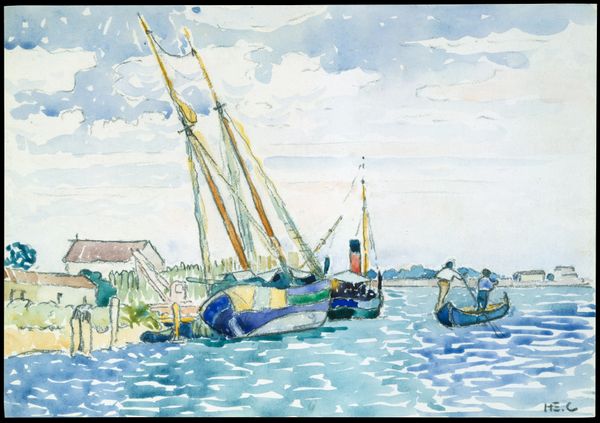
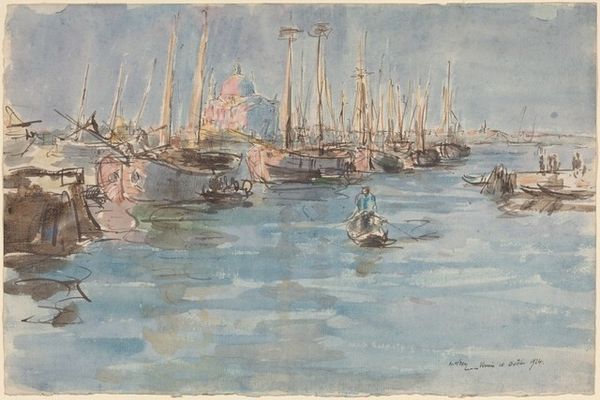
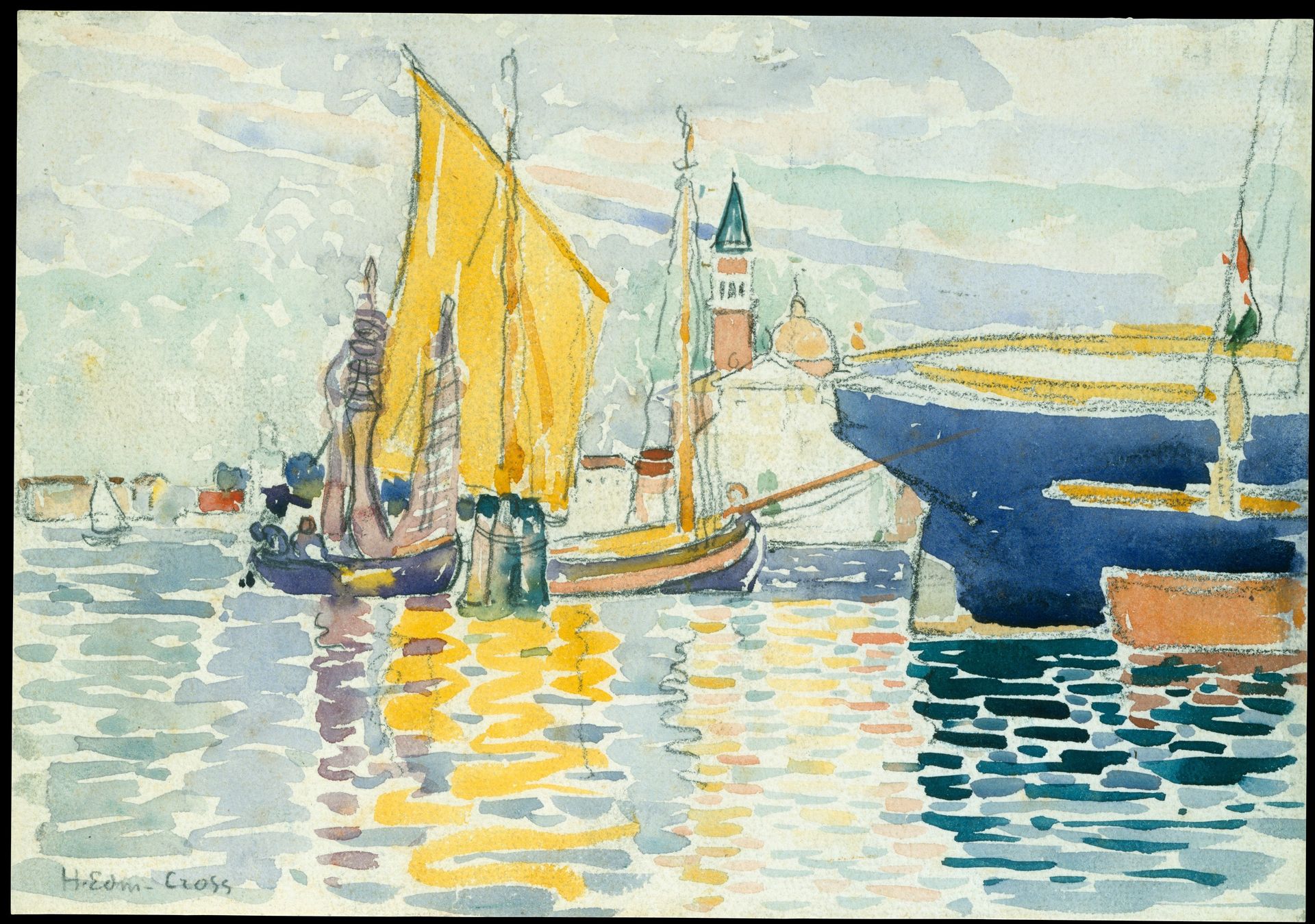
Henri-Edmond Cross’s watercolor, Venice-The Giudecca, captures a vibrant view of the Venetian lagoon. It’s interesting to consider this image in light of Cross’s commitment to Neo-Impressionism, a movement concerned with the science of color and perception. Here, the shimmering reflections on the water's surface and the juxtaposition of complementary hues—blues and yellows, oranges and greens—create a vibrant, almost dreamlike atmosphere. Venice, of course, was a popular destination for artists in the late 19th and early 20th centuries, a place where they could explore new styles and subjects. This painting is less a realistic portrayal of the city than an exercise in capturing its light and atmosphere, in the service of a modern aesthetic. To truly understand this work, we might delve into the writings of theorists like Michel Eugène Chevreul, whose ideas influenced the Neo-Impressionists, as well as the exhibition history of groups like the Salon des Indépendants, which provided a platform for these radical new approaches to painting.
Venice-The Giudecca
1903

Henri-Edmond Cross (Henri-Edmond Delacroix)
1856 - 1910
The Metropolitan Museum of Art
Metropolitan Museum of Art, New York, NYArtwork details
- Dimensions
- 6 3/4 x 9 3/4 in. (17.1 x 24.8 cm)
- Location
- Metropolitan Museum of Art, New York, NY
- Copyright
- Public Domain
Comments
Share your thoughts
About this artwork
Henri-Edmond Cross’s watercolor, Venice-The Giudecca, captures a vibrant view of the Venetian lagoon. It’s interesting to consider this image in light of Cross’s commitment to Neo-Impressionism, a movement concerned with the science of color and perception. Here, the shimmering reflections on the water's surface and the juxtaposition of complementary hues—blues and yellows, oranges and greens—create a vibrant, almost dreamlike atmosphere. Venice, of course, was a popular destination for artists in the late 19th and early 20th centuries, a place where they could explore new styles and subjects. This painting is less a realistic portrayal of the city than an exercise in capturing its light and atmosphere, in the service of a modern aesthetic. To truly understand this work, we might delve into the writings of theorists like Michel Eugène Chevreul, whose ideas influenced the Neo-Impressionists, as well as the exhibition history of groups like the Salon des Indépendants, which provided a platform for these radical new approaches to painting.
Comments
Share your thoughts