About this artwork
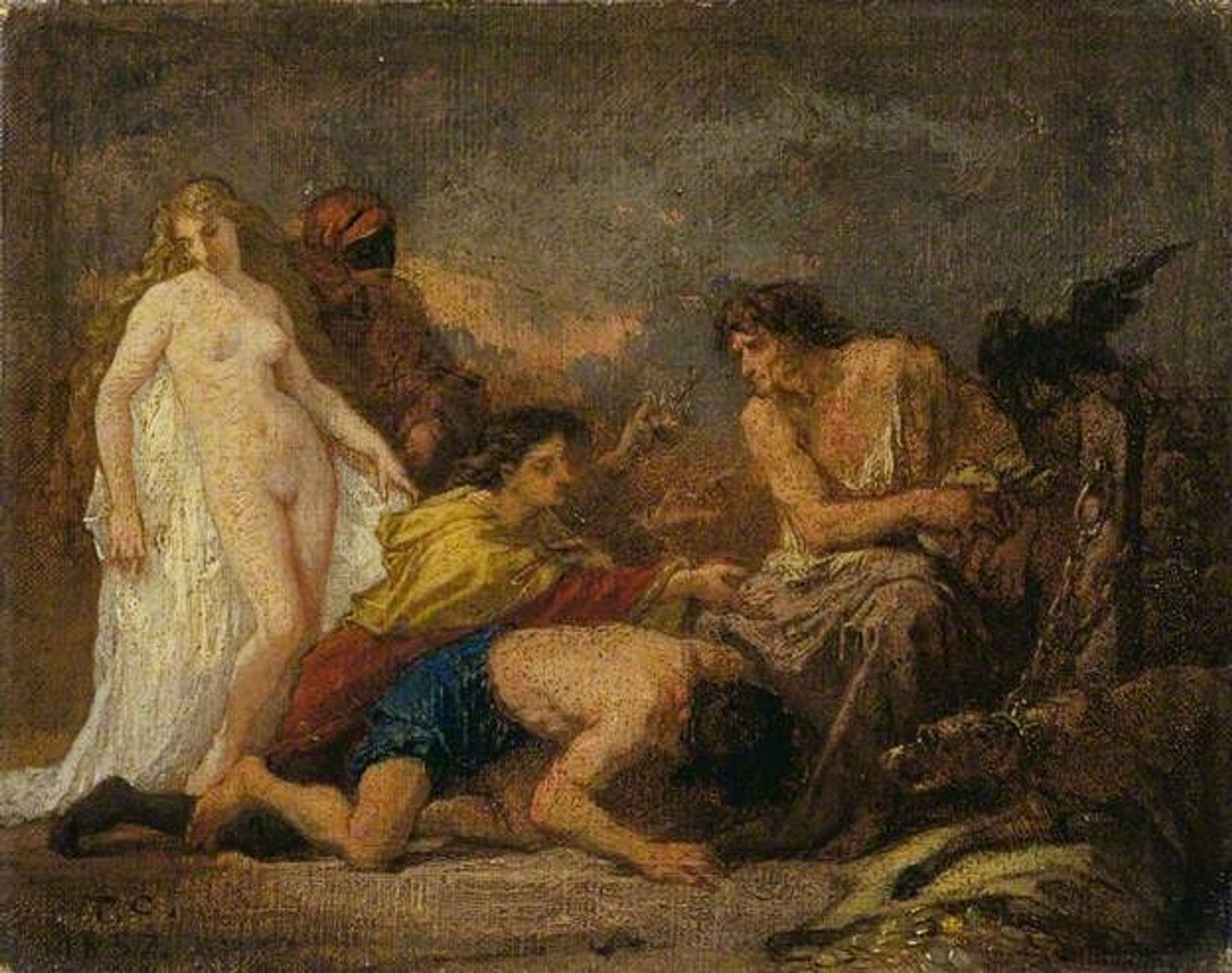
Thomas Couture painted this oil on canvas, called "Timon of Athens", sometime in the mid-19th century. Couture came of age during the rise of the bourgeois class, and his work often reflects the social tensions of the time. Here we see a scene from Shakespeare’s play, which tells the story of a wealthy man who becomes disillusioned with humanity after being betrayed by his friends. Couture's painting evokes questions of morality, wealth, and human nature. Nakedness is used to convey vulnerability but is differently gendered. We see the eroticized, idealized female body on the left and the gaunt frame of the isolated male figure on the right. Timon, seated, is surrounded by symbols of wealth, yet his expression conveys a deep sense of despair. The figures prostrating themselves at his feet are as much a commentary on wealth as on desperation. Couture presents us with a world where generosity leads to betrayal, and wealth does not guarantee happiness. Is it a critique of society's values, or an exploration of the human condition?

Artwork details
- Copyright
- Public domain
Comments
Share your thoughts
About this artwork
Thomas Couture painted this oil on canvas, called "Timon of Athens", sometime in the mid-19th century. Couture came of age during the rise of the bourgeois class, and his work often reflects the social tensions of the time. Here we see a scene from Shakespeare’s play, which tells the story of a wealthy man who becomes disillusioned with humanity after being betrayed by his friends. Couture's painting evokes questions of morality, wealth, and human nature. Nakedness is used to convey vulnerability but is differently gendered. We see the eroticized, idealized female body on the left and the gaunt frame of the isolated male figure on the right. Timon, seated, is surrounded by symbols of wealth, yet his expression conveys a deep sense of despair. The figures prostrating themselves at his feet are as much a commentary on wealth as on desperation. Couture presents us with a world where generosity leads to betrayal, and wealth does not guarantee happiness. Is it a critique of society's values, or an exploration of the human condition?
Comments
Share your thoughts