About this artwork
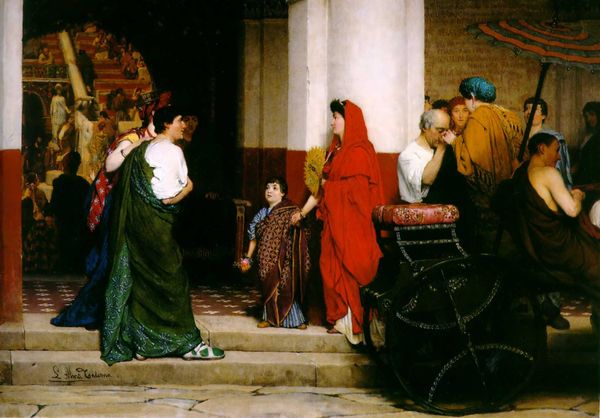
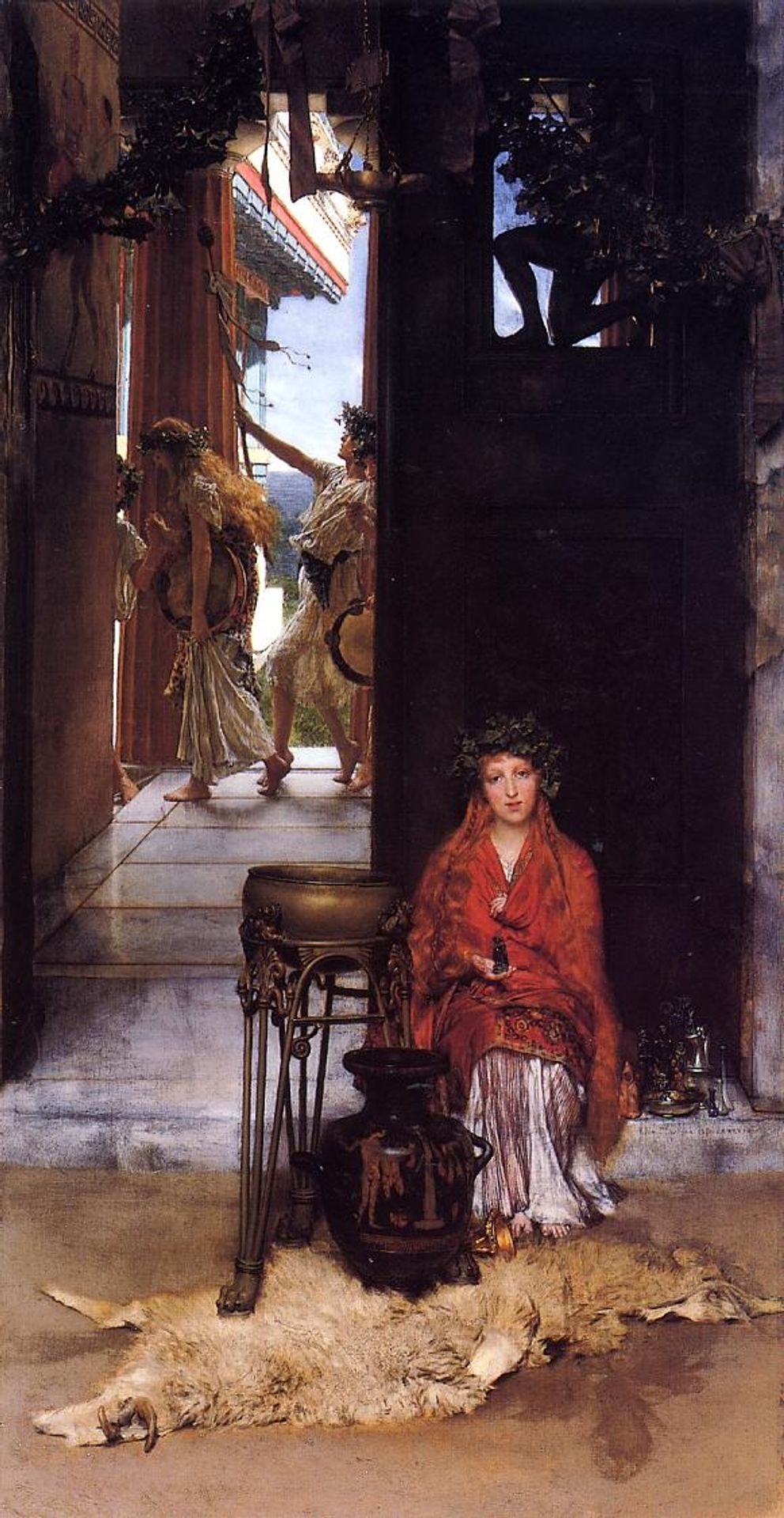
Curator: This is Lawrence Alma-Tadema's "The Way to the Temple," an oil painting dating back to 1882. It depicts a scene steeped in classical imagery. Editor: My first impression is how the composition is dramatically divided. A dark foreground occupied by a single pensive figure gives way to a bright, processional scene receding into the distance. Curator: Precisely. Alma-Tadema, known for his meticulous research, recreates a Roman setting here, reflecting the Victorian era's fascination with the classical world. Notice how academic art favoured this revivalism. Editor: Absolutely, I see it clearly in the way light falls on the marble. The formal elements really direct our gaze: from the intense red of the seated woman's cloak to the cool blues and greens in the background. It creates a captivating contrast. The artist's technique, this almost photographic realism… Curator: He definitely aimed for verisimilitude. Beyond the artistic technique, consider what these paintings represented to their audiences. Alma-Tadema was celebrated for making the ancient world accessible and relatable, yet always idealized and filtered through a very particular Victorian lens. Editor: The contrast makes me think of inner versus outer worlds, and highlights that division – one experiences a sense of joyful participation and the other of solemn contemplation. It's very theatrical. Curator: A perfect assessment, one must always recognize how theatricality played a role in creating these paintings. As to its popularity back in its day, it really did fulfill a cultural need to connect with a glorious past. Editor: I agree, looking at the structure itself it is undeniably thought provoking to analyse these pictorial dichotomies that were consciously deployed. It adds to our own experience of historical perception. Curator: Alma-Tadema wasn't simply documenting the past; he was actively constructing a particular version of it, heavily influenced by the prevailing tastes and values of his own time. Editor: In seeing how deliberate these choices were, the painting serves as a document that has revealed to me, both an echo from that Victorian Era while still exhibiting masterful control over light and composition.
The Way to the Temple
1882


Artwork details
- Medium
- painting, oil-paint
- Location
- Royal Academy of Arts (RA), London, UK
- Copyright
- Public domain
Tags
Comments
Share your thoughts
About this artwork
Curator: This is Lawrence Alma-Tadema's "The Way to the Temple," an oil painting dating back to 1882. It depicts a scene steeped in classical imagery. Editor: My first impression is how the composition is dramatically divided. A dark foreground occupied by a single pensive figure gives way to a bright, processional scene receding into the distance. Curator: Precisely. Alma-Tadema, known for his meticulous research, recreates a Roman setting here, reflecting the Victorian era's fascination with the classical world. Notice how academic art favoured this revivalism. Editor: Absolutely, I see it clearly in the way light falls on the marble. The formal elements really direct our gaze: from the intense red of the seated woman's cloak to the cool blues and greens in the background. It creates a captivating contrast. The artist's technique, this almost photographic realism… Curator: He definitely aimed for verisimilitude. Beyond the artistic technique, consider what these paintings represented to their audiences. Alma-Tadema was celebrated for making the ancient world accessible and relatable, yet always idealized and filtered through a very particular Victorian lens. Editor: The contrast makes me think of inner versus outer worlds, and highlights that division – one experiences a sense of joyful participation and the other of solemn contemplation. It's very theatrical. Curator: A perfect assessment, one must always recognize how theatricality played a role in creating these paintings. As to its popularity back in its day, it really did fulfill a cultural need to connect with a glorious past. Editor: I agree, looking at the structure itself it is undeniably thought provoking to analyse these pictorial dichotomies that were consciously deployed. It adds to our own experience of historical perception. Curator: Alma-Tadema wasn't simply documenting the past; he was actively constructing a particular version of it, heavily influenced by the prevailing tastes and values of his own time. Editor: In seeing how deliberate these choices were, the painting serves as a document that has revealed to me, both an echo from that Victorian Era while still exhibiting masterful control over light and composition.
Comments
Share your thoughts