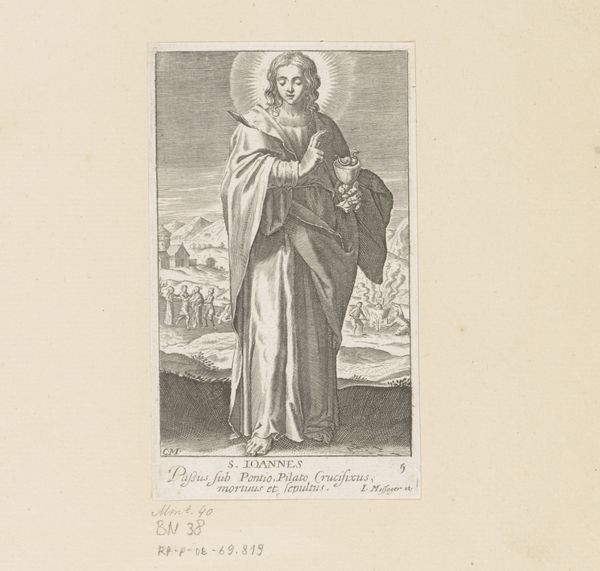
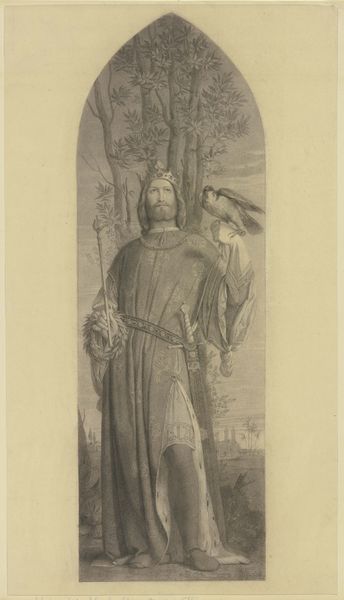
drawing, ink, pen
portrait
drawing
pen illustration
old engraving style
figuration
ink
pen
history-painting
academic-art
Dimensions: height 100 mm, width 70 mm
Copyright: Rijks Museum: Open Domain
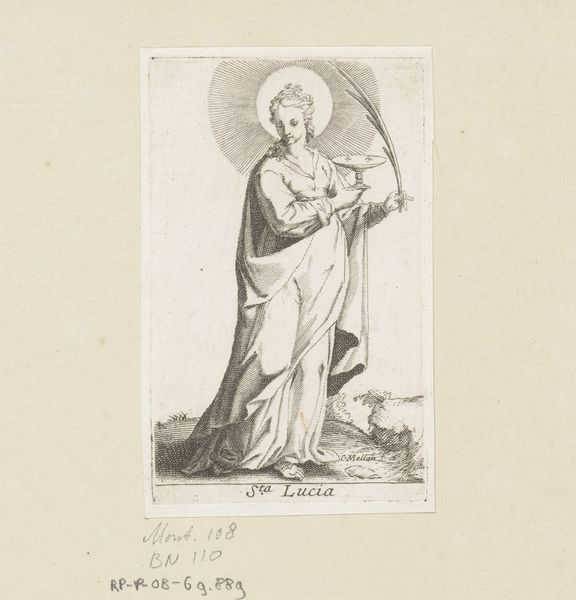
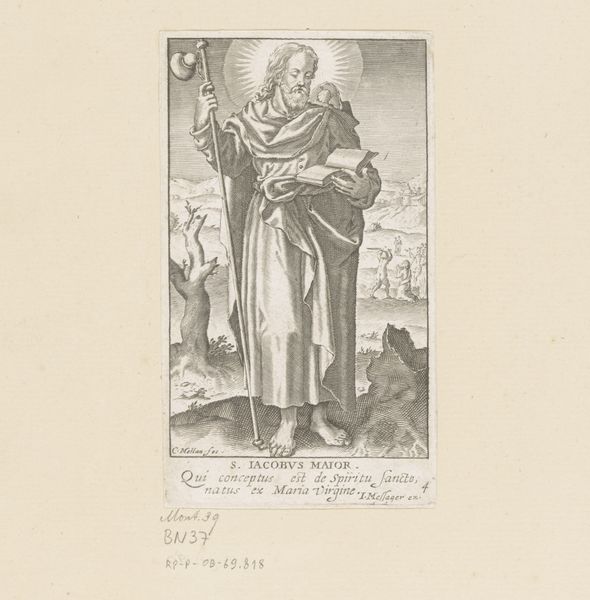
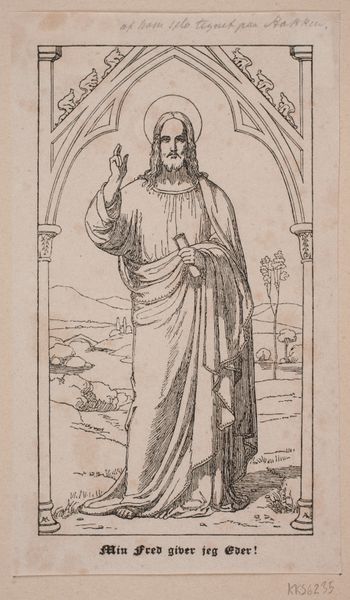
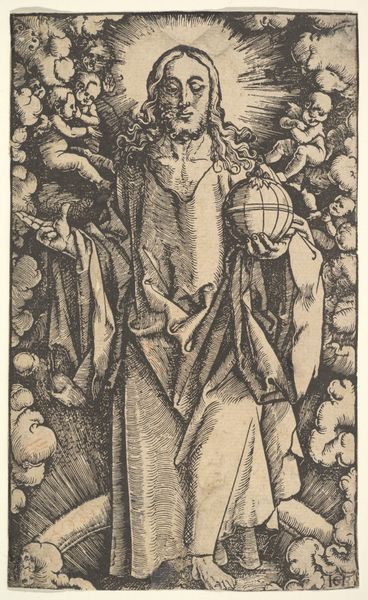
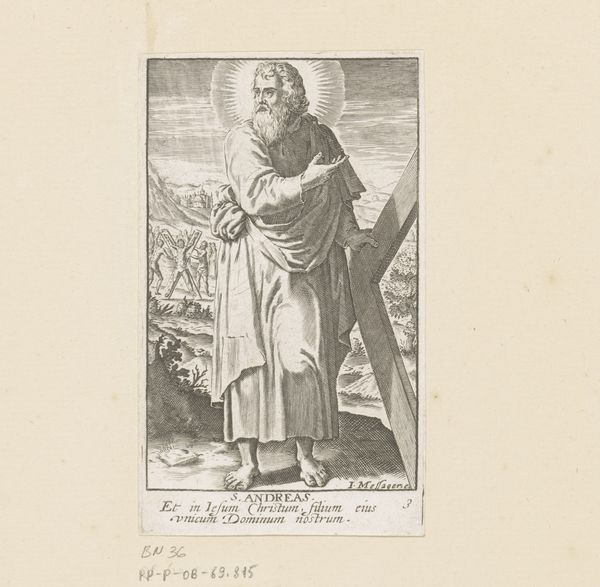
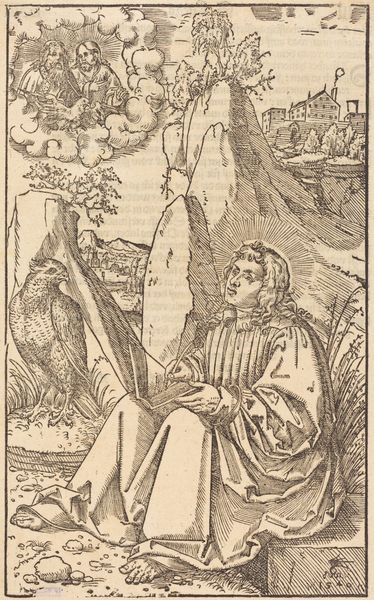
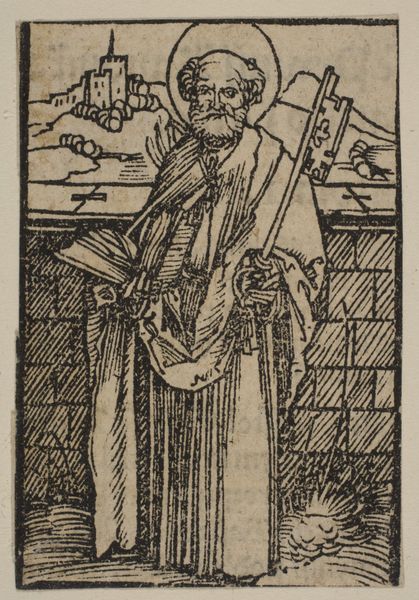
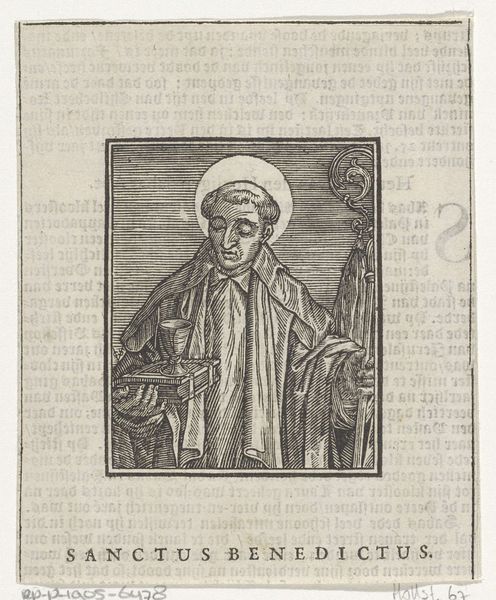
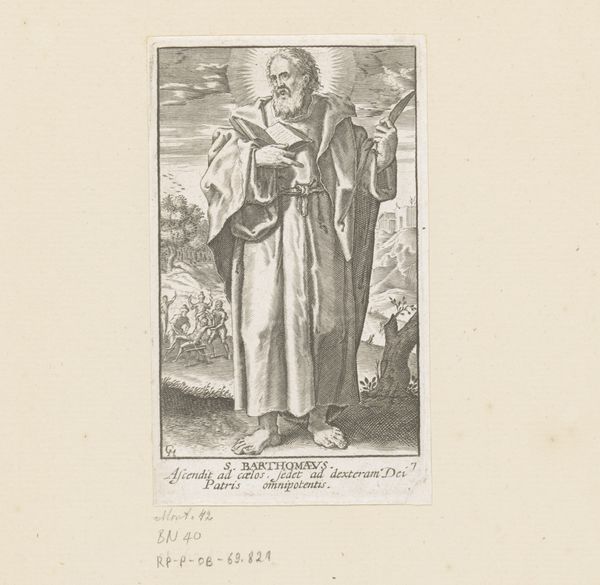
Curator: This pen and ink drawing is entitled "Ex libris van B. Kruyt," crafted in 1939 by Lodewijk Schelfhout, now held at the Rijksmuseum. The name "Ex Libris" implies this was created as a bookplate. Editor: It feels like stepping back in time; the crisp lines and the almost severe composition evoke a deep sense of reverence. The haloed figure gives the artwork an overtly saintly feel. Curator: Indeed, that "old engraving style" as it is often called recalls illuminated manuscripts but presented at the precipice of World War II. Notice how Schelfhout uses figuration to link historical modes of representation with the looming anxieties of the period. The contrast is striking. Editor: Absolutely. The halo immediately draws the eye, but it's surrounded by less familiar symbols. What about the building at the foot of the mountain, and those creatures swimming in the lower right? They give the saintly figure a specific context, maybe tying the book owner, B. Kruyt, to a particular place or belief system. Curator: I am very curious about the positioning of those particular creatures and forms – the almost classical style landscape against this religious central figure raises interesting ideas of knowledge and how power is legitimized through institutions in the face of natural life. Is there something inherent to academic-style history painting at play? Editor: Precisely! Symbols layered to create deeper meaning: those fish perhaps representing abundance, maybe spirituality, contrasting with an emerging factory in the background representing early industrialization...it encourages us to decipher not just what we see but also the memory embedded within the visual. Curator: In the face of such shifting social mores brought on by war and technology, these echoes of the past become critical sites for reflecting on tradition, progress, and societal memory. Thank you for giving those symbols greater gravity here, as so many would perhaps just view them as elements of decor. Editor: And thank you for always providing historical grounding. The artist is making a conversation possible, and hopefully, listeners here can appreciate those embedded messages.
Comments
No comments
Be the first to comment and join the conversation on the ultimate creative platform.
 React
React Comment