1840
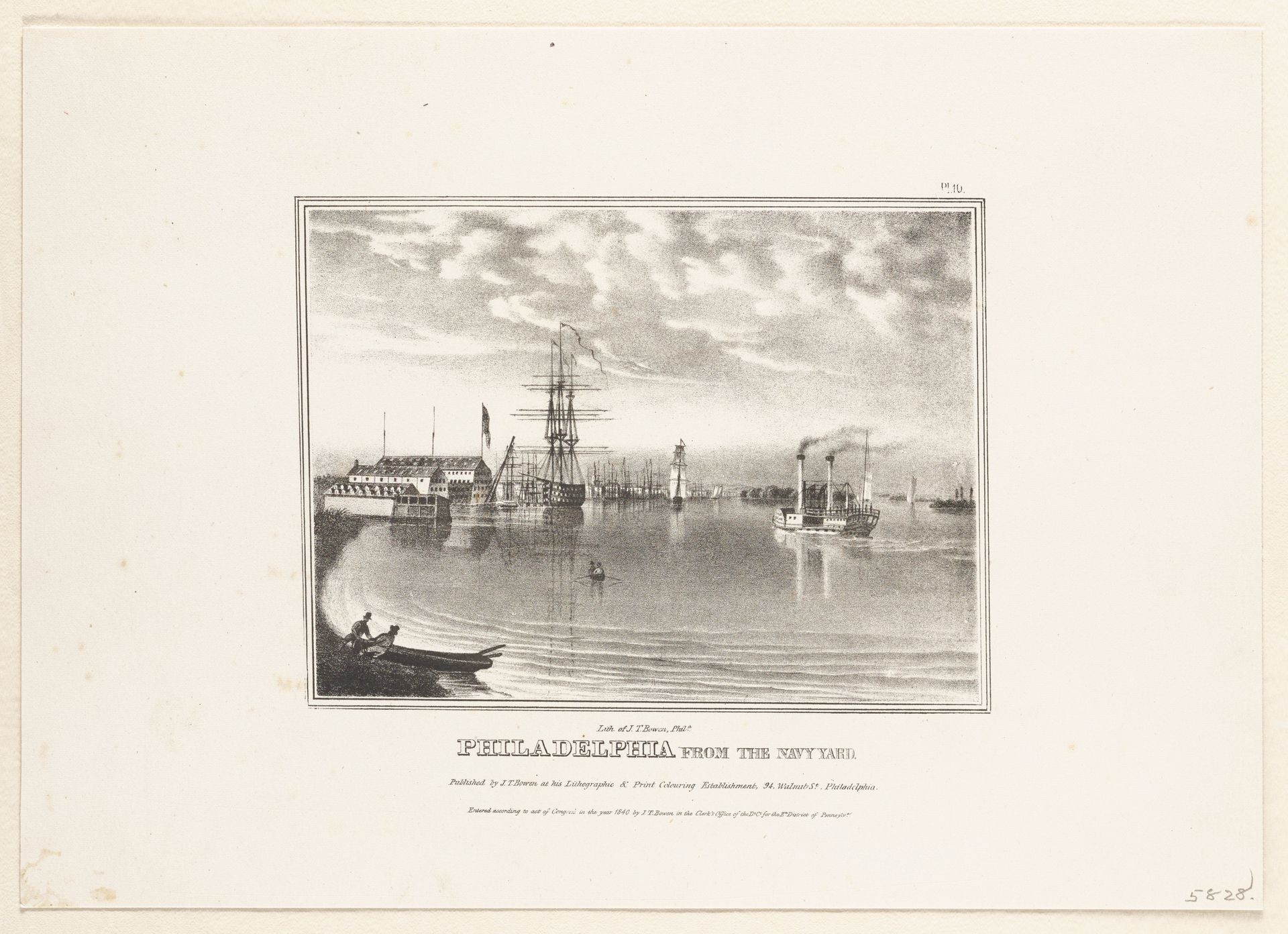
Philadelphia from the Navy Yard


Listen to curator's interpretation
Curatorial notes
Curator: Here we have "Philadelphia from the Navy Yard," a lithograph created around 1840 by John T. Bowen, providing an evocative glimpse into the city's maritime activity. Editor: It’s… surprisingly serene. The monochrome lends a wistful, almost dreamlike quality, especially with the ships fading into the hazy background. Curator: That reflects the Romanticism movement’s emphasis on emotion and nature's power. Bowen created this during a period of intense economic and social change. Depicting the navy yard highlights the era’s naval expansion, mirroring the nation’s ambitions and also touching upon themes of colonialism. Editor: That imposing sailing ship, however, stands out against the newfangled steamboats; it carries powerful connotations. The steamboat represented industrial progress, disrupting old sailing routes that connected nations over centuries, yet sailing ships retained prestige as symbols of global power and exploration. It signals an ongoing negotiation between past traditions and industrial transformations. Curator: Absolutely. And consider Philadelphia's position as a pivotal port. Images such as this affirmed the city's commercial prowess, reflecting how cityscapes were deliberately constructed to promote civic identity. This image showcases industrialization as something promising but not overwhelming, maintaining balance. Bowen was known for these kinds of scenes; we must examine how those idyllic representations of progress impacted labor practices or exploited resources that sustained it. Editor: It is curious how that single figure in the rowboat contrasts so sharply to those symbols of industry, almost a lonely remnant from another era—that solitary boat adrift as industrialization advances. A strong emblem, hinting at potential displacement. Curator: It shows how landscape, particularly as mediated through Romantic aesthetics, can both obscure and illuminate these tensions. Bowen romanticizes this image of commercial prosperity while perhaps unknowingly showing some unsettling seeds within it. Editor: The eye is drawn to this calm harbor scene. A harbor where both loss and great innovation seem to have occurred concurrently. A perfect summary. Curator: Indeed. Seeing it framed like this deepens our understanding of progress' intertwined legacies, demanding that we consider the price alongside the perceived benefits.