About this artwork
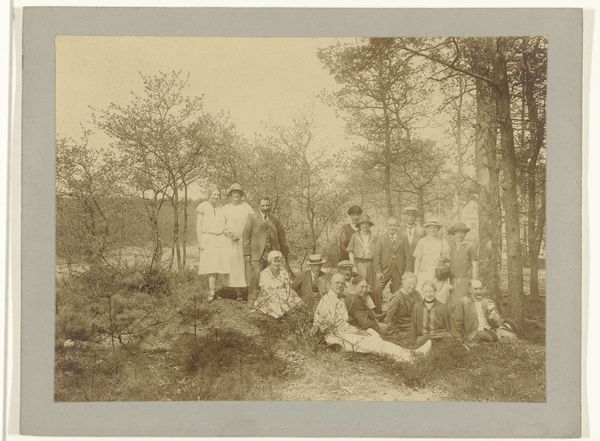
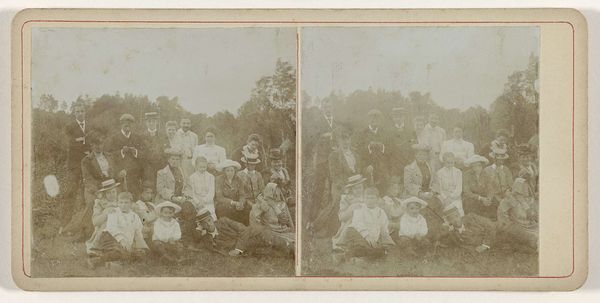
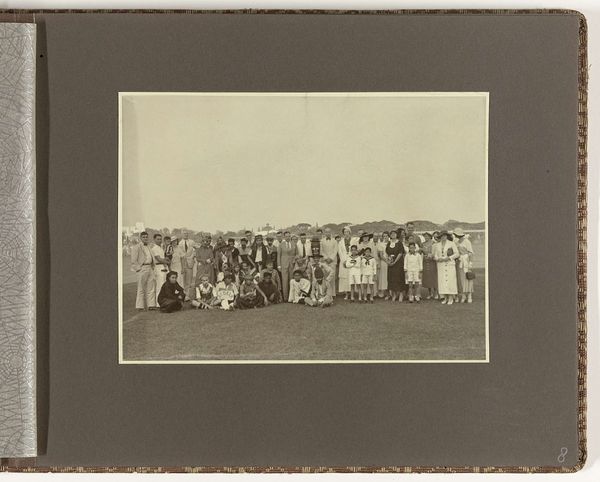
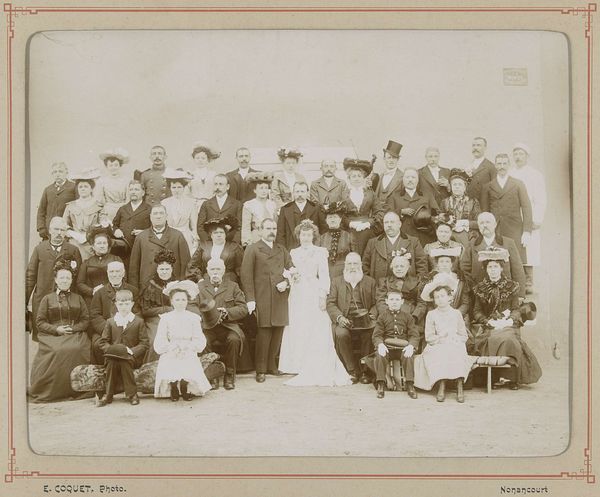
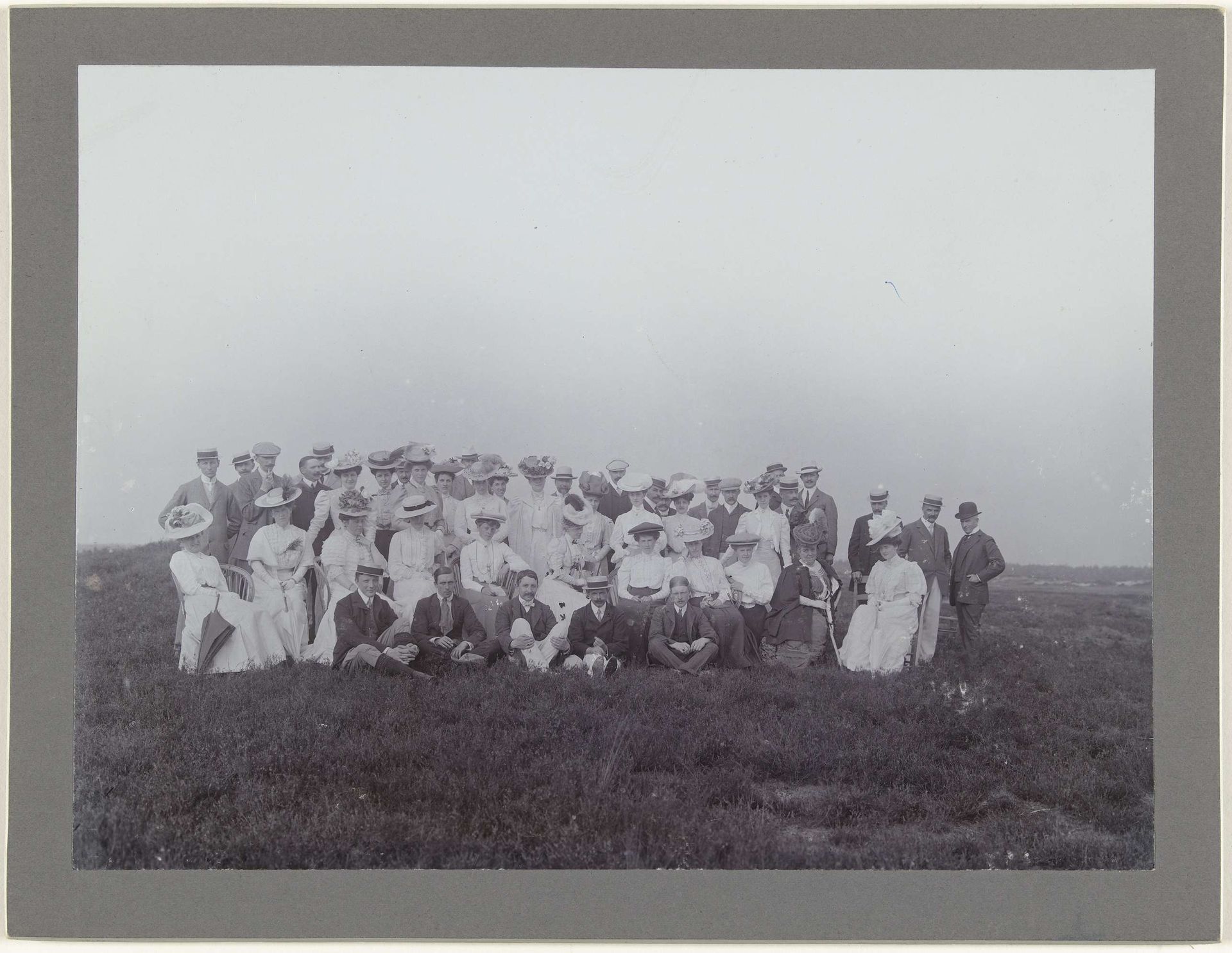
This photo, by Henry Pauw van Wieldrecht, captures what looks like fifty men and women clustered in a landscape, whenever that may have been. The limited tonal range—mostly grays and muted whites—gives it this strange, almost ghostly feel. You can imagine the process of developing the image, the careful timing and layering of chemicals. Look at the way the figures are arranged; a sea of faces, mostly in hats, blurring into one another. There’s something so intimate and intrusive about it, like peering into someone else's memory. The grainy texture and soft focus flatten the image, turning this group portrait into an abstract composition. It makes me think of the work of Gerhard Richter, the way he uses blur and abstraction to explore the unreliability of memory. Perhaps this photo is less about capturing a moment and more about the inherent limitations of representation itself. Either way, it's a piece that invites you to linger, to question, and to find your own meaning in the shadows.
Groepsportret van circa 50 mannen en vrouwen in een landschap
1906

Henry Pauw van Wieldrecht
1863 - 1912Location
RijksmuseumArtwork details
- Dimensions
- height 170 mm, width 230 mm, height 199 mm, width 258 mm
- Location
- Rijksmuseum
- Copyright
- Rijks Museum: Open Domain
Comments
Share your thoughts
About this artwork
This photo, by Henry Pauw van Wieldrecht, captures what looks like fifty men and women clustered in a landscape, whenever that may have been. The limited tonal range—mostly grays and muted whites—gives it this strange, almost ghostly feel. You can imagine the process of developing the image, the careful timing and layering of chemicals. Look at the way the figures are arranged; a sea of faces, mostly in hats, blurring into one another. There’s something so intimate and intrusive about it, like peering into someone else's memory. The grainy texture and soft focus flatten the image, turning this group portrait into an abstract composition. It makes me think of the work of Gerhard Richter, the way he uses blur and abstraction to explore the unreliability of memory. Perhaps this photo is less about capturing a moment and more about the inherent limitations of representation itself. Either way, it's a piece that invites you to linger, to question, and to find your own meaning in the shadows.
Comments
Share your thoughts