About this artwork
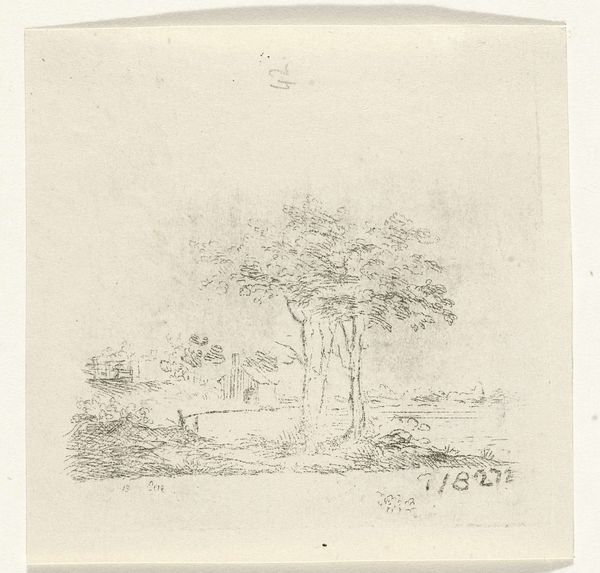
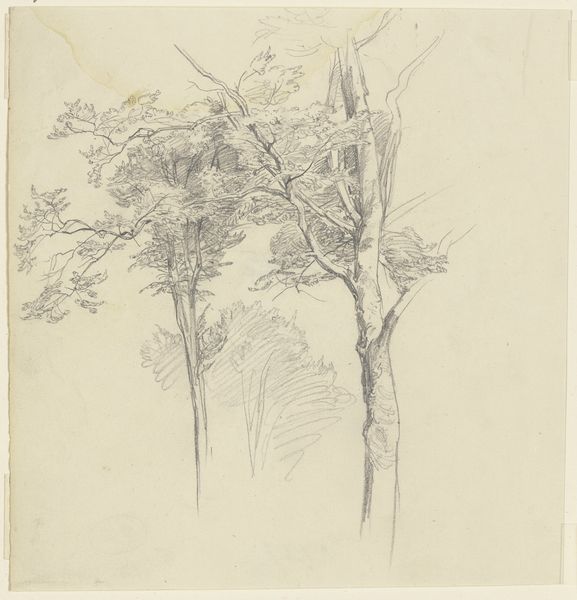
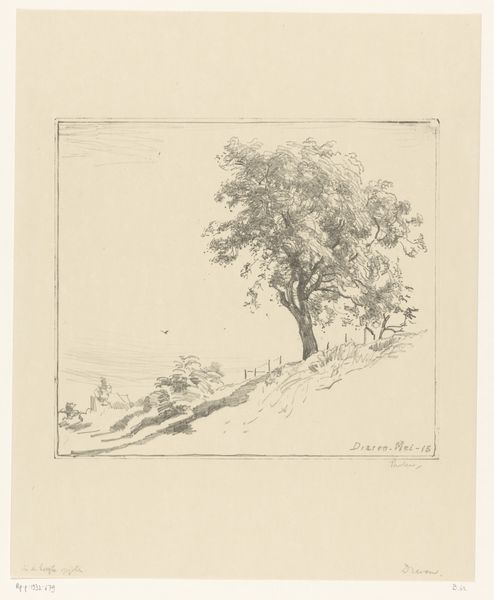
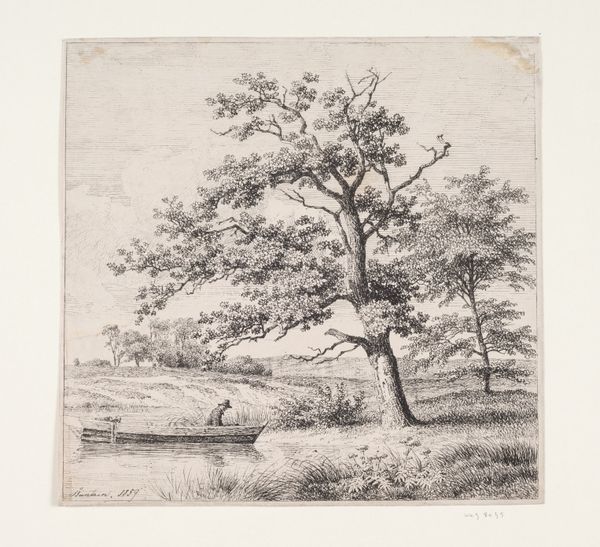
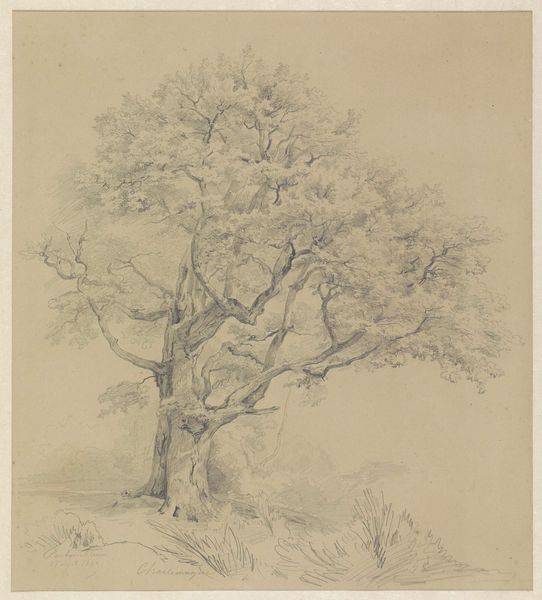
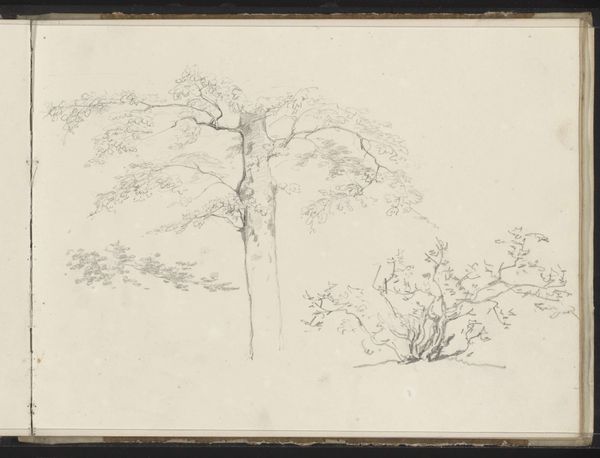
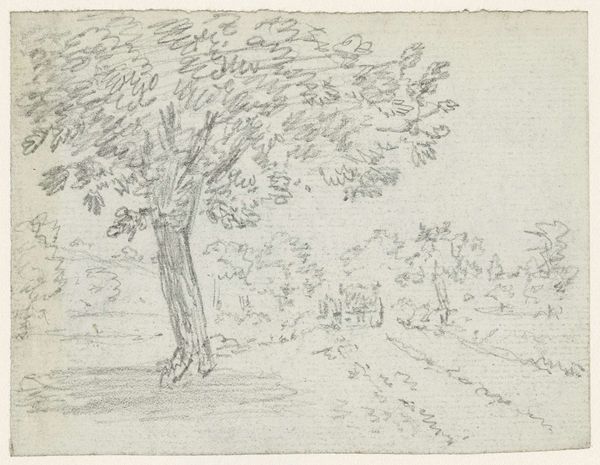
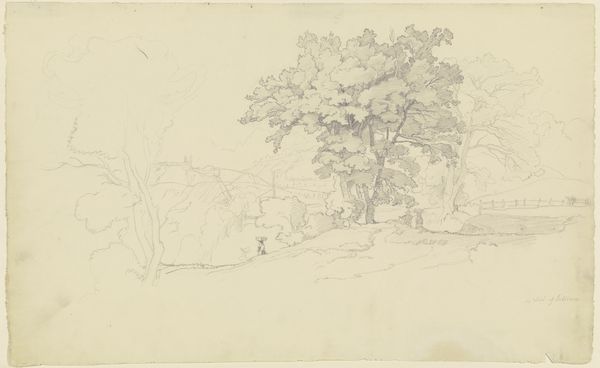
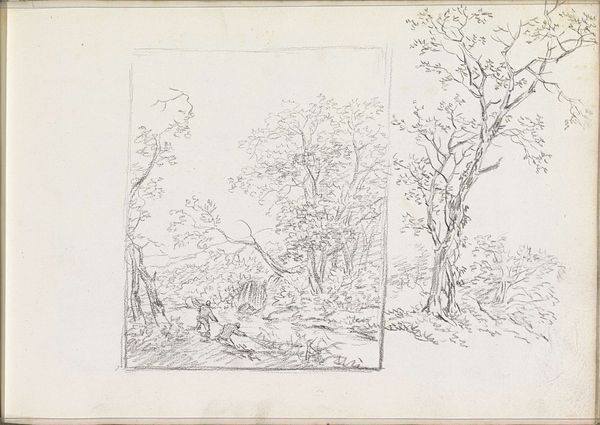
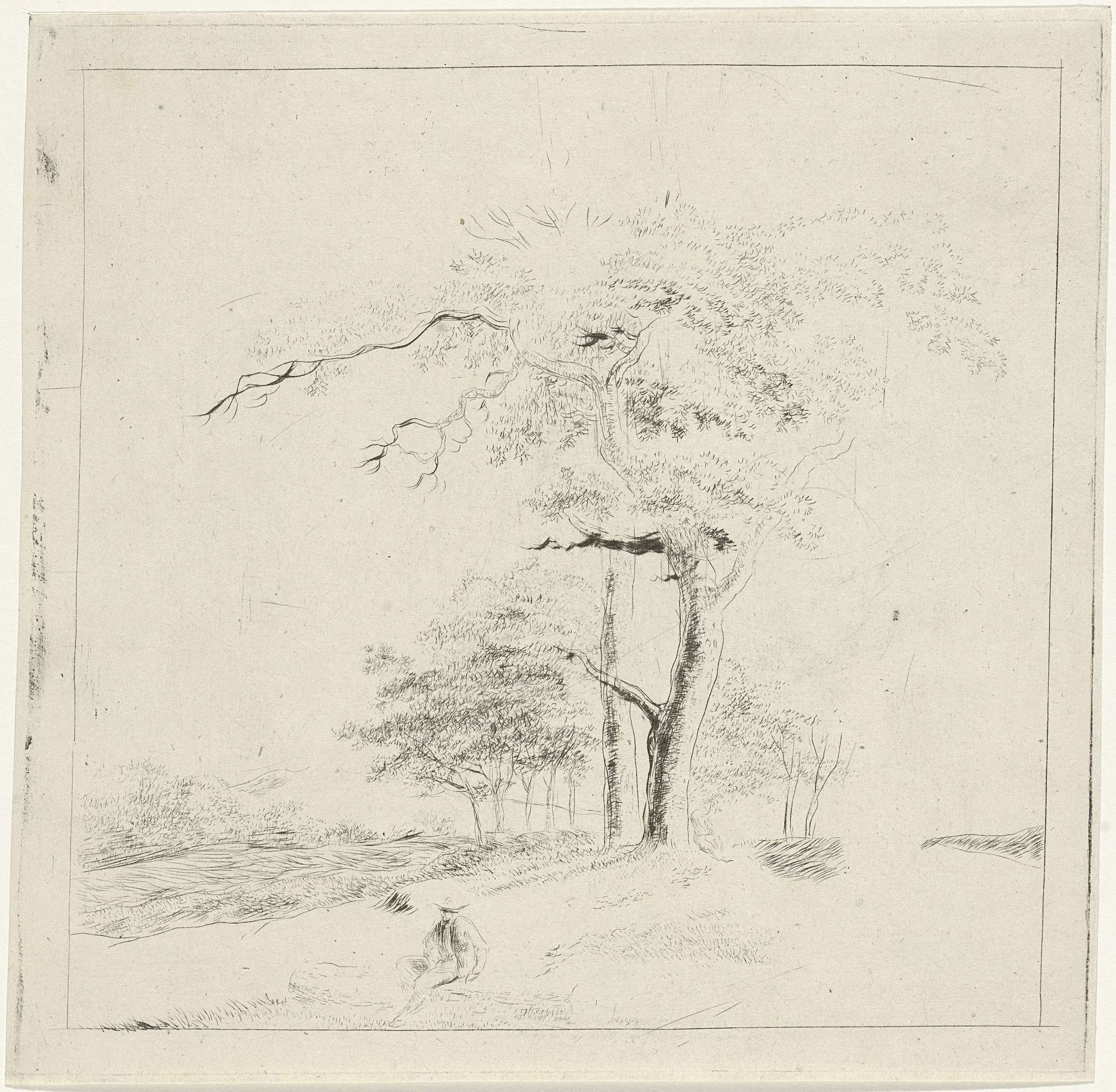
Curator: Here we have Hermanus Fock's "Studie met man op boomstam," or "Study with man on a tree trunk," believed to have been made sometime between 1781 and 1822. It’s a drawing combining pencil and ink on paper, currently held in the Rijksmuseum. Editor: There's a haunting stillness to this sketch. The very sparse application of the pencil and ink feels delicate, almost fragile, like it could disappear if you breathe on it. Curator: Absolutely. Considering Fock's broader artistic circle, landscape drawings like this reflected a growing appreciation for the natural world but also a more rudimentary aspect related to the drawing execution and his status as "just" an amateur. This connects to the culture of the time, where sketching *en plein air* was becoming popular but also accessible to non-professionals who would engage art as part of leisure activities. Editor: The materiality speaks to that. The relative affordability of pencil and paper democratized art-making. And if we examine closely, we note several initial strokes that remained as is. We see here, an engagement with artmaking rather than a finalized drawing for exhibition. This work reveals the labor, the process. It’s an amateur sketch, an incomplete pen-ink drawing experimentation, perhaps something found in a personal sketchbook. Curator: It certainly provides an intimate glimpse into Fock's process. There's a visible lack of pretension. The placement within the Rijksmuseum elevates this amateur sketch from a private practice object to a representation of a certain leisure class from this time. Editor: Right. And the museum's role here is crucial, it transforms the private act of sketching into a publicly accessible piece. How perceptions about skill, labor and "value" shift over time and in various settings! This modest artwork provides much food for thought, right? Curator: Yes indeed! It makes one ponder how the simplest of materials and a moment of quiet observation can resonate across centuries, altered by how, where, and why this sketch gets exhibited in our time.

Artwork details
- Medium
- drawing, paper, ink, pencil
- Dimensions
- height 187 mm, width 190 mm
- Location
- Rijksmuseum
- Copyright
- Rijks Museum: Open Domain
Tags
Comments
Share your thoughts
About this artwork
Curator: Here we have Hermanus Fock's "Studie met man op boomstam," or "Study with man on a tree trunk," believed to have been made sometime between 1781 and 1822. It’s a drawing combining pencil and ink on paper, currently held in the Rijksmuseum. Editor: There's a haunting stillness to this sketch. The very sparse application of the pencil and ink feels delicate, almost fragile, like it could disappear if you breathe on it. Curator: Absolutely. Considering Fock's broader artistic circle, landscape drawings like this reflected a growing appreciation for the natural world but also a more rudimentary aspect related to the drawing execution and his status as "just" an amateur. This connects to the culture of the time, where sketching *en plein air* was becoming popular but also accessible to non-professionals who would engage art as part of leisure activities. Editor: The materiality speaks to that. The relative affordability of pencil and paper democratized art-making. And if we examine closely, we note several initial strokes that remained as is. We see here, an engagement with artmaking rather than a finalized drawing for exhibition. This work reveals the labor, the process. It’s an amateur sketch, an incomplete pen-ink drawing experimentation, perhaps something found in a personal sketchbook. Curator: It certainly provides an intimate glimpse into Fock's process. There's a visible lack of pretension. The placement within the Rijksmuseum elevates this amateur sketch from a private practice object to a representation of a certain leisure class from this time. Editor: Right. And the museum's role here is crucial, it transforms the private act of sketching into a publicly accessible piece. How perceptions about skill, labor and "value" shift over time and in various settings! This modest artwork provides much food for thought, right? Curator: Yes indeed! It makes one ponder how the simplest of materials and a moment of quiet observation can resonate across centuries, altered by how, where, and why this sketch gets exhibited in our time.
Comments
Share your thoughts