1797
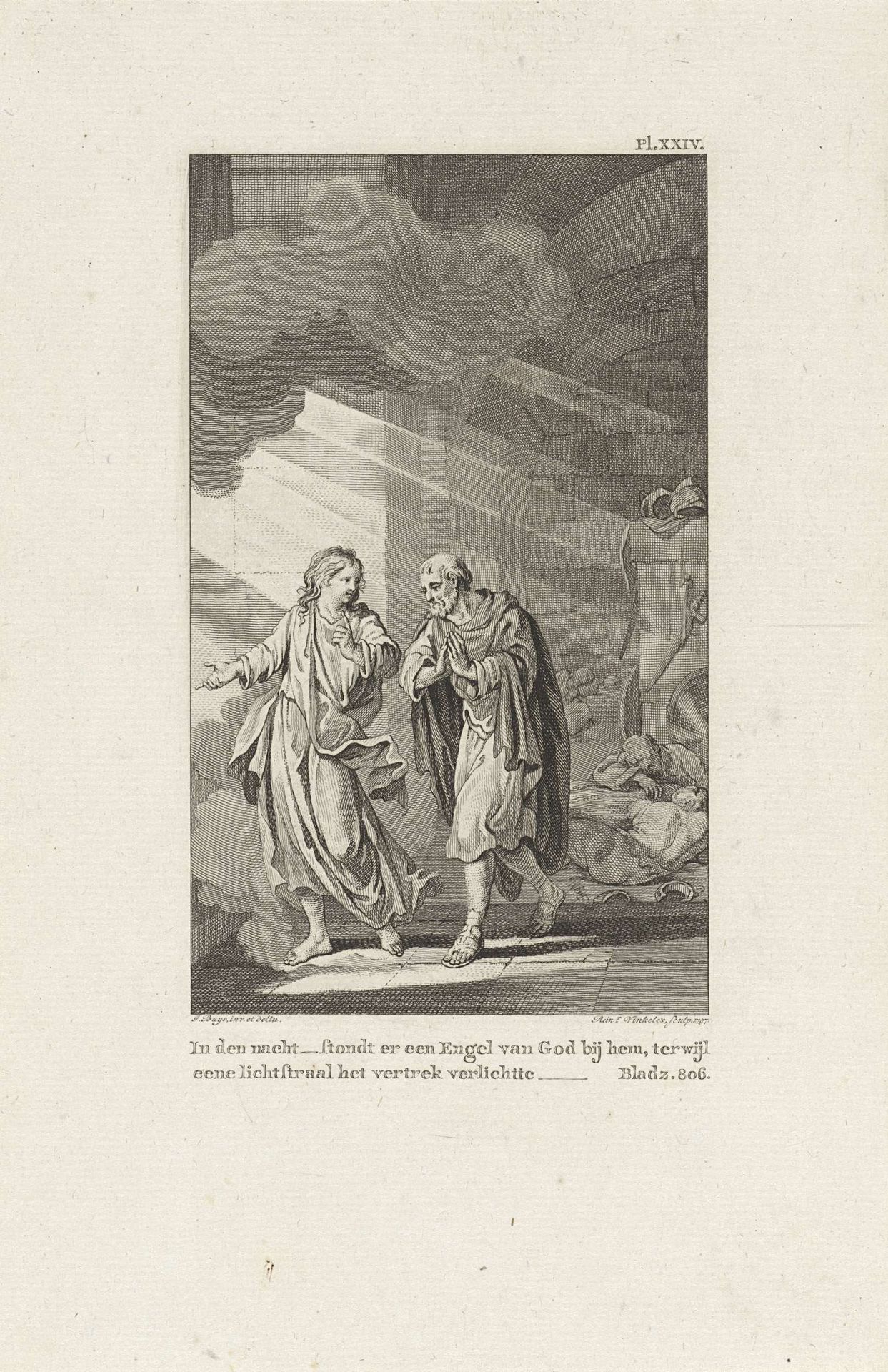
Bevrijding van Petrus uit de gevangenis

Reinier Vinkeles
1741 - 1816Location
RijksmuseumListen to curator's interpretation
Curatorial notes
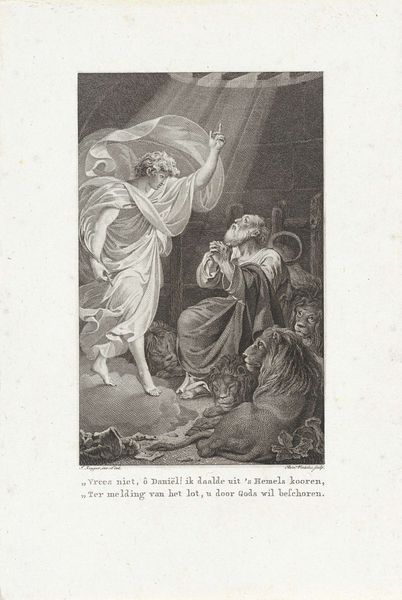
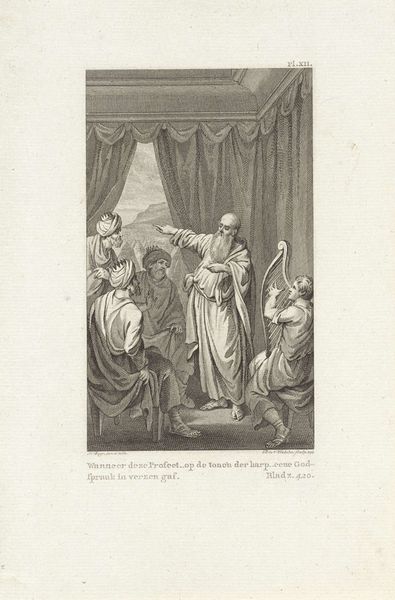
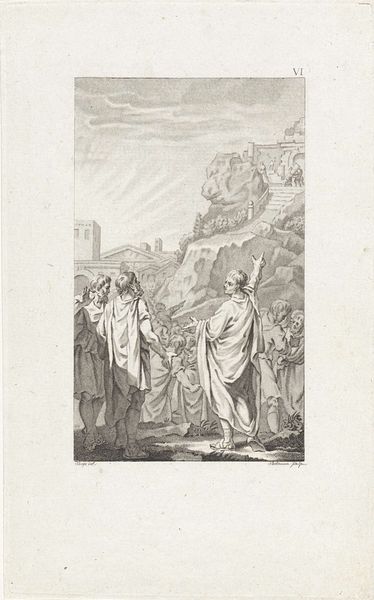
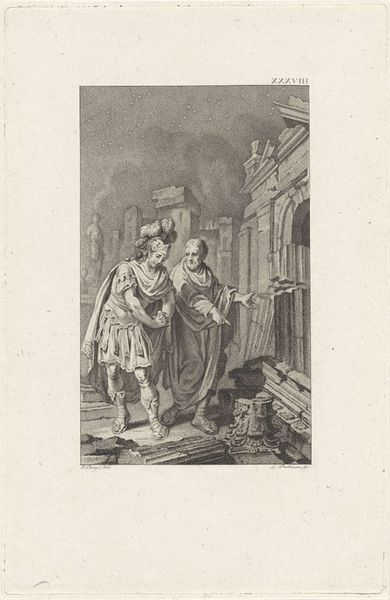
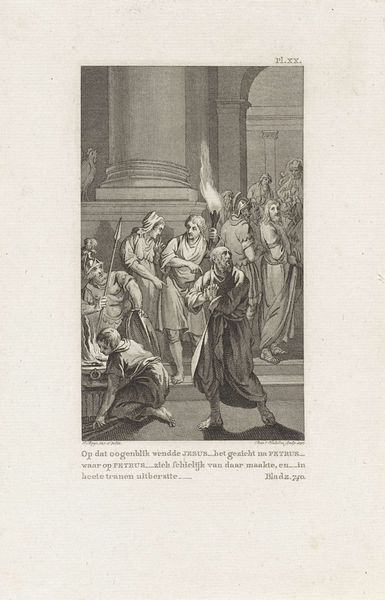
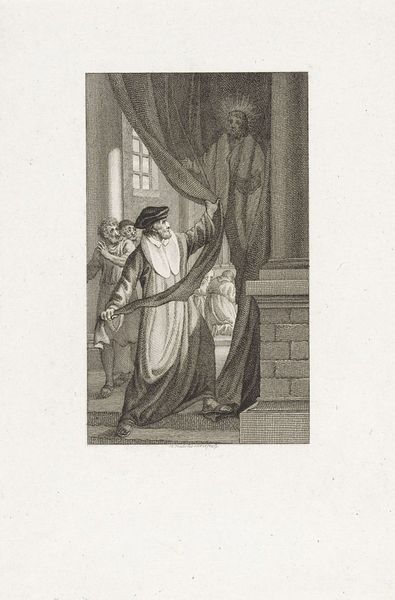
Curator: Let's consider this engraving, "Bevrijding van Petrus uit de gevangenis," dating to 1797, crafted by Reinier Vinkeles and now residing here at the Rijksmuseum. Editor: Immediately, what strikes me is the dramatic lighting. The harsh lines, typical of engraving, coupled with the contrasting light and shadow, create a sense of stark realism. I’m also curious about the type of paper Vinkeles used and how the etching affected its fibers. Curator: Light plays a pivotal role. It doesn’t just illuminate the scene, but suggests divine intervention. It’s classic baroque staging, but Vinkeles employs it to convey a narrative – specifically, Peter’s miraculous escape facilitated by an angel. Consider the iconography: the angel radiating light, contrasting against the slumped forms of the guards. It's not just about the technical execution but what it symbolizes. Editor: I agree the scene itself relies on familiar iconography, but I wonder what the actual process looked like. The precision and labor involved must have been tremendous. Think of the socio-economic context too. Who would have owned such prints? What kind of workshops would produce engravings of this kind, how were artists like Vinkeles viewed in society? These questions really highlight the art’s function and place in culture at the time. Curator: That perspective opens it up – thinking of ownership and viewership broadens our understanding of its place in society at the time. Considering this as a historical record, or at least, a very specific and culturally biased visual record of a spiritual event shifts how we look at it now. I had primarily considered it as the spiritual drama that Reinier Vinkeles meant it to be. Editor: Ultimately, analyzing the materials, labor, and distribution of art objects makes us consider who had access and how it affected representation itself. I do like thinking about the choices made around image creation that, when contextualized, can open it up so greatly. Curator: Absolutely. And delving into the symbols embedded in "Bevrijding van Petrus uit de gevangenis" has provided a way of thinking about cultural continuity over time, not simply technique or spiritual moment, though both were equally on display. Editor: A fascinating combination of materiality and symbolism that continues to provoke insightful questions and analysis.