About this artwork
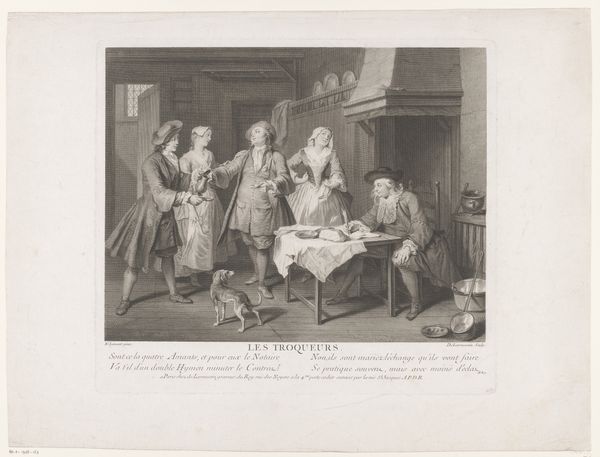
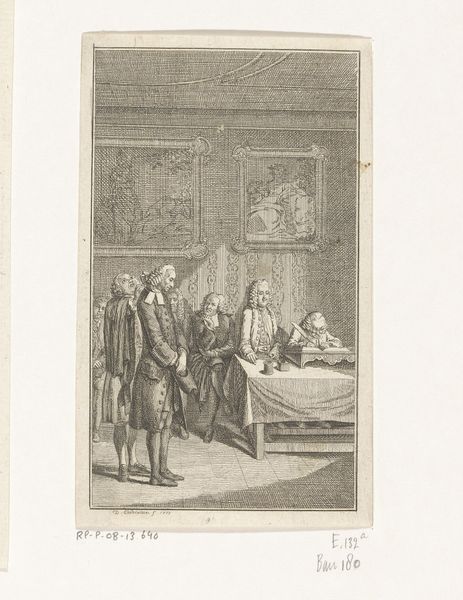
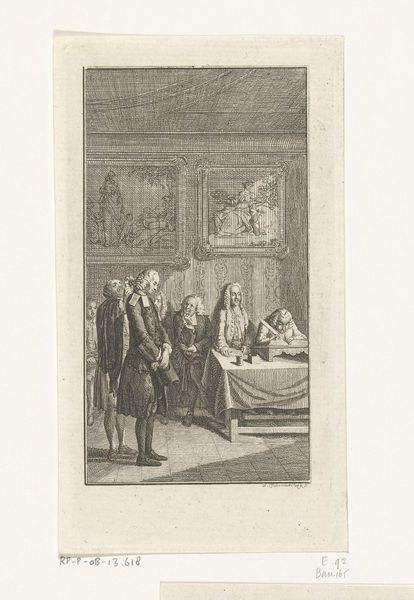
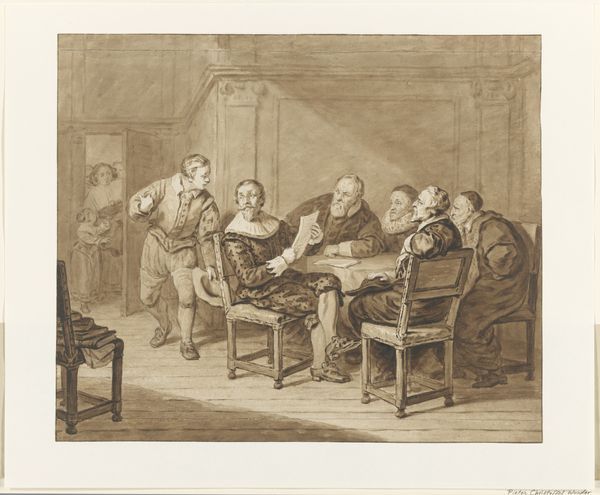
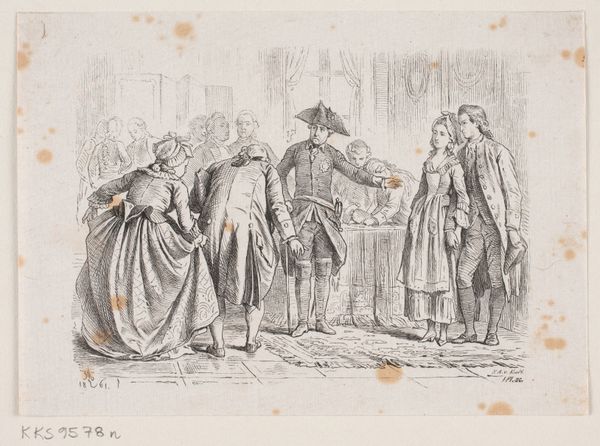
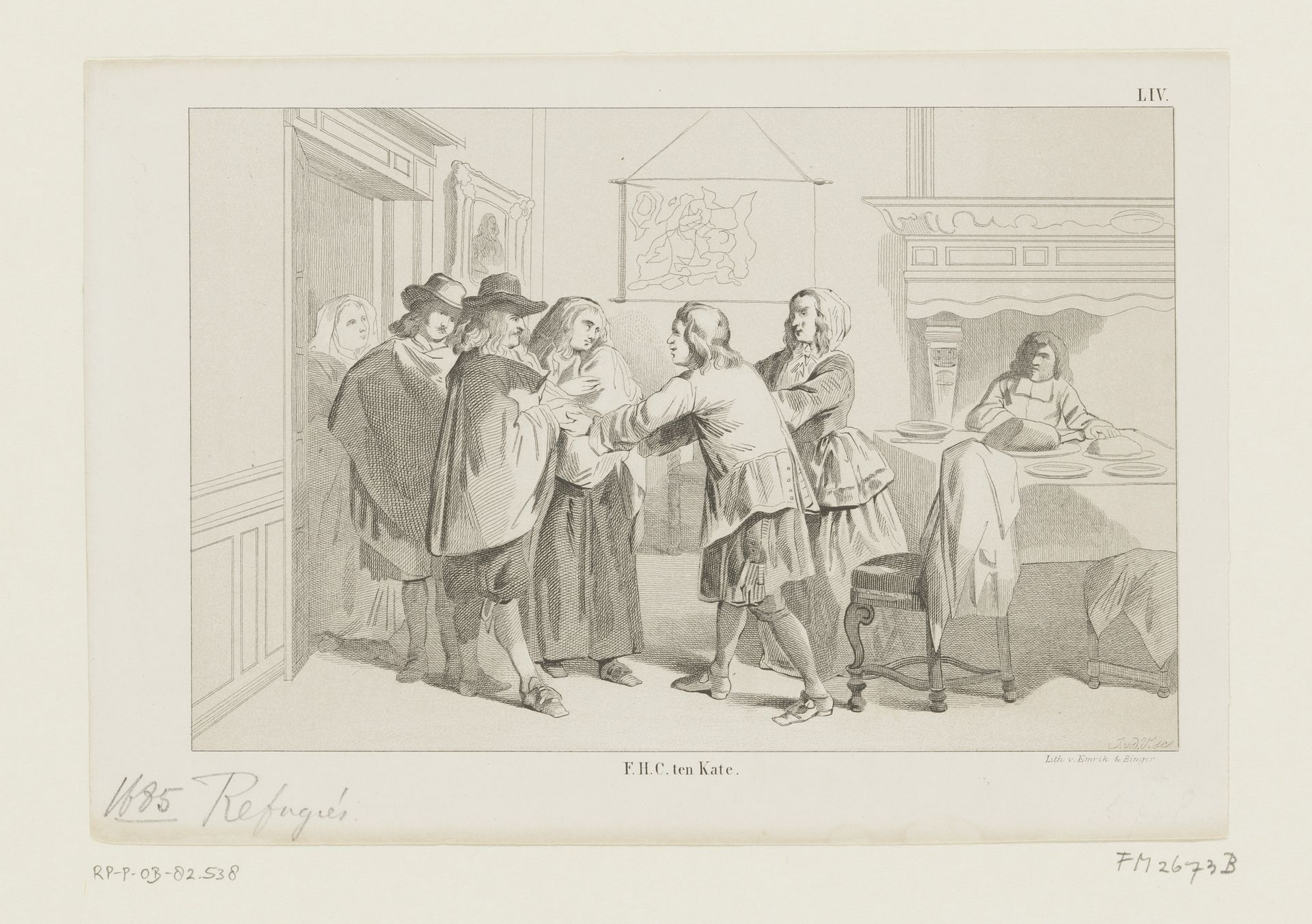
Editor: Here we have Jan van der Veen's print, "Ontvangst van gevluchte hugenoten, 1685," created between 1853 and 1861, now residing at the Rijksmuseum. It seems to depict a poignant moment of welcome and relief. There’s a vulnerability to the refugees that I find striking, almost as if their journey just ended now. What emotions or stories do you see embedded in this work? Curator: Oh, it's a whisper of empathy, isn't it? Imagine those fleeing religious persecution, seeking solace, and new beginnings. The artist, working two centuries after the event, channels the baroque drama into a gente-like interior. Did you notice how the light seems to fall just so on their faces? A soft illumination. As if to say “welcome home”. Editor: Yes, the light definitely draws attention to the emotional exchange between the people in the center, highlighting that exact sense of welcome. Is that historical accuracy or artistic license? Curator: A delightful dance of both, I’d argue. While meticulously researched for details like costume and interior, artists like Jan also used these moments to remind society about timeless virtues – compassion, generosity. Think of the tension. The line where human kindness triumphs! It reminds you, perhaps to be kinder to those in need in your community. It does for me! Editor: I see what you mean, almost like a gentle nudge towards present-day awareness through a historical lens. It is a timely work! I’ll definitely look at it in a new light now. Thanks! Curator: Anytime! Maybe art history could use that kind of lens more often. Art can remind us, as much as the world can often forget.
Ontvangst van gevluchte hugenoten, 1685 1853 - 1861

Jan van der (prentmaker) Veen
1831 - 1860Location
RijksmuseumArtwork details
- Dimensions
- height 166 mm, width 242 mm
- Location
- Rijksmuseum
- Copyright
- Rijks Museum: Open Domain
Comments
No comments
About this artwork
Editor: Here we have Jan van der Veen's print, "Ontvangst van gevluchte hugenoten, 1685," created between 1853 and 1861, now residing at the Rijksmuseum. It seems to depict a poignant moment of welcome and relief. There’s a vulnerability to the refugees that I find striking, almost as if their journey just ended now. What emotions or stories do you see embedded in this work? Curator: Oh, it's a whisper of empathy, isn't it? Imagine those fleeing religious persecution, seeking solace, and new beginnings. The artist, working two centuries after the event, channels the baroque drama into a gente-like interior. Did you notice how the light seems to fall just so on their faces? A soft illumination. As if to say “welcome home”. Editor: Yes, the light definitely draws attention to the emotional exchange between the people in the center, highlighting that exact sense of welcome. Is that historical accuracy or artistic license? Curator: A delightful dance of both, I’d argue. While meticulously researched for details like costume and interior, artists like Jan also used these moments to remind society about timeless virtues – compassion, generosity. Think of the tension. The line where human kindness triumphs! It reminds you, perhaps to be kinder to those in need in your community. It does for me! Editor: I see what you mean, almost like a gentle nudge towards present-day awareness through a historical lens. It is a timely work! I’ll definitely look at it in a new light now. Thanks! Curator: Anytime! Maybe art history could use that kind of lens more often. Art can remind us, as much as the world can often forget.
Comments
No comments