1500 - 1550
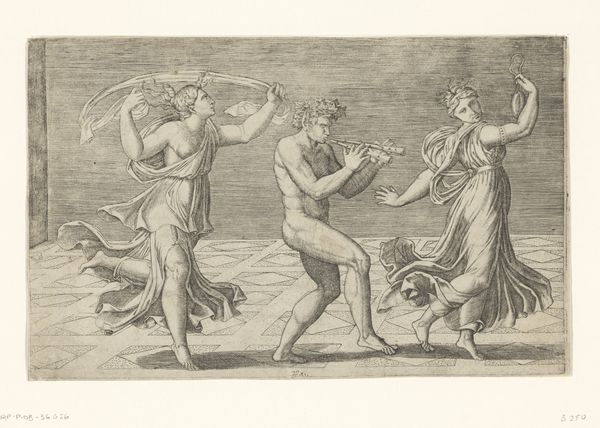
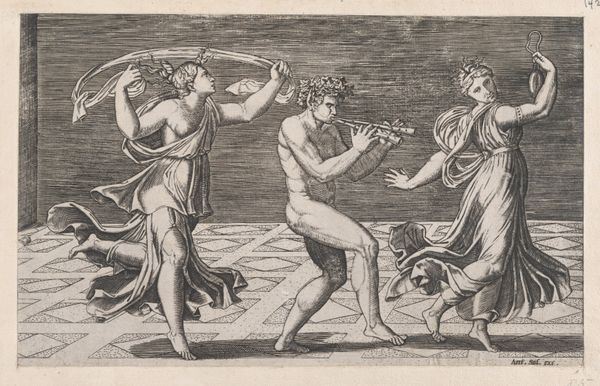
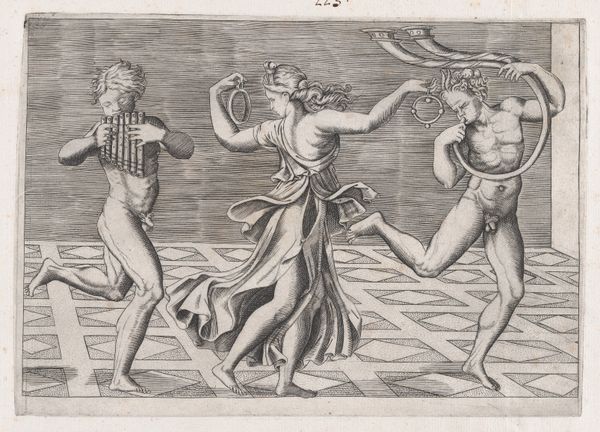
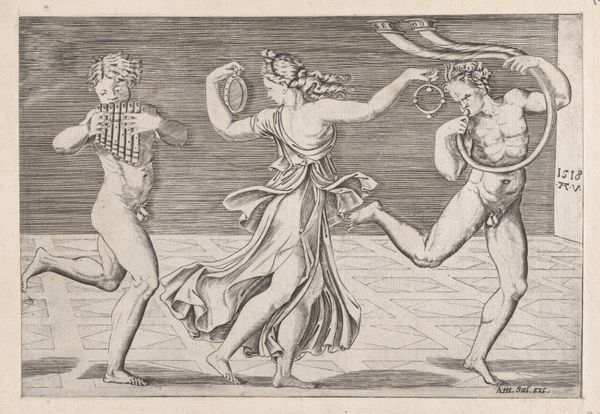
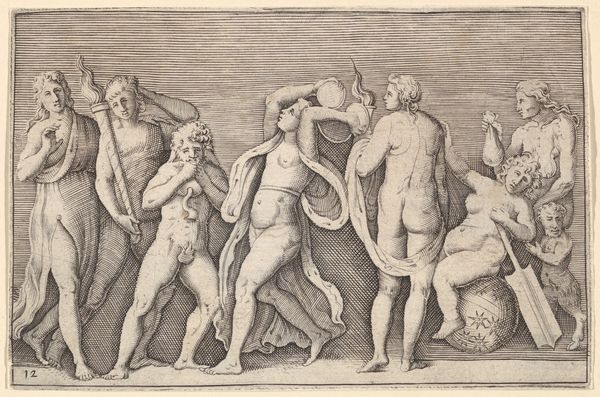
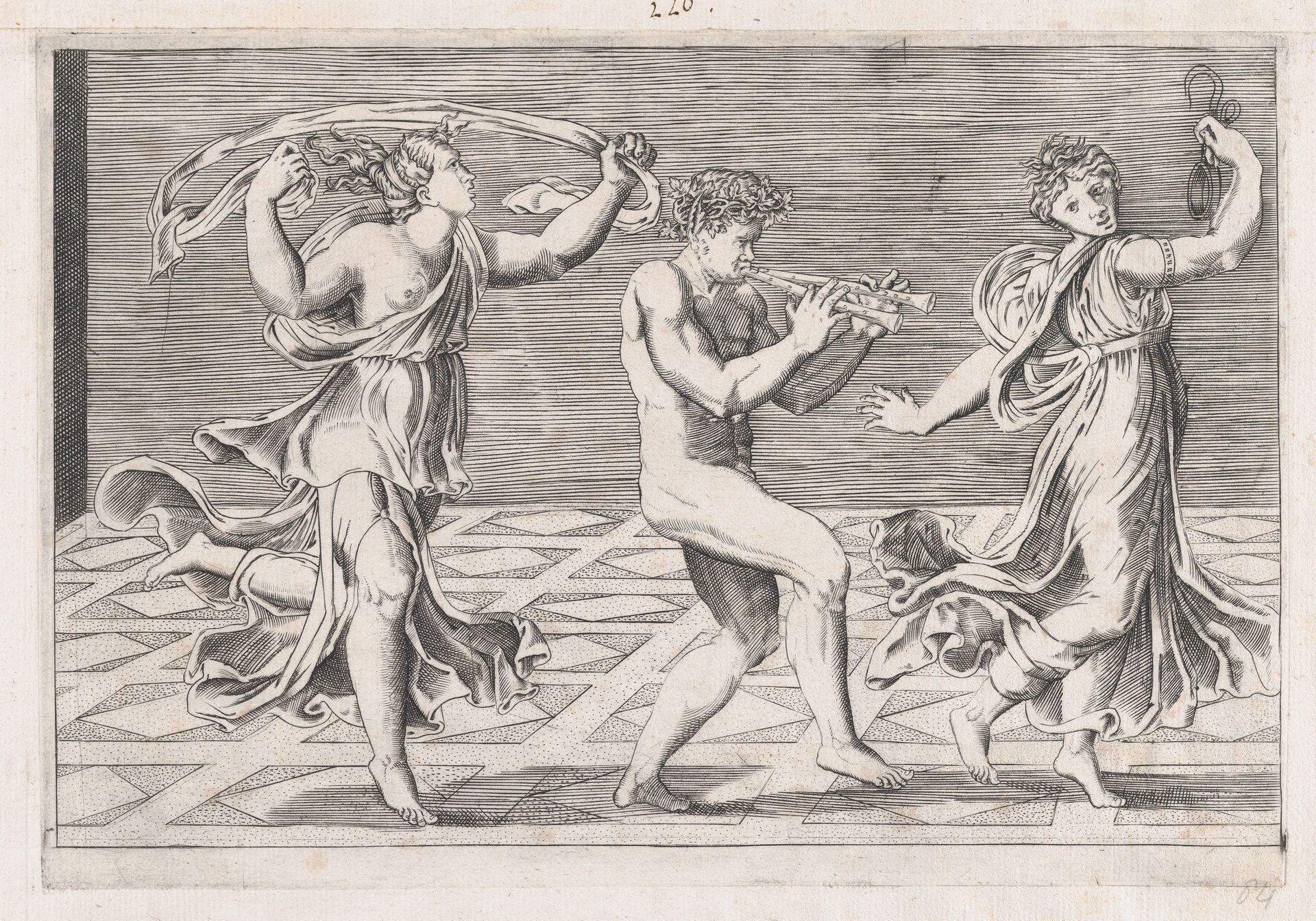
Speculum Romanae Magnificentiae: Dance of Fauns and Bacchants


Listen to curator's interpretation
Curatorial notes
This print, "Dance of Fauns and Bacchants," was made using an engraving process; an anonymous artist cut lines into a metal plate, likely copper, with a tool called a burin. The incised lines hold ink, which is then transferred to paper under great pressure. The image, made up of tiny hatched marks, shows figures in motion: a piper, dancers, and what appears to be a small goat. The quality of the print relies entirely on the engraver’s skill, and the time taken to produce a delicate image. The print would have been relatively inexpensive to produce in multiples, and easy to distribute. Prints like this circulated widely, serving as a means of communicating classical aesthetics. The “Speculum Romanae Magnificentiae” was a project to document the wonders of ancient Rome, and this print reflects a broader interest in antiquity. We can consider this artwork as an explicit example of art's intersection with the economics of its time, challenging traditional distinctions between fine art and craft.