About this artwork
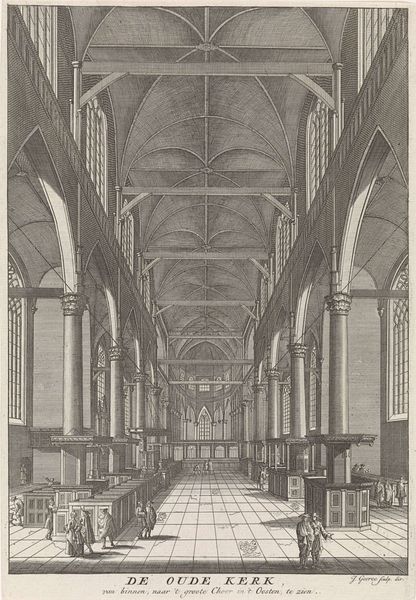
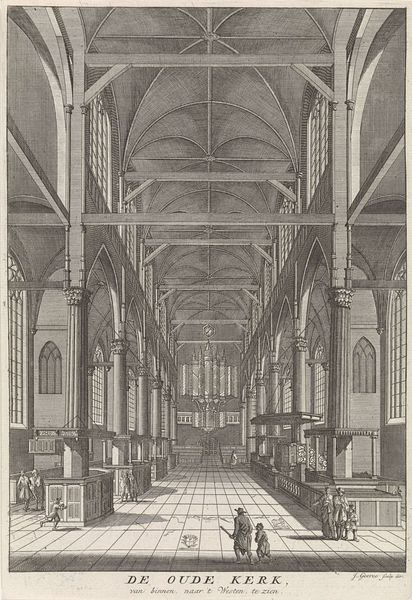
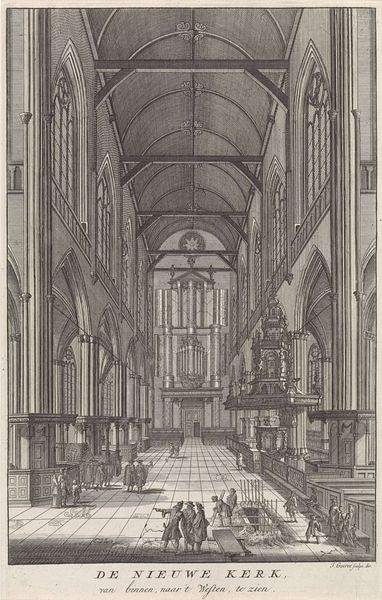
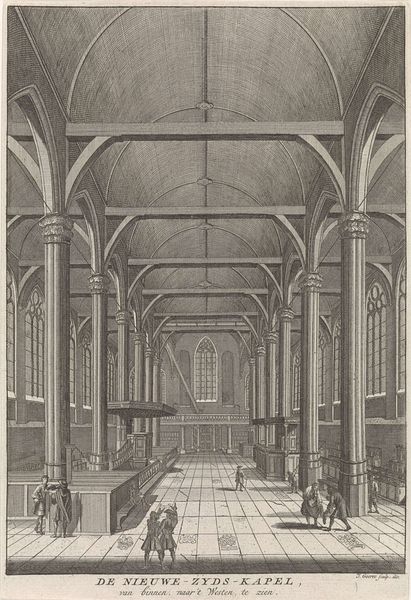
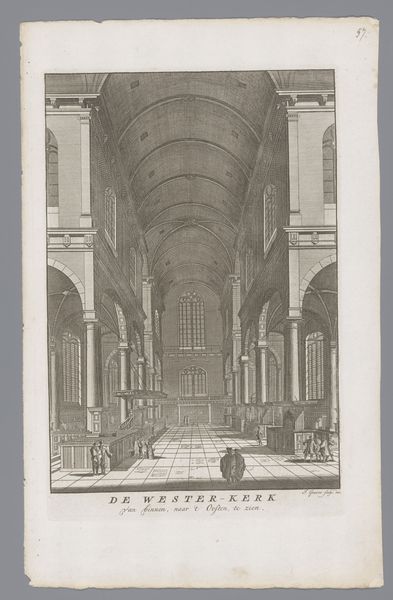
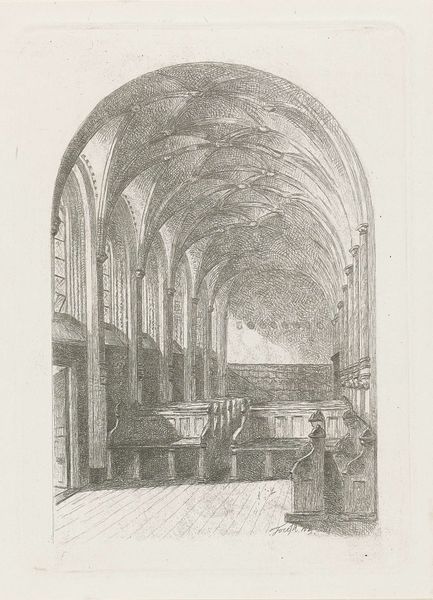
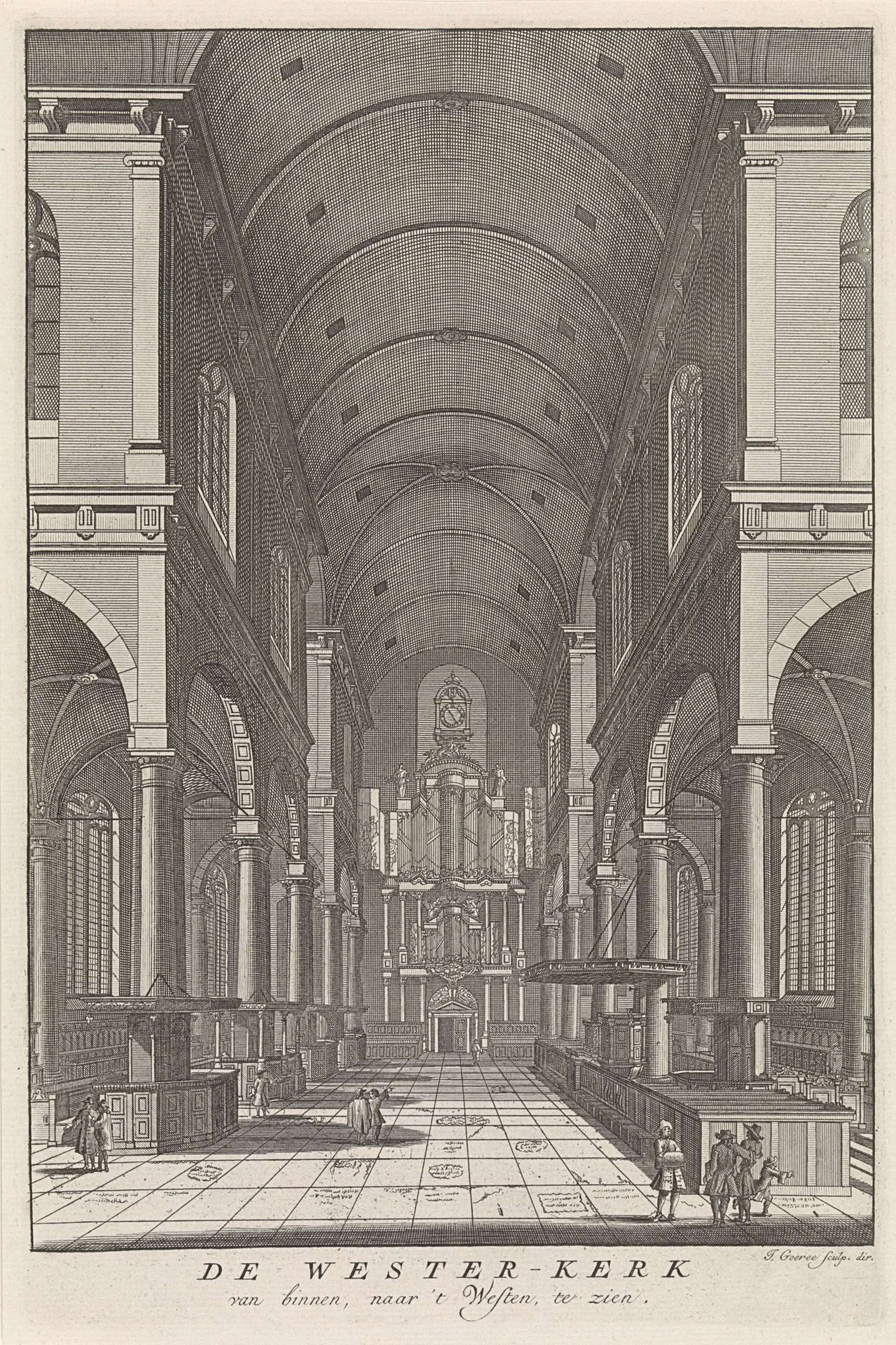
Jan Goeree made this print of the Westerkerk in Amsterdam around the turn of the 18th century. It's rendered in etching and engraving, essentially scratching lines into a metal plate that then holds ink. Now, consider this immense building. It wasn't just dreamt up, it was erected, brick by brick. Think of the labor, from quarrying stone to milling timber. The print flattens all that effort into delicate lines, the artist skillfully capturing the church’s soaring interior. Look at the strict geometry, the rows of windows, the barrel-vaulted ceiling. It’s a celebration of order. The architectural rendering, too, is a kind of labor. Goeree isn't just documenting a space, but translating it through meticulous handwork. The contrast between the implied industry of the church's construction, and the artisanry of the print itself, invites us to appreciate the human effort embedded in both. It’s a powerful reminder that everything we see is the product of someone’s work.
Interieur van de Amsterdamse Westerkerk, gezien naar het westen.
1680 - 1731

Jan Goeree
1670 - 1731Location
RijksmuseumArtwork details
- Medium
- print, engraving, architecture
- Dimensions
- height 271 mm, width 181 mm
- Location
- Rijksmuseum
- Copyright
- Rijks Museum: Open Domain
Tags
Comments
Share your thoughts
About this artwork
Jan Goeree made this print of the Westerkerk in Amsterdam around the turn of the 18th century. It's rendered in etching and engraving, essentially scratching lines into a metal plate that then holds ink. Now, consider this immense building. It wasn't just dreamt up, it was erected, brick by brick. Think of the labor, from quarrying stone to milling timber. The print flattens all that effort into delicate lines, the artist skillfully capturing the church’s soaring interior. Look at the strict geometry, the rows of windows, the barrel-vaulted ceiling. It’s a celebration of order. The architectural rendering, too, is a kind of labor. Goeree isn't just documenting a space, but translating it through meticulous handwork. The contrast between the implied industry of the church's construction, and the artisanry of the print itself, invites us to appreciate the human effort embedded in both. It’s a powerful reminder that everything we see is the product of someone’s work.
Comments
Share your thoughts