About this artwork
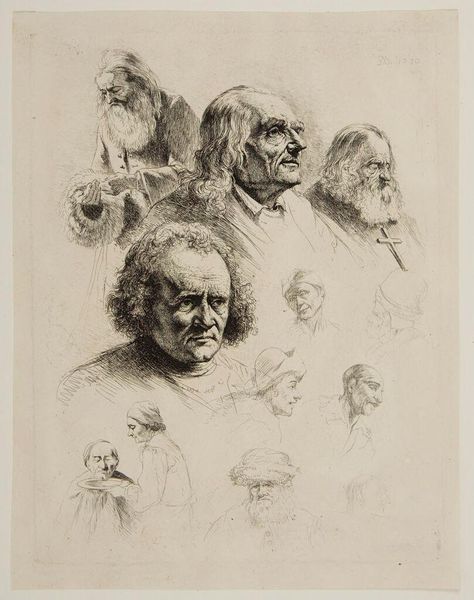
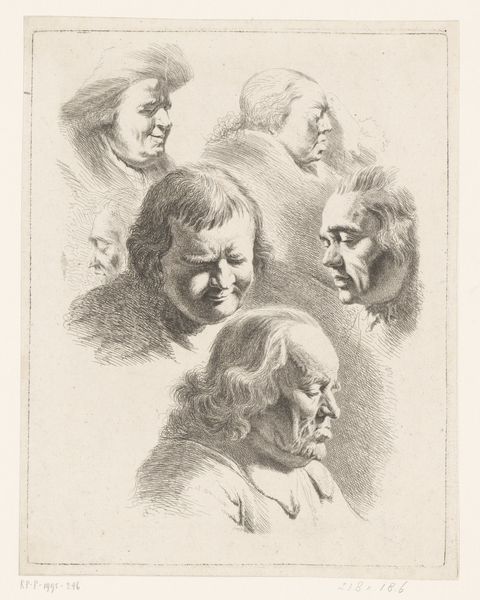
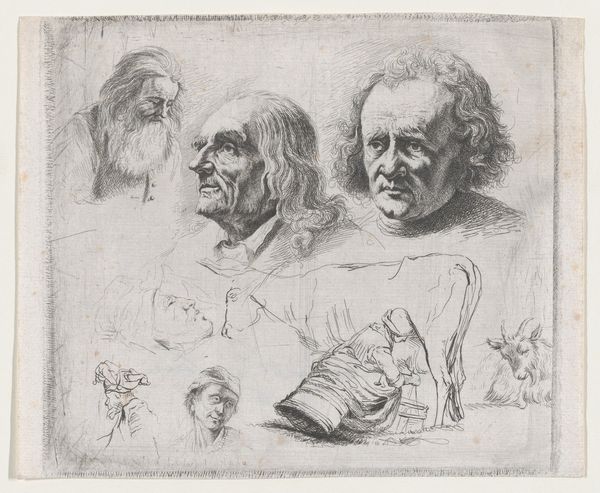
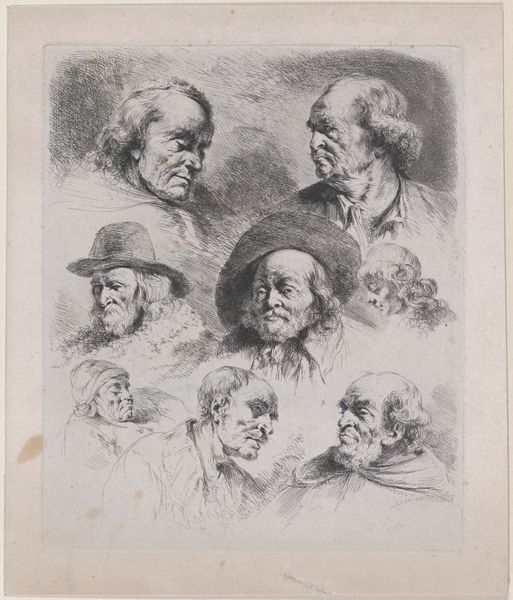
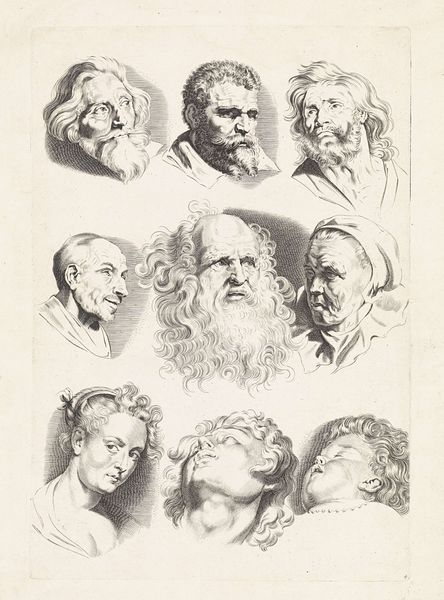
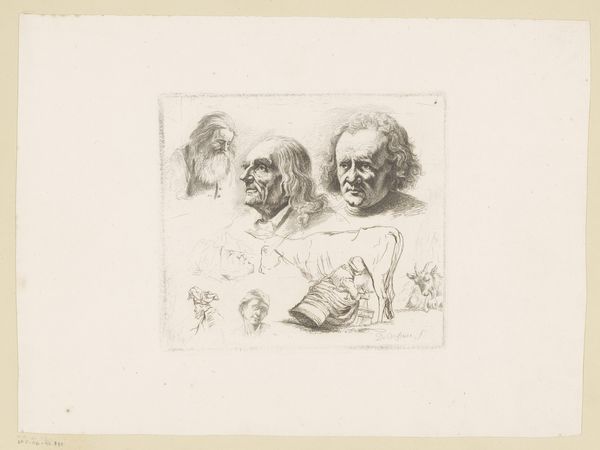
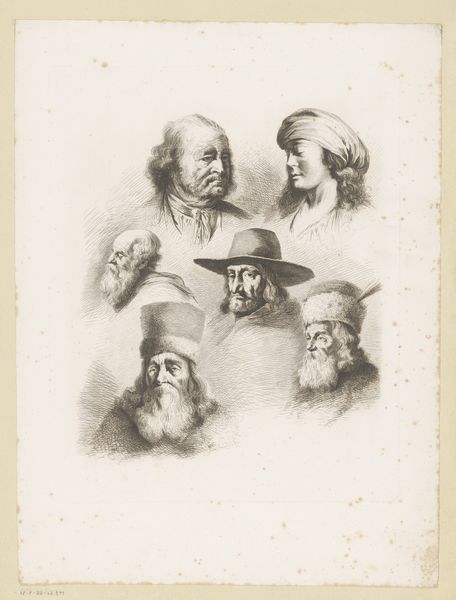
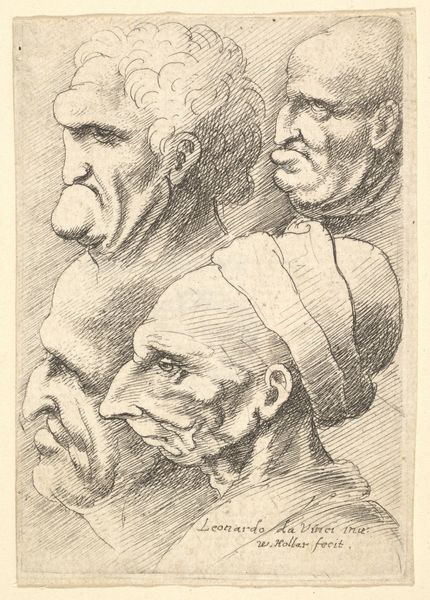
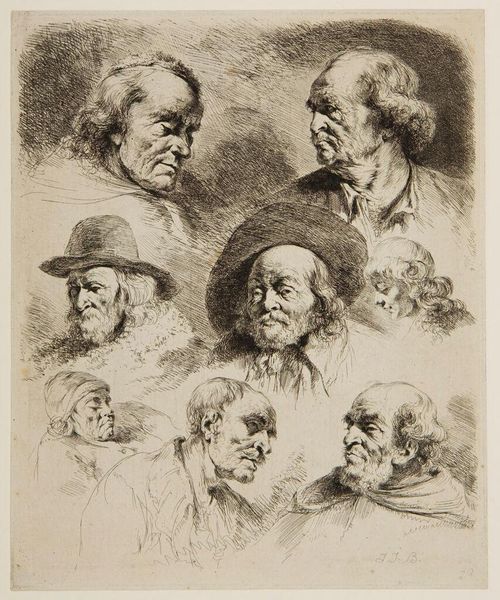
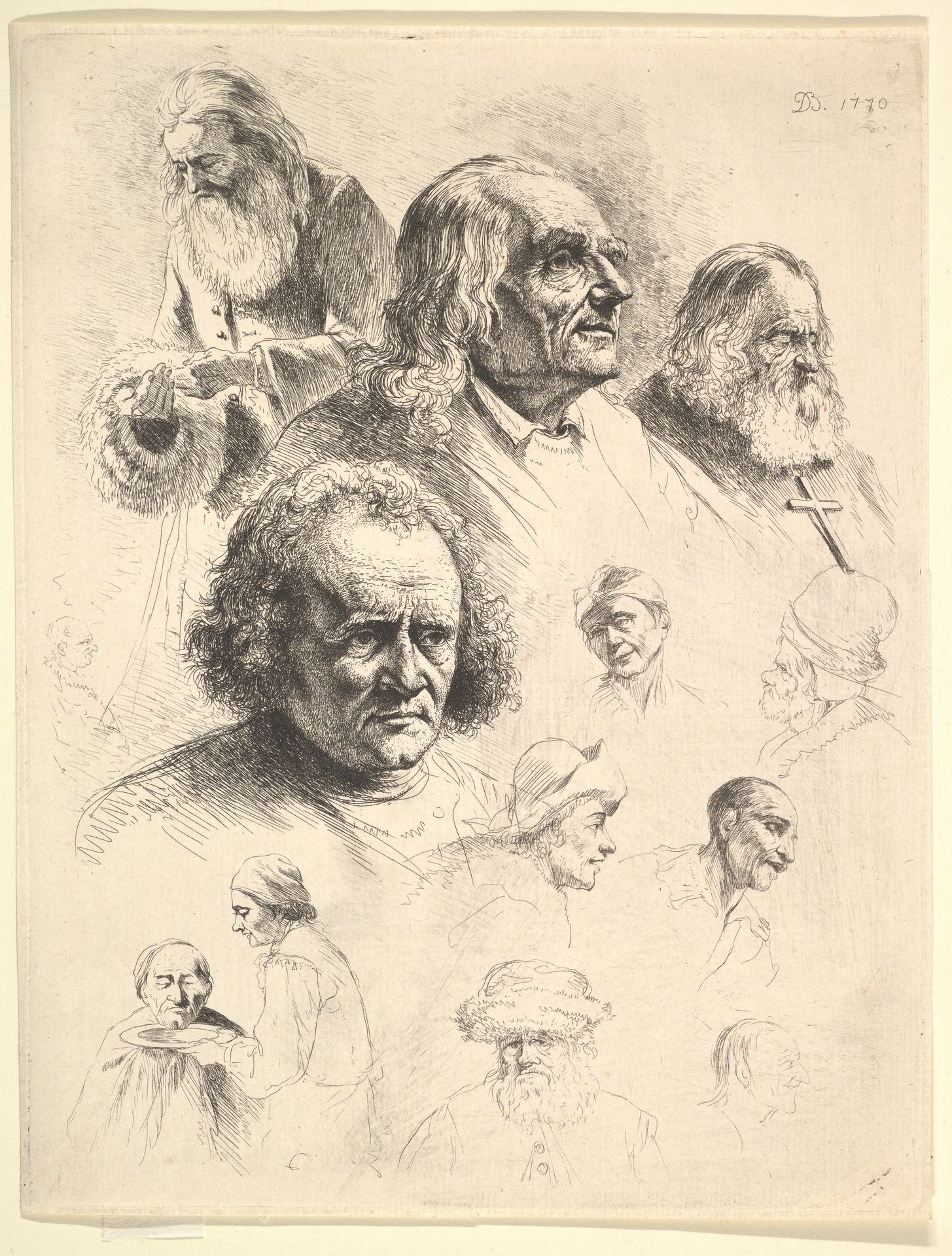
In 1770, Jean Jacques de Boissieu created "Study of Thirteen Heads," an etching now housed at the Metropolitan Museum of Art. Boissieu lived during the Enlightenment, a period where reason and observation were highly valued. This work reflects that interest, serving almost as a catalog of human character through its detailed studies of different faces. However, it's important to consider who gets represented and how. The prominence given to older, bearded men suggests a reverence for age and perhaps authority, while the fleeting glimpses of women in servant-like roles provide a stark contrast. The artist's own social standing as a bourgeois man undoubtedly shaped his perspective. Boissieu isn't just showing us faces; he's offering a glimpse into the social hierarchies of his time. It makes me think about how we assign value and visibility even today, and who gets to be seen and remembered.
Study of Thirteen Heads
1770

Jean Jacques de Boissieu
1736 - 1810
The Metropolitan Museum of Art
Metropolitan Museum of Art, New York, NYArtwork details
- Medium
- drawing, print, etching
- Dimensions
- Sheet: 9 7/16 × 7 3/16 in. (24 × 18.3 cm) Plate: 9 1/4 × 7 1/16 in. (23.5 × 17.9 cm)
- Location
- Metropolitan Museum of Art, New York, NY
- Copyright
- Public Domain
Tags
Comments
Share your thoughts
About this artwork
In 1770, Jean Jacques de Boissieu created "Study of Thirteen Heads," an etching now housed at the Metropolitan Museum of Art. Boissieu lived during the Enlightenment, a period where reason and observation were highly valued. This work reflects that interest, serving almost as a catalog of human character through its detailed studies of different faces. However, it's important to consider who gets represented and how. The prominence given to older, bearded men suggests a reverence for age and perhaps authority, while the fleeting glimpses of women in servant-like roles provide a stark contrast. The artist's own social standing as a bourgeois man undoubtedly shaped his perspective. Boissieu isn't just showing us faces; he's offering a glimpse into the social hierarchies of his time. It makes me think about how we assign value and visibility even today, and who gets to be seen and remembered.
Comments
Share your thoughts