

c. 1490 - 1500
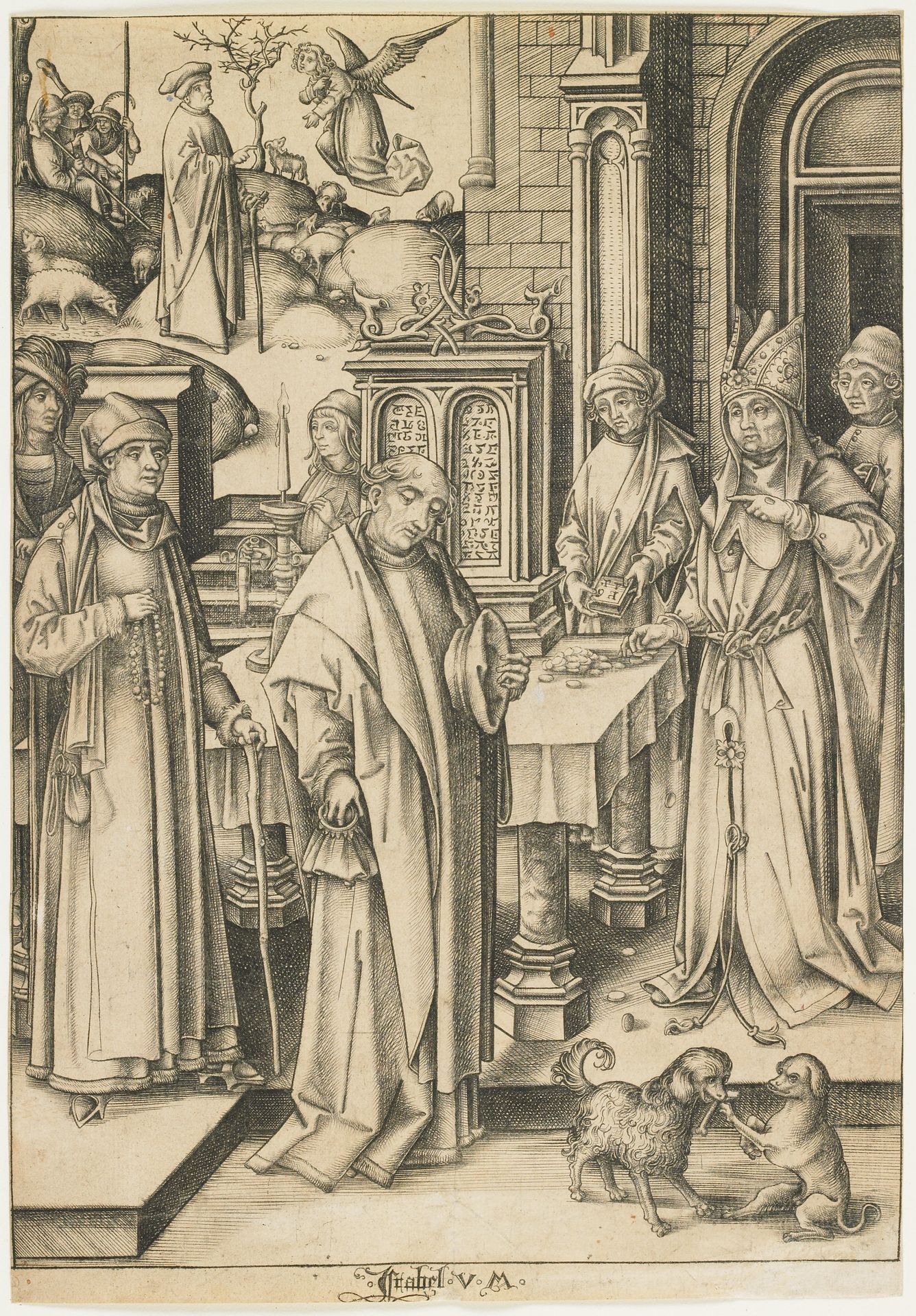
High Priest Refusing Joachim's Offering


Listen to curator's interpretation
Curatorial notes
Editor: This is "High Priest Refusing Joachim's Offering" by Israhel van Meckenem, created around 1490 to 1500. It’s an ink engraving. I’m struck by the central figure's downcast gaze and the overall feeling of rejection. What significance do you see in this composition? Curator: The engraving captures a pivotal moment laden with cultural memory. Notice how Joachim's offering is literally pushed away by the High Priest. Think of Joachim as a symbol – his rejection represents infertility, shame, a break in the ancestral line. Editor: I see… the barrenness is not just physical, it's also spiritual and societal. But why include such specific imagery like the dogs or the angel? Curator: Indeed, it becomes a communal plight, emphasized by his quiet removal, which isolates him. Even the dogs reflect this—their playful aggression contrasts the human drama, yet is not separate from it. The angel… Consider it as hope struggling to enter a space dominated by human limitations and biases. Notice, Joachim's life outside the temple contrasts sharply to that inside of it in the work's composition? Editor: Now I see the landscape with sheep juxtaposed to the altar with money in the engraving. So the engraving suggests a narrative of redemption through the promise signaled by the angel and also through new means to communicate ideas such as printmaking? Curator: Exactly! It points to how visual narratives and hope persisted, especially in moments of rejection and seeming closure. We remember that Anna will later miraculously conceive the Virgin Mary! Editor: I never considered the depth of symbolic struggle embedded in a single image. I see it all quite differently now, knowing it's about more than just what’s immediately visible. Curator: Precisely, art becomes a mirror, reflecting our hopes, fears, and the enduring human quest for meaning, made all the more possible via technological shifts of the period that this print embodies!
