1820 - 1844
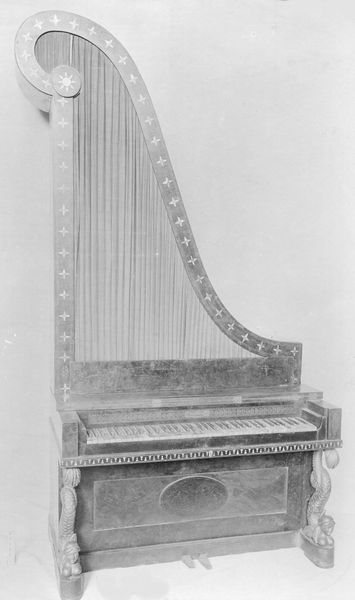
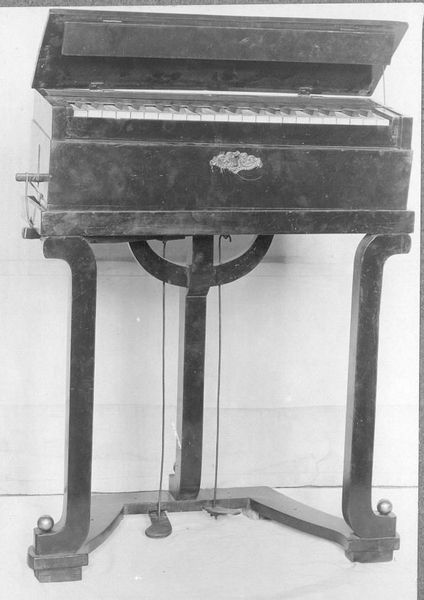
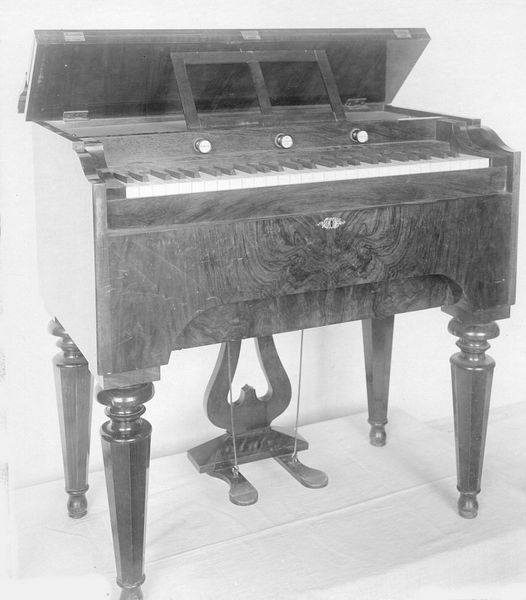
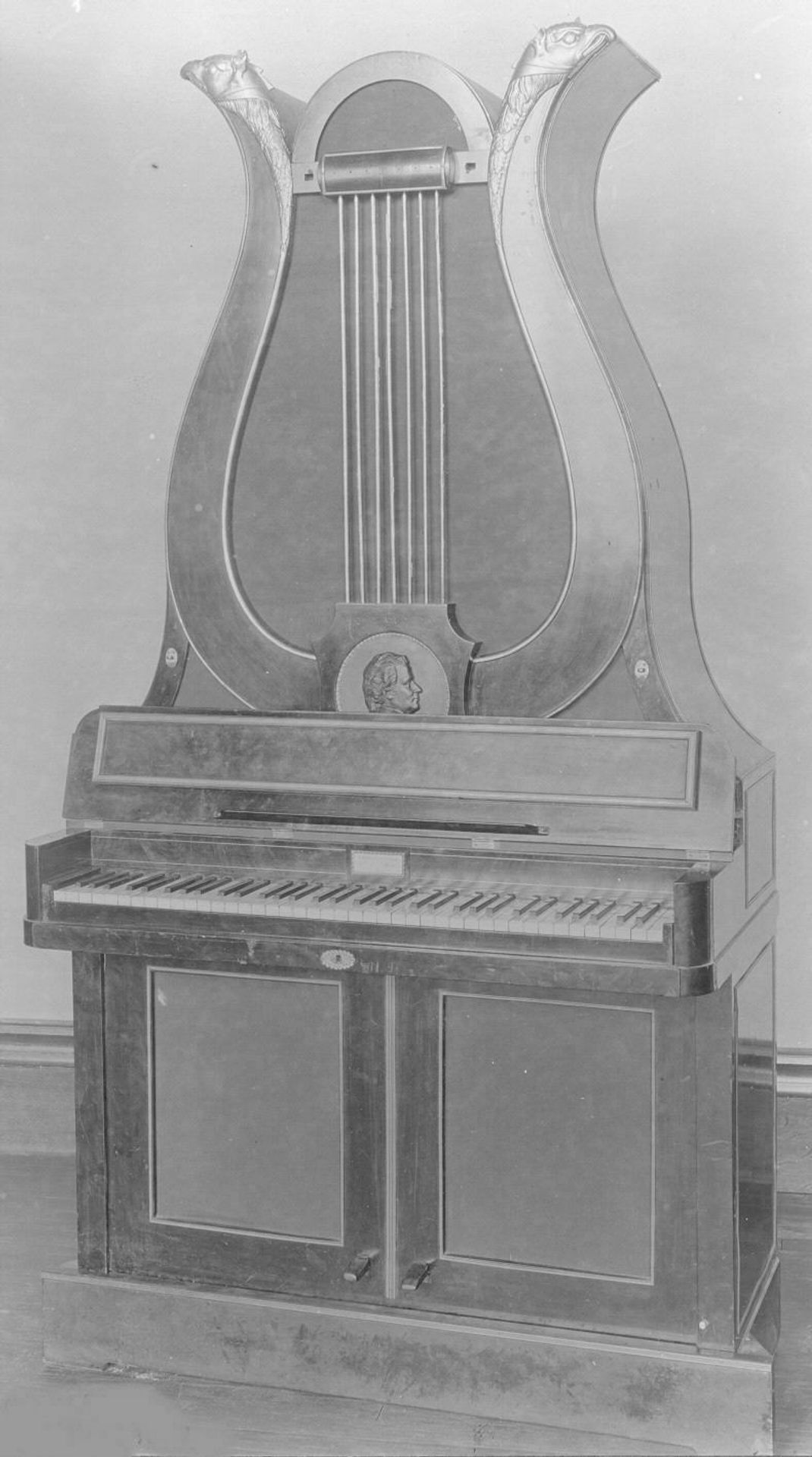
Upright (Lyre) Piano with Pedalboard

Johann Christian Schleip (1786–1848)
1786 - 1846
The Metropolitan Museum of Art
Metropolitan Museum of Art, New York, NYListen to curator's interpretation
Curatorial notes
This Upright Lyre Piano with Pedalboard was made by Johann Christian Schleip in the early 19th century, an era defined by the rise of the middle class, and the changing status of women within it. During this period, the piano became a fixture in middle-class homes, particularly as a tool for women's education and social presentation. The piano symbolized refinement, accomplishment, and domestic harmony, while masking the constraints and expectations placed upon women in society. A woman's musical skill was not just an aesthetic achievement, but a marker of her marriageability and social standing. The design, shaped like an ancient lyre, connects music with classical ideals and elevates the piano beyond a mere instrument. The piano transforms the act of playing into a performance of gentility and cultural knowledge. It stands as a testament to the complex interplay between art, gender, and social aspiration in the 19th century, embedding personal stories within broader cultural narratives.