About this artwork
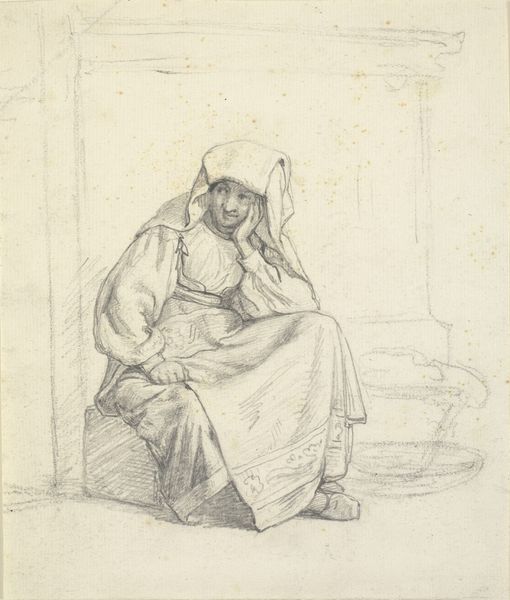
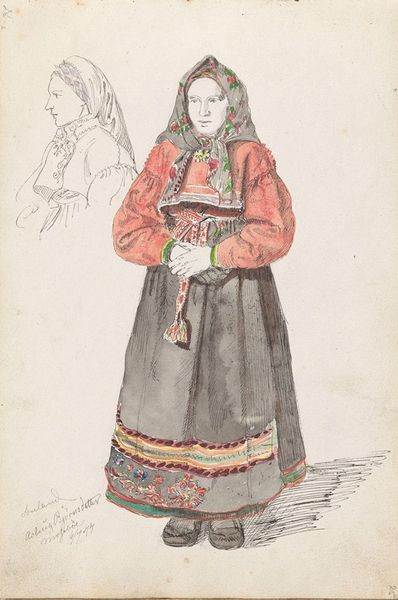
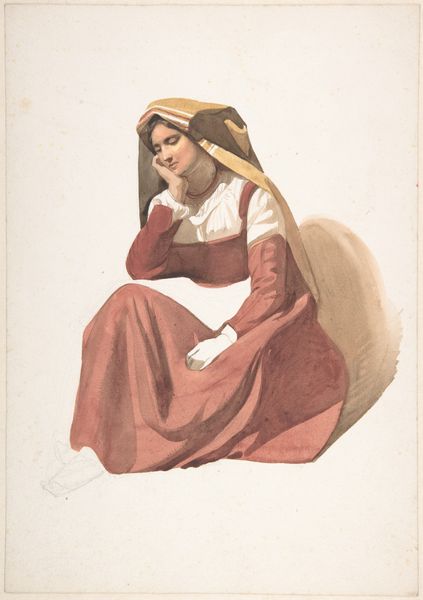
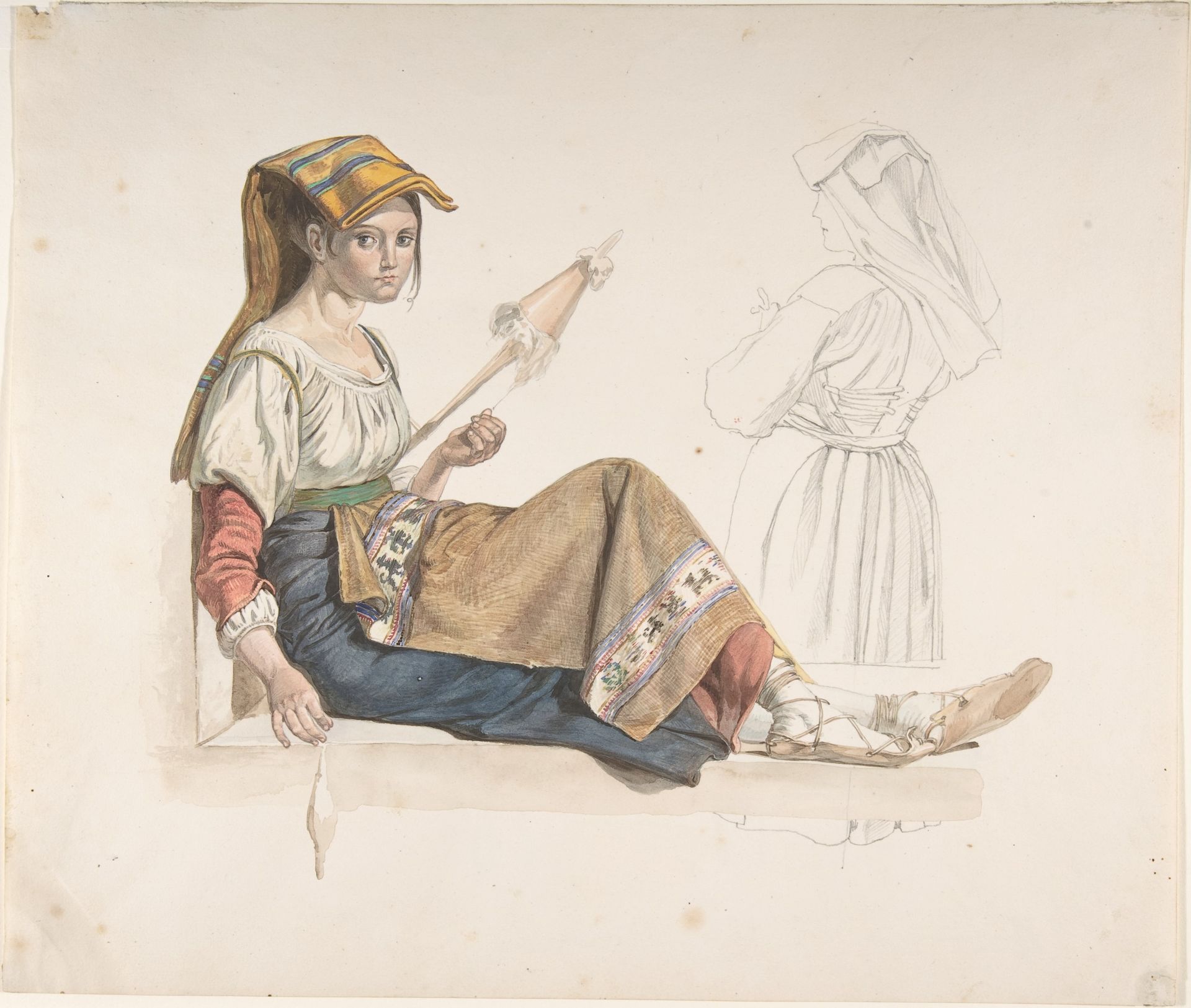
Karl Wilhelm Freiherr von Heideck created this watercolour and graphite drawing, Neapolitan Woman, sometime in the 19th century. The composition is dominated by the figure of a woman, her form arranged in a seated pose that creates a series of diagonal lines, balanced by the verticality of her headscarf. Heideck masterfully uses colour and line to draw our eye across the paper, focusing on the textural contrast between the woman's clothing and her surroundings. The interplay of light and shadow gives the figure volume and presence, whilst the contrasting sketch behind introduces a fascinating element of spatial ambiguity. The work plays with ideas of representation, showing the artist's process as he works to capture the essence and appearance of his subject, as if to destabilise the traditional portrait. We are left to consider how the artwork not only captures a likeness, but also embodies the artist's interpretation and the very act of seeing.
Neapolitan Woman (recto); Study for an Interior (verso)
1788 - 1861

Karl Wilhelm Freiherr von Heideck
1788 - 1861
The Metropolitan Museum of Art
Metropolitan Museum of Art, New York, NYArtwork details
- Medium
- drawing, print, paper, pencil
- Dimensions
- 10 3/4 x 12 11/16 in. (27.3 x 32.2 cm)
- Location
- Metropolitan Museum of Art, New York, NY
- Copyright
- Public Domain
Tags
Comments
Share your thoughts
About this artwork
Karl Wilhelm Freiherr von Heideck created this watercolour and graphite drawing, Neapolitan Woman, sometime in the 19th century. The composition is dominated by the figure of a woman, her form arranged in a seated pose that creates a series of diagonal lines, balanced by the verticality of her headscarf. Heideck masterfully uses colour and line to draw our eye across the paper, focusing on the textural contrast between the woman's clothing and her surroundings. The interplay of light and shadow gives the figure volume and presence, whilst the contrasting sketch behind introduces a fascinating element of spatial ambiguity. The work plays with ideas of representation, showing the artist's process as he works to capture the essence and appearance of his subject, as if to destabilise the traditional portrait. We are left to consider how the artwork not only captures a likeness, but also embodies the artist's interpretation and the very act of seeing.
Comments
Share your thoughts