ceramic, sculpture
portrait
asian-art
ceramic
classical-realism
sculptural image
figuration
sculpture
Dimensions: height 27.8 cm, length 14 cm, width 11.5 cm, length 11.4 cm, width 10.4 cm
Copyright: Rijks Museum: Open Domain
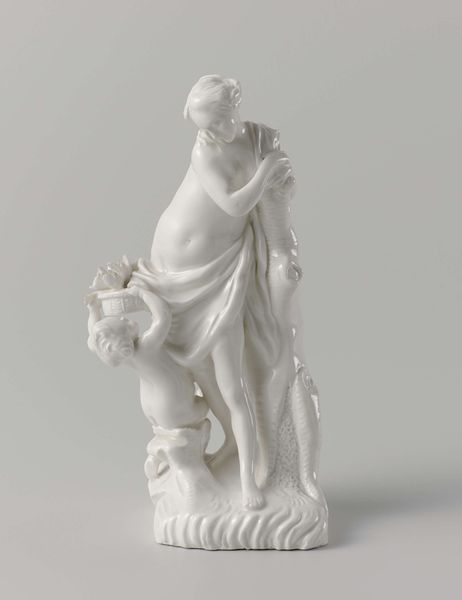
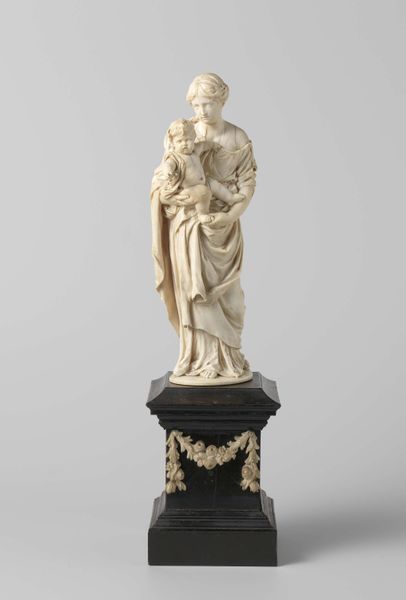
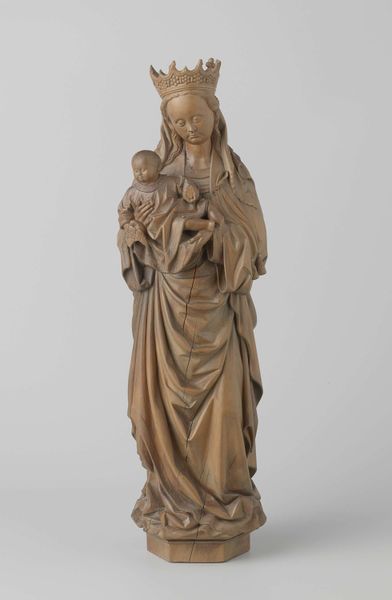
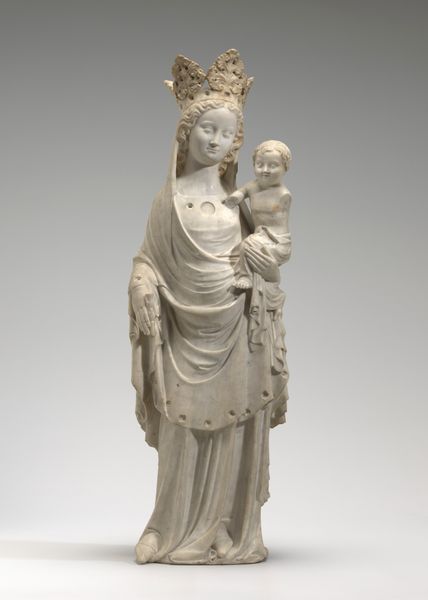
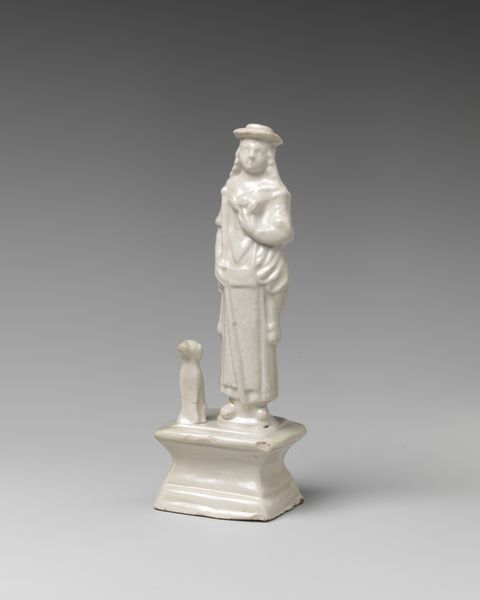
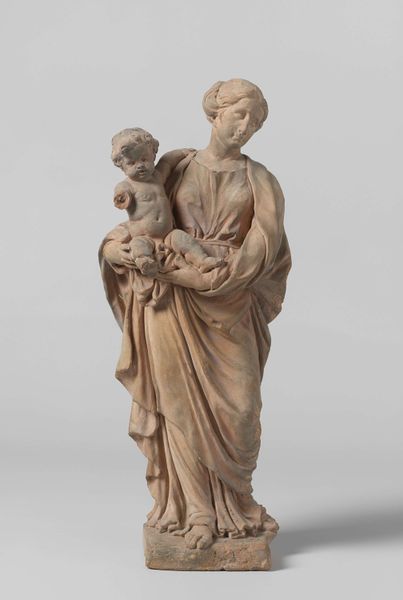
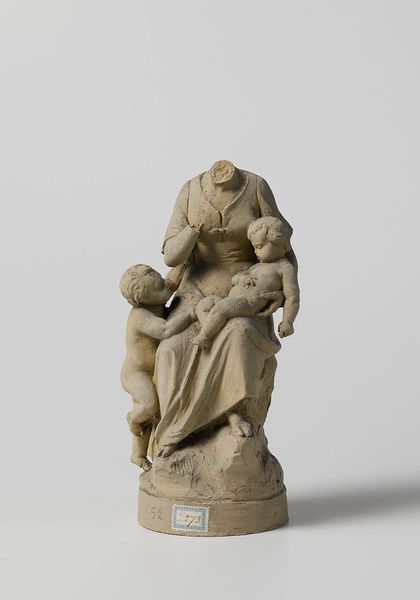
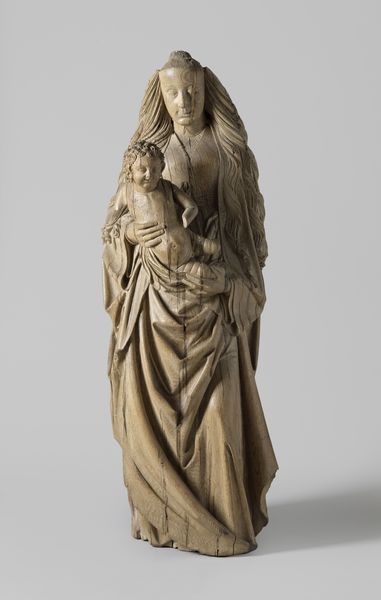
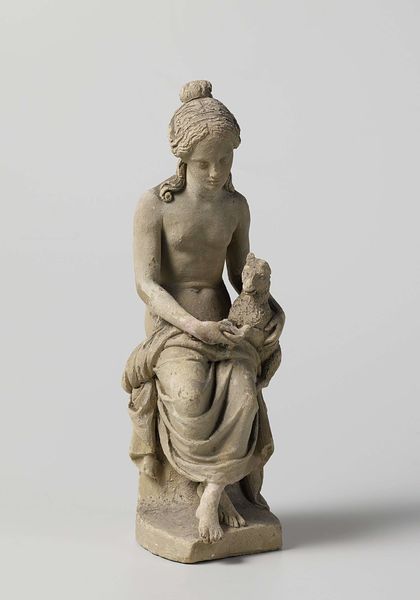
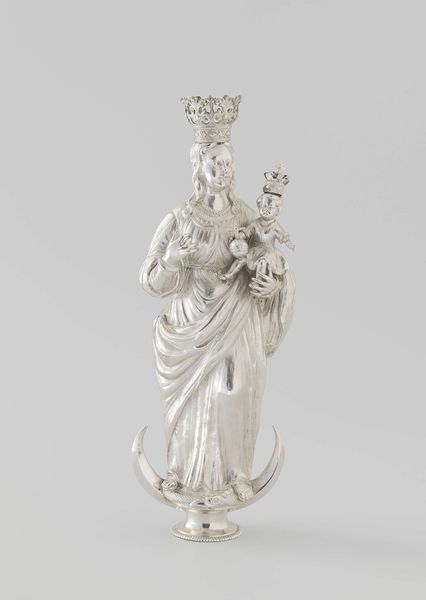
Editor: Here we have “Guanyin with a Child,” a porcelain sculpture by He Chaozong, likely crafted between 1750 and 1800. Its smooth, white surface gives it a really serene quality. What symbols do you recognize in this sculpture? Curator: Indeed, the serenity emanates from a deep well of cultural symbolism. Guanyin herself, often depicted holding a child, is revered as the Bodhisattva of compassion. This iconography taps into the powerful, almost universal archetype of the Madonna and Child. Consider the echoes of nurturing and protection… what feelings are evoked? Editor: I feel a sense of peace and motherly love, definitely. It's interesting that you bring up the Madonna – I wouldn't immediately connect the two, given their different cultural contexts. Curator: Precisely, the comparison invites us to look closer. While the context differs, both figures serve as visual representations of empathy and refuge. Notice how Guanyin's posture – gentle, with slightly downcast eyes – reinforces her role as a compassionate caregiver. What might the artist be trying to convey? Editor: Maybe the universality of maternal love, regardless of religious or cultural background? Also, the smooth ceramic material itself adds to that sense of purity and calm. Curator: That's insightful! The choice of white porcelain also ties into specific cultural connotations of purity and enlightenment within Buddhism. So, what’s been revealed through our interpretation of visual cues? Editor: I’ve learned how to analyze a work of art based on what it symbolizes, and the emotions and ideas that cultural icons transmit over time. Curator: And understanding how enduring archetypes bridge diverse cultural expressions can open us to broader empathy and connection.
Comments

The pure white of blanc de Chine is perfect for depicting this so-called ‘Guanyin in white robes.’ This manner of portraying Guanyin originated in China in the 10th century, when Guanyin was transformed from a male into a female divinity. The colour white stands for her purity and mercy.


Join the conversation
Join millions of artists and users on Artera today and experience the ultimate creative platform.