c. 1795 - 1805
The House of Death


Listen to curator's interpretation
Curatorial notes
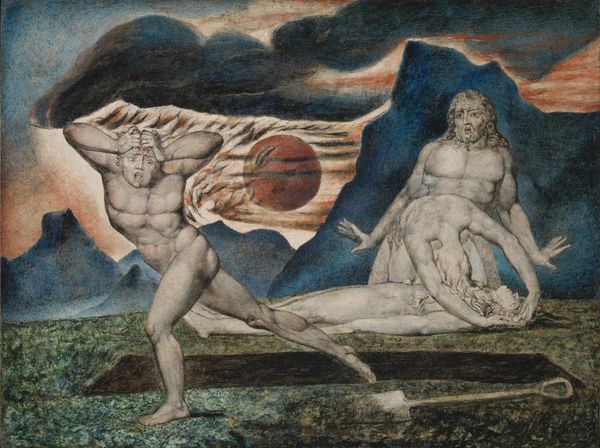
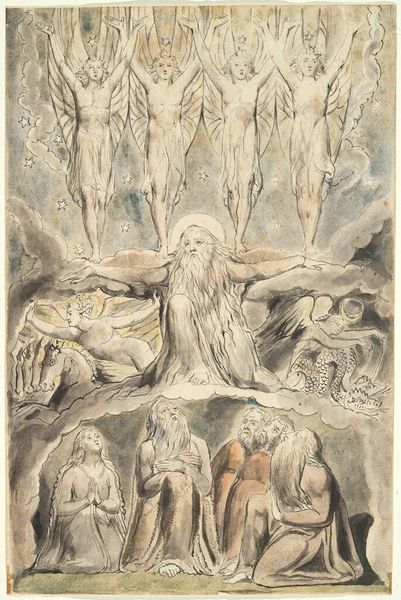
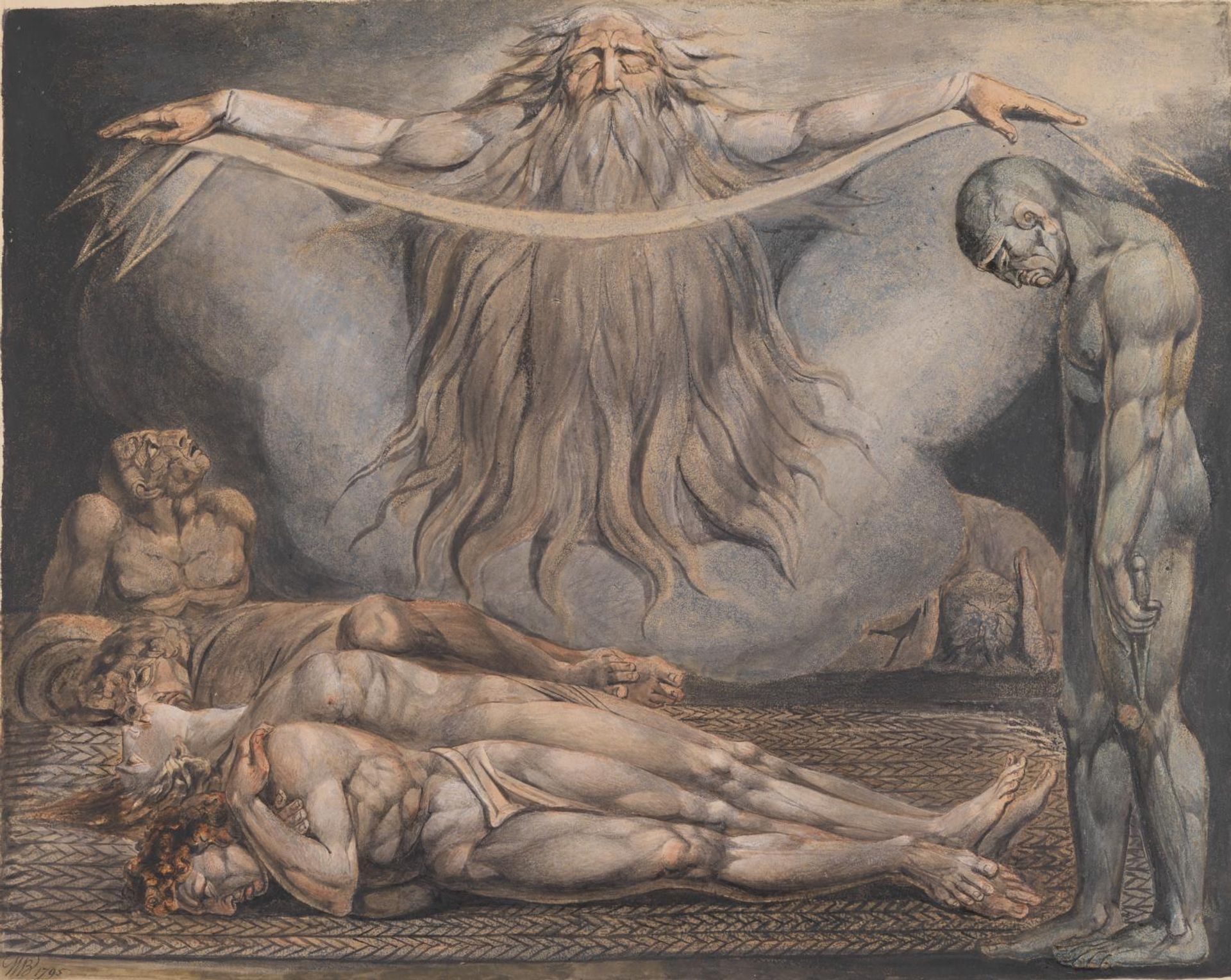
Curator: William Blake’s watercolor, "The House of Death," currently in the Tate Collections, presents a scene imbued with sorrow and finality. Editor: It’s stark. The figures seem suspended in a pale, ethereal realm, a definite break from earthly vibrancy. Curator: Absolutely. Note the dominating, almost oppressive, figure looming above the bodies. Blake often used such figures to represent abstract ideas, in this case perhaps a grim reaper or a deity presiding over death. Editor: The bodies themselves are arranged almost like a classical lamentation scene, but drained of color. Do you think this aesthetic choice was a reflection of the cultural attitudes toward mortality at the time? Curator: Undoubtedly. Death was a constant presence in the 18th and early 19th centuries. Blake’s work often reflected anxieties about mortality and the afterlife, but his artistic vision also gave a voice to those societal anxieties. Editor: So, in a way, Blake used the visual language of death to confront the viewer with their own mortality? Curator: Precisely. His visual language is very heavy with the weight of what's to come. Editor: It's an intimate and chilling portrayal of a universal experience.