About this artwork
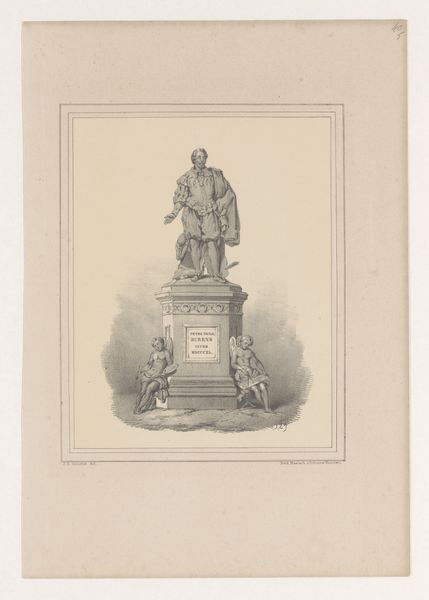
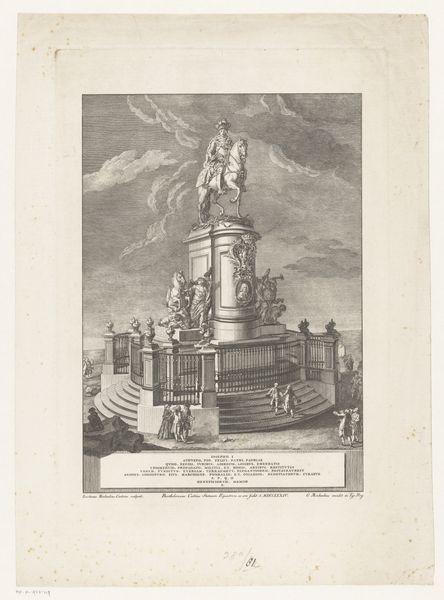
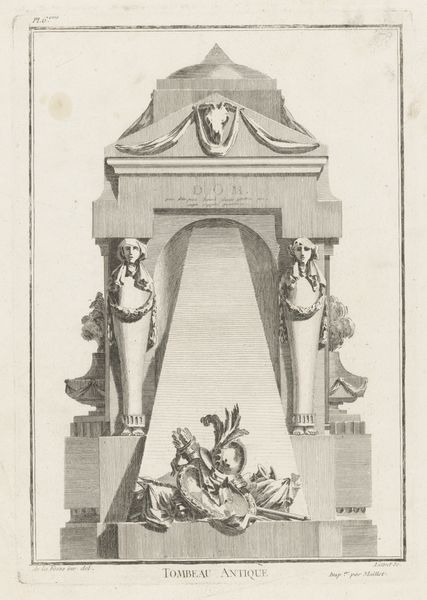
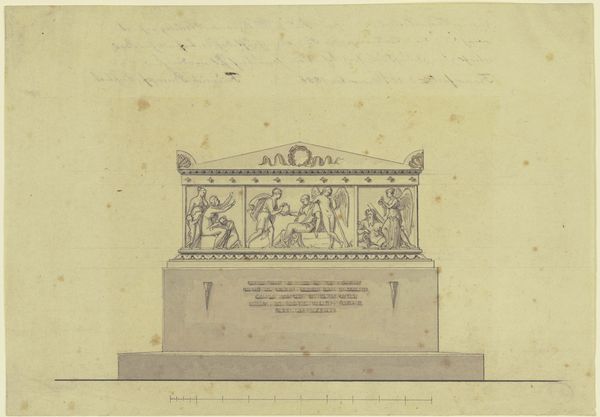
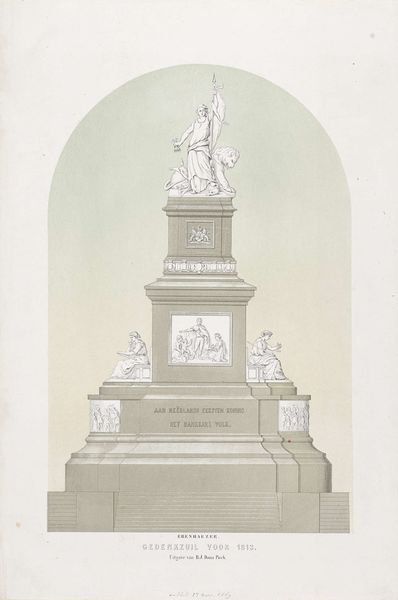
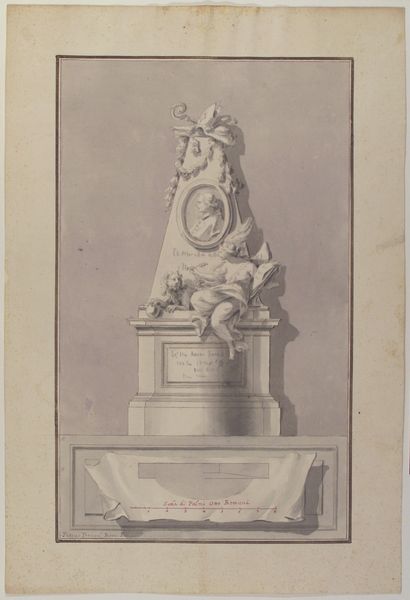
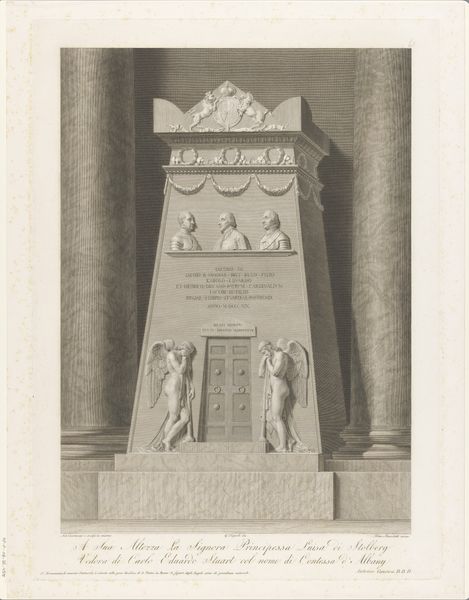
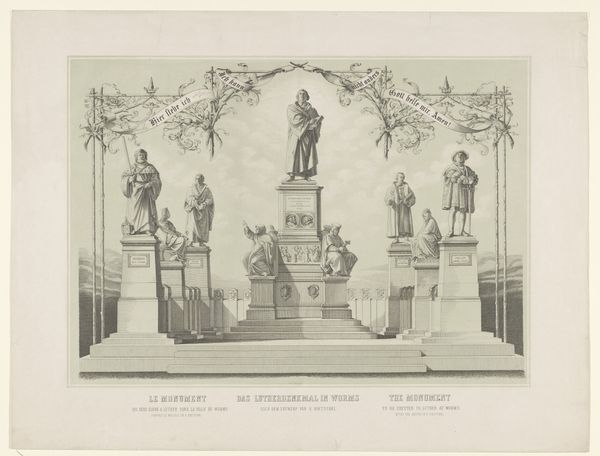
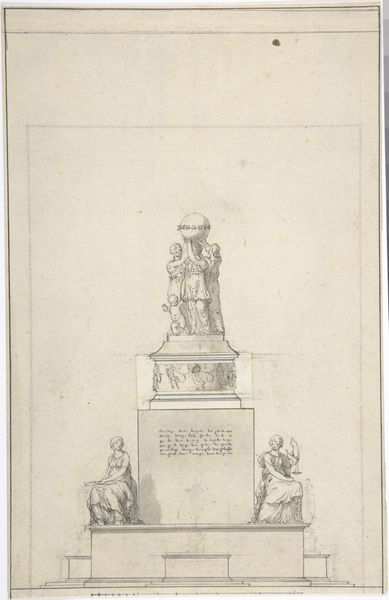
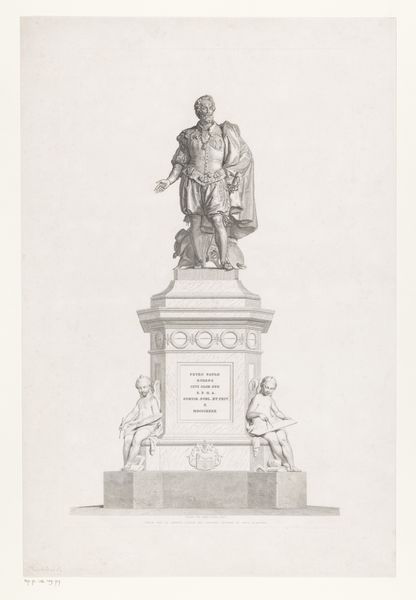
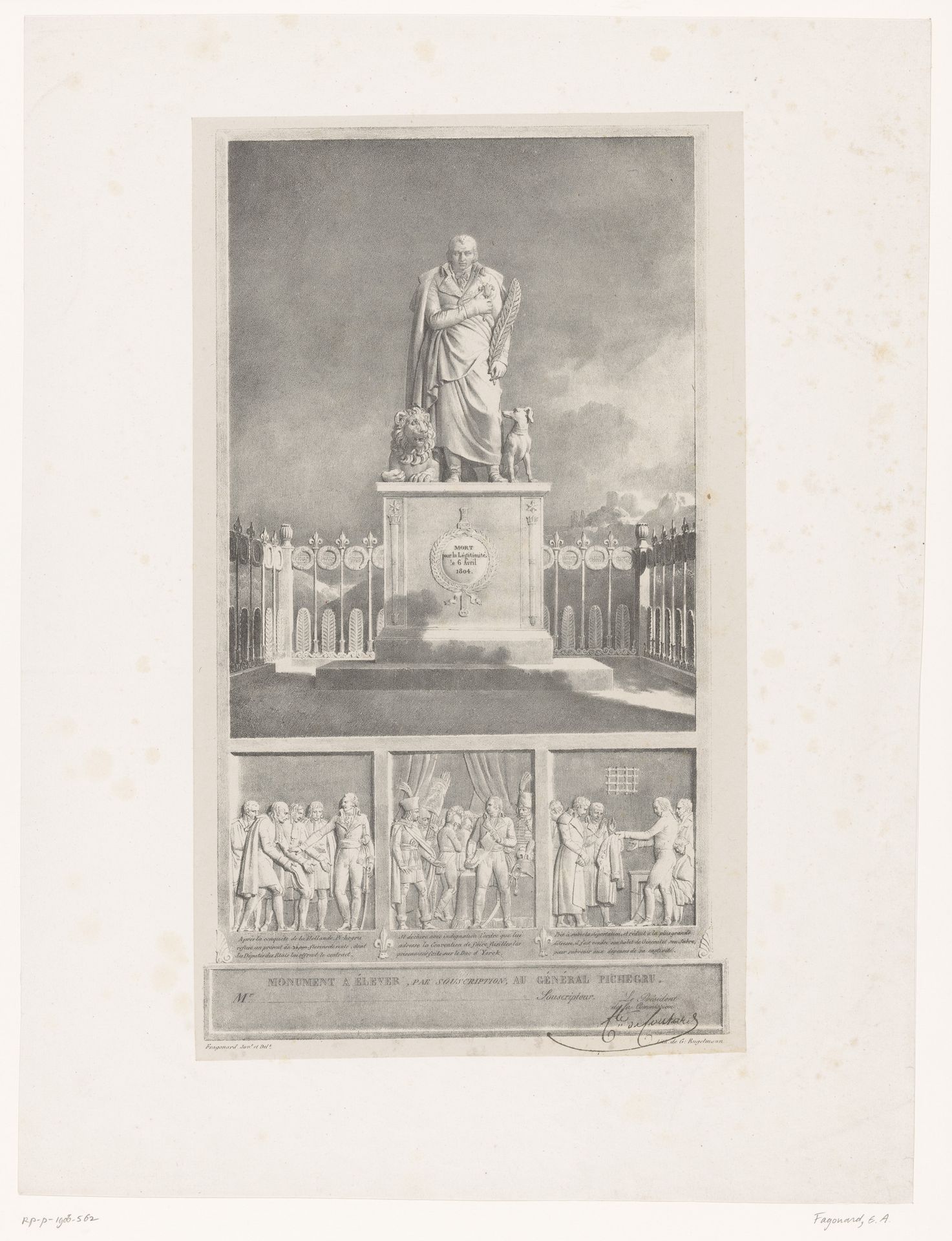
Alexandre Evariste Fragonard made this print of a statue design for General Jean-Charles Pichegru sometime in the early 1800s. It is made of paper, with an eye to the stone it represents. The print captures the monument’s intended grandeur, showing Pichegru in classical garb, flanked by a lion and dog—symbols of courage and fidelity. Fragonard’s choice of printmaking allows for broad distribution of the image, influencing public opinion and shaping the general’s legacy. Look closely at the base of the statue and the surrounding panels. They depict scenes from Pichegru’s life, aiming to create an idealized narrative. The print’s lines create an illusion of depth and volume; consider how the artist mimics the texture of stone and the play of light on its surface. The print medium contrasts sharply with the envisioned monumentality of stone. It's a reminder of the political uses that monuments serve, and the translation of individual action into public memory.
Ontwerp voor een standbeeld van generaal Jean-Charles Pichegru
c. 1818 - 1819

Alexandre Evariste Fragonard
1780 - 1850Location
RijksmuseumArtwork details
- Medium
- drawing, print, sculpture, marble, engraving
- Dimensions
- height 518 mm, width 397 mm
- Location
- Rijksmuseum
- Copyright
- Rijks Museum: Open Domain
Tags
portrait
pencil drawn
drawing
neoclacissism
statue
pencil sketch
old engraving style
sculpture
history-painting
academic-art
marble
engraving
Comments
Be the first to share your thoughts about this work.
About this artwork
Alexandre Evariste Fragonard made this print of a statue design for General Jean-Charles Pichegru sometime in the early 1800s. It is made of paper, with an eye to the stone it represents. The print captures the monument’s intended grandeur, showing Pichegru in classical garb, flanked by a lion and dog—symbols of courage and fidelity. Fragonard’s choice of printmaking allows for broad distribution of the image, influencing public opinion and shaping the general’s legacy. Look closely at the base of the statue and the surrounding panels. They depict scenes from Pichegru’s life, aiming to create an idealized narrative. The print’s lines create an illusion of depth and volume; consider how the artist mimics the texture of stone and the play of light on its surface. The print medium contrasts sharply with the envisioned monumentality of stone. It's a reminder of the political uses that monuments serve, and the translation of individual action into public memory.
Comments
Be the first to share your thoughts about this work.