About this artwork
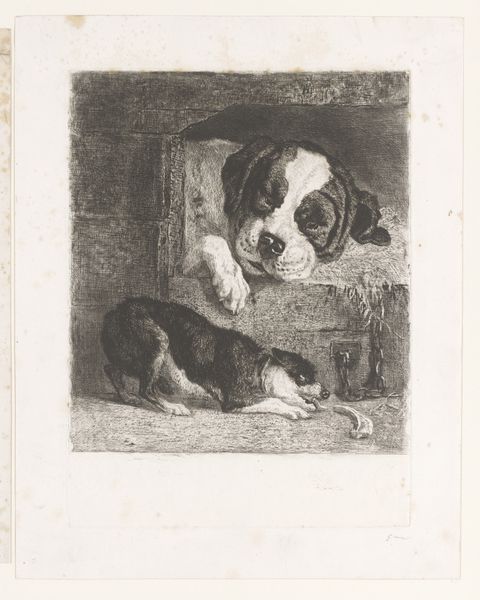
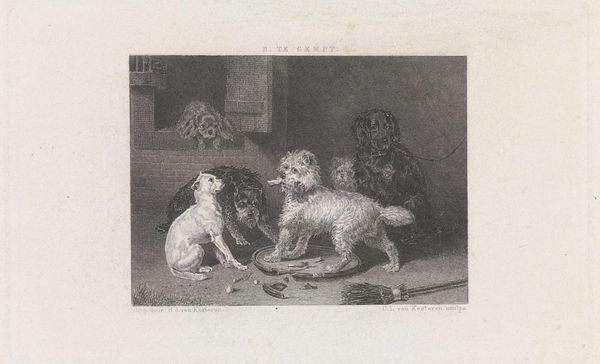
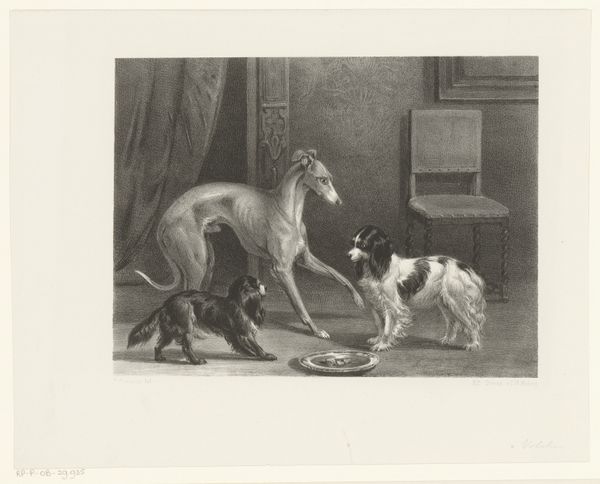
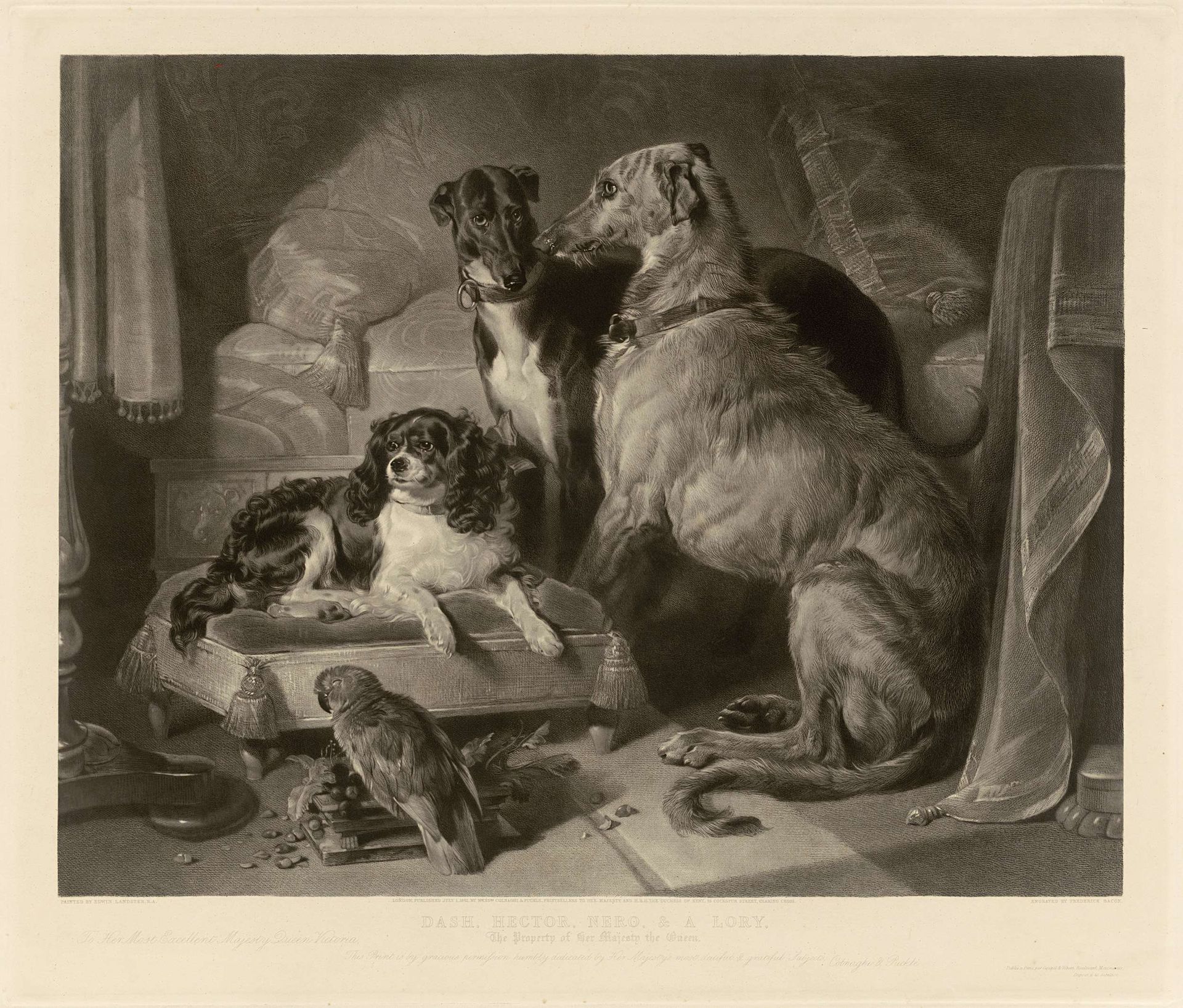
Frederick Bacon’s print, "Dash, Hector, Nero, & A Lory," reflects the 19th-century British fascination with domestic animals as symbols of status and companionship. During this period, dog breeds were carefully cultivated and became visual markers of class and taste, much like fine furniture or clothing. Here, we see the dogs posed almost as members of the family, each with its own distinct character and place within the household hierarchy, with the Lory off to the side, eating. It's interesting to consider how these animals were perceived and treated in comparison to other marginalized groups in society. While these dogs enjoy comfort and privilege, many humans at the time were subject to harsh living conditions and social inequalities. Bacon invites us to reflect on the emotional bonds we form with animals, and the ways in which these relationships mirror and challenge our understanding of social roles and hierarchies.

Artwork details
- Medium
- Dimensions
- height mm, width mm
- Copyright
- Rijks Museum: Open Domain
Tags
Comments
Share your thoughts
About this artwork
Frederick Bacon’s print, "Dash, Hector, Nero, & A Lory," reflects the 19th-century British fascination with domestic animals as symbols of status and companionship. During this period, dog breeds were carefully cultivated and became visual markers of class and taste, much like fine furniture or clothing. Here, we see the dogs posed almost as members of the family, each with its own distinct character and place within the household hierarchy, with the Lory off to the side, eating. It's interesting to consider how these animals were perceived and treated in comparison to other marginalized groups in society. While these dogs enjoy comfort and privilege, many humans at the time were subject to harsh living conditions and social inequalities. Bacon invites us to reflect on the emotional bonds we form with animals, and the ways in which these relationships mirror and challenge our understanding of social roles and hierarchies.
Comments
Share your thoughts