
Curatorial notes
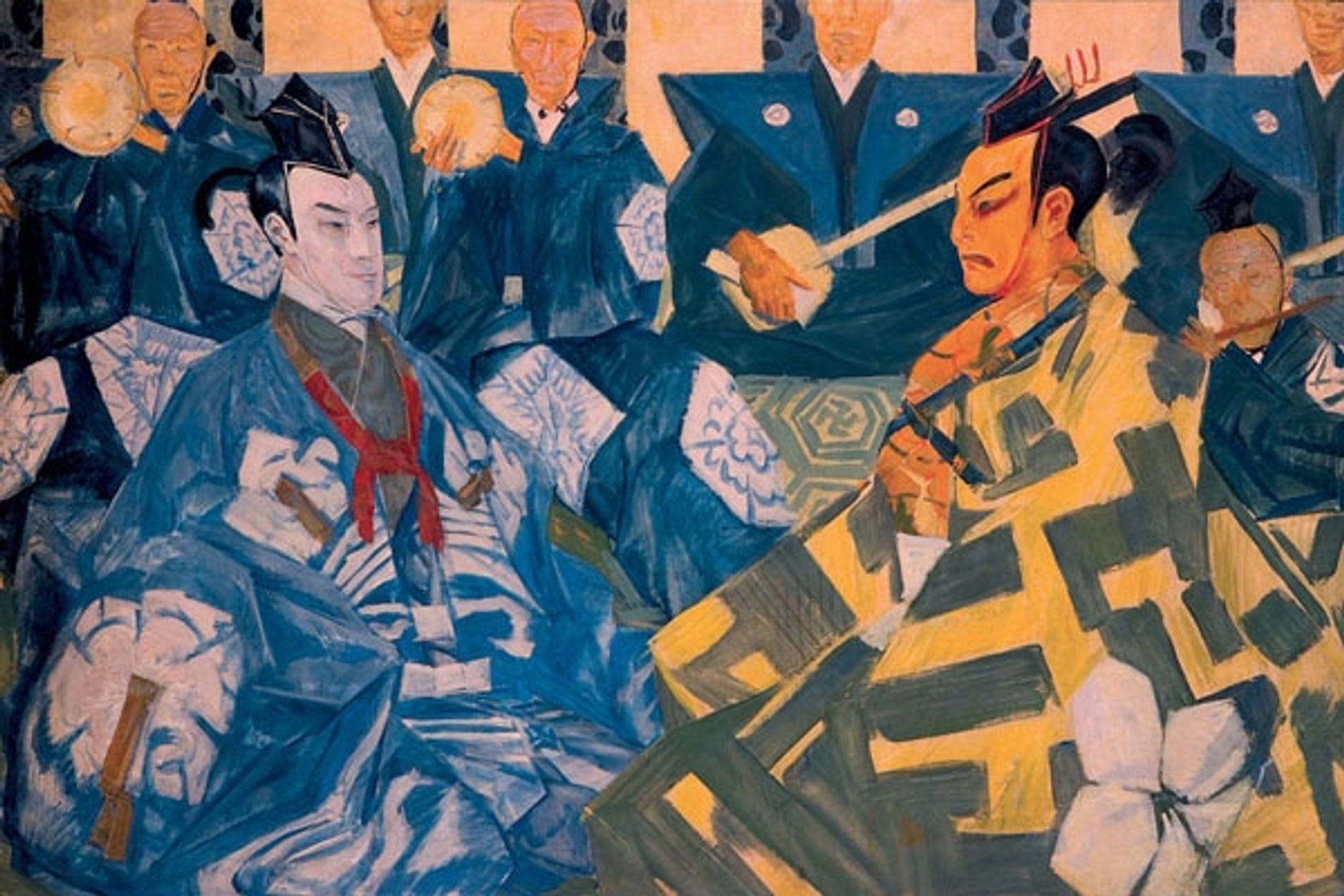
Alexandre Jacovleff's painting "Japanese Theatre (Kabuki)" invites us to consider the cultural exchange between East and West in the early 20th century. The image captures the essence of Kabuki, a traditional Japanese theater form, through bold colors and dynamic composition. Jacovleff, a Russian artist working in Paris, likely encountered Kabuki through performances or exhibitions that were part of the broader trend of Japonism in Europe. This fascination with Japanese art and culture influenced Western artists, leading them to incorporate elements of Japanese aesthetics into their work. The painting's visual codes, such as the stylized makeup and elaborate costumes, reference the highly codified nature of Kabuki. By studying accounts of Jacovleff’s travels and the cultural milieu of early 20th-century Paris, we can better understand the complex interplay of artistic influences and the social conditions that shaped this captivating image.