1576
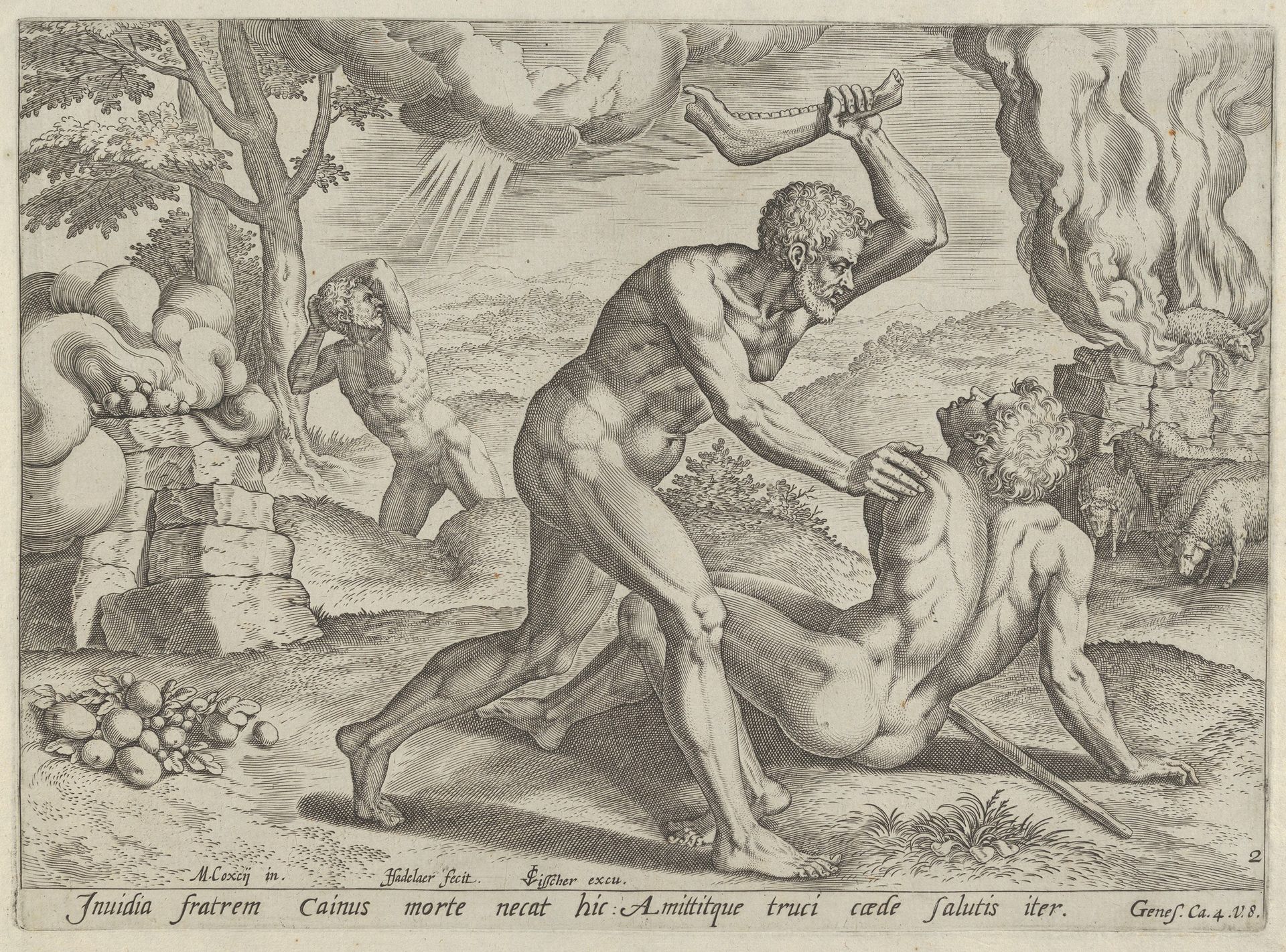
Cain murdering Abel (plate 2 from The Story of Cain and Abel)


Listen to curator's interpretation
Curatorial notes
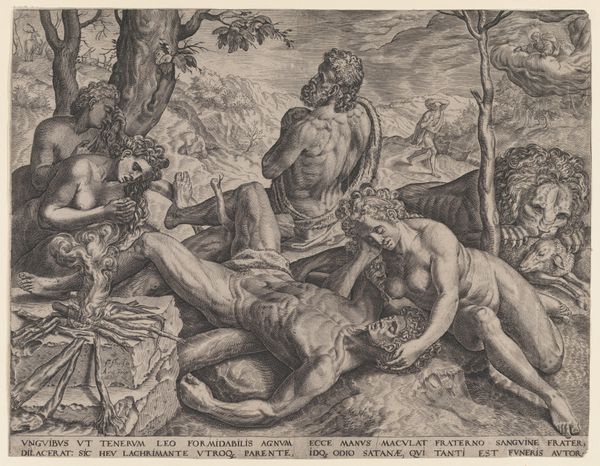
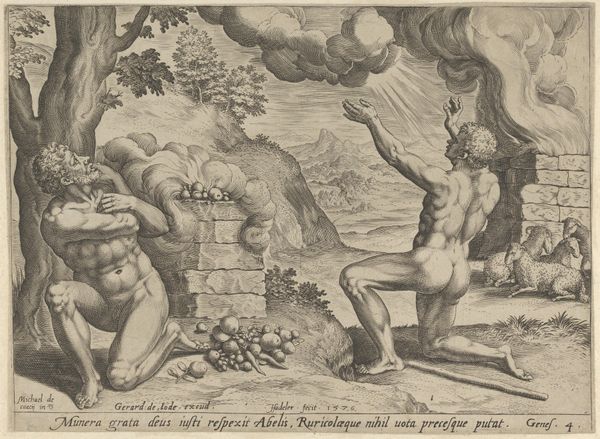
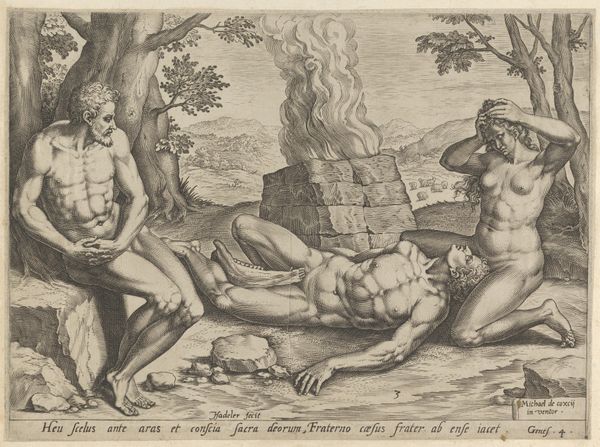
Johann Sadeler I created this engraving, "Cain murdering Abel," sometime around the late 16th century. Sadeler was working in a Europe still reeling from the Reformation and deeply invested in religious narratives. Here, we see Cain, a farmer, enacting fratricide upon his brother Abel, a shepherd, after God favors Abel's animal sacrifice over Cain’s offering of crops. In this incredibly violent rendering, we see the chiseled musculature of both men, their bodies idealized, yet their actions are brutal. It’s important to note that artists like Sadeler were working within a visual tradition that often used the body to convey moral messages. In this case, the nakedness of Cain and Able renders them vulnerable, but also primal, and perhaps beyond the bounds of law. This print invites us to reflect on the narratives we inherit and how they shape our understanding of morality, jealousy, and the consequences of divine judgment. Consider how this image and its story have reverberated through centuries, shaping societal norms and individual perceptions of right and wrong.